Wangxian Valley, China: A Complete Guide for Foreigners [2026]
The9toFly contains affiliate links. If you make a purchase using one of the links below, we may receive compensation at no extra cost to you. We only recommend products and services we use and trust. Read our disclaimer for more information.
PLANNING A TRIP TO WANGXIAN VALLEY?
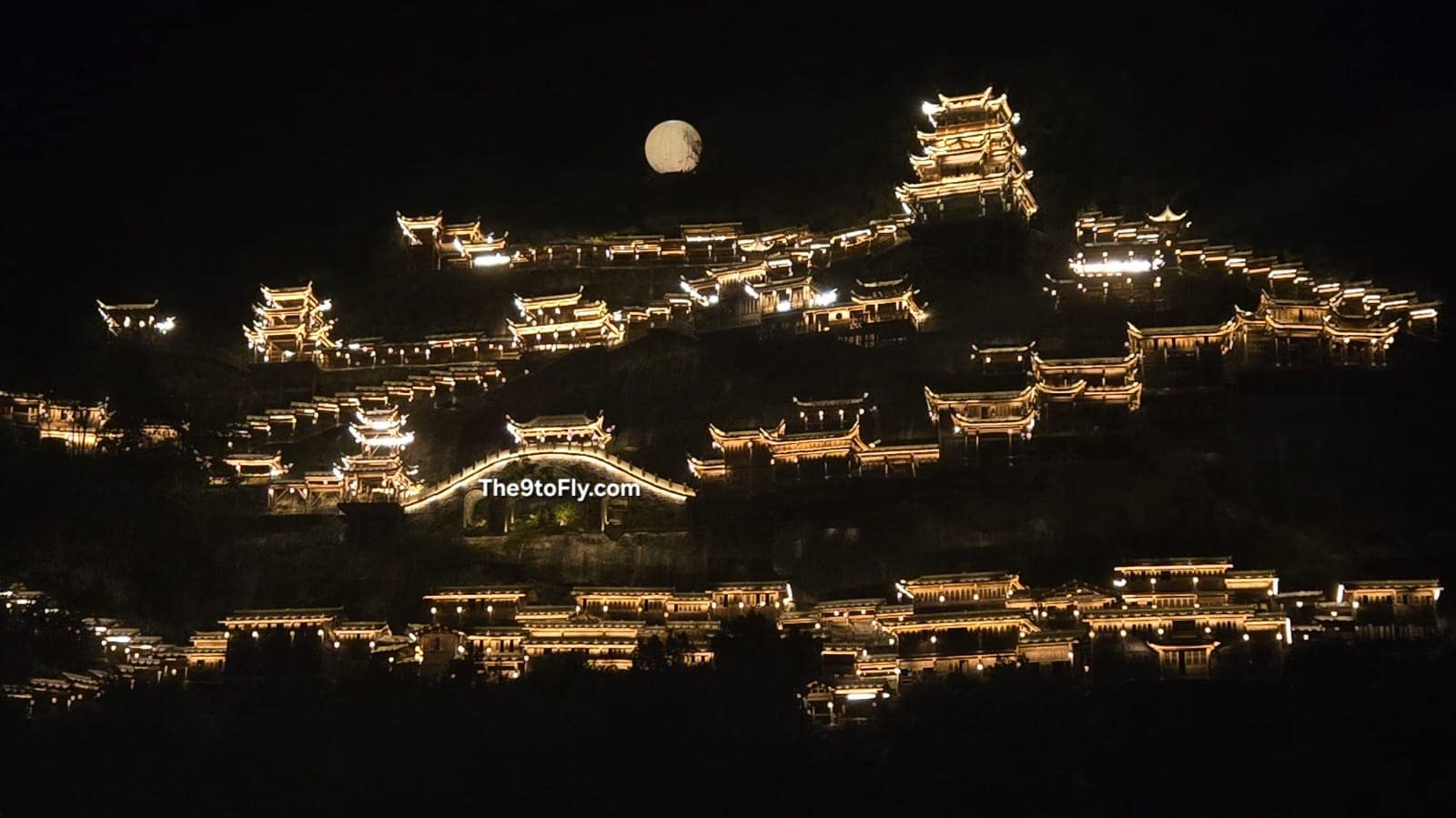
Wangxian Valley was not on our original China itinerary. We were deep into planning our Zhangjiajie trip when a few photos of this place kept popping up on our feed. Cliffside wooden houses glowing at night, lanterns everywhere, a valley that looked like it belonged in a fantasy novel. We were sold pretty quickly, and we shuffled our plans to squeeze it in on the way to Shanghai.
Turns out, it was one of the best decisions of the whole trip.
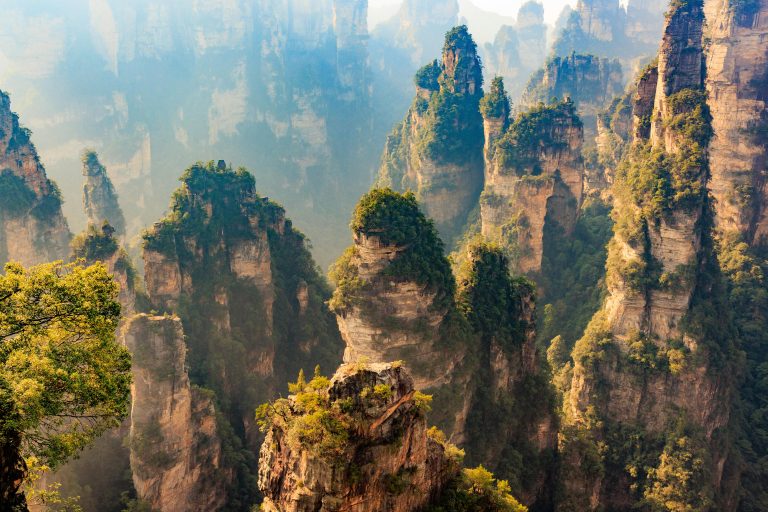
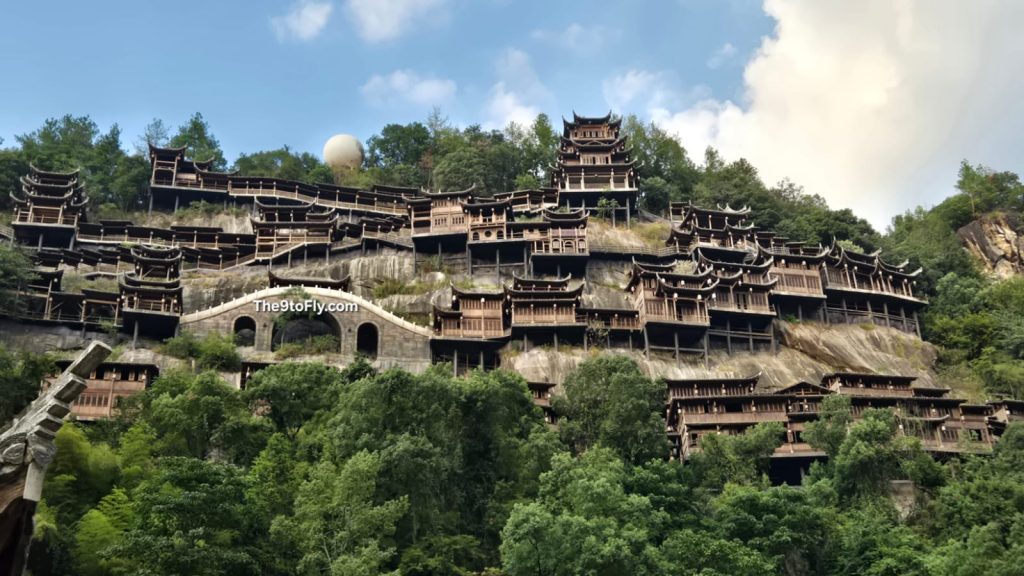
Wangxian Valley (also called Wangxiangu) sits in Jiangxi Province, about an hour and a half from Shangrao city. It was literally an abandoned mine not that long ago, and then someone had the genius idea to build a whole village of traditional-looking stilt houses on the cliffs. Yes, the buildings are new, not ancient. But the cliffs, the waterfalls, the streams, and the mountain views are all real. And once the sun sets and the whole valley lights up with lanterns and beam lights, you completely forget to care whether the houses are 10 years old or 1,000.
We spent one full day here and it was more than enough to cover the main highlights. If you’re travelling through Jiangxi or doing a wider China trip, this guide walks you through exactly how we got there, where we stayed, what it cost, what we did, and everything we’d want a friend to know before going.
How to Get to Wangxian Valley
This is the part that took us the most planning. Wangxian Valley is not near any major city, and the closest gateway is Shangrao in Jiangxi Province. From Shangrao, it’s still another 50 km to the valley itself. Here’s how we made it work.
From Zhangjiajie to Wangxian Valley (Our Exact Route)
We came straight from a 3-day trip in Zhangjiajie, and the route was trickier than we expected. There is technically one direct high-speed train from Zhangjiajie to Shangrao, but it only runs once a day. It departs around 7:30 AM and gets you to Shangrao by early afternoon. Just one option, no backup if the tickets sells out.
We didn’t want to take that risk, so we split the journey into two overnight legs instead. This gave us more flexibility and saved us money on a night of accommodation at the same time. Here’s exactly what we did:
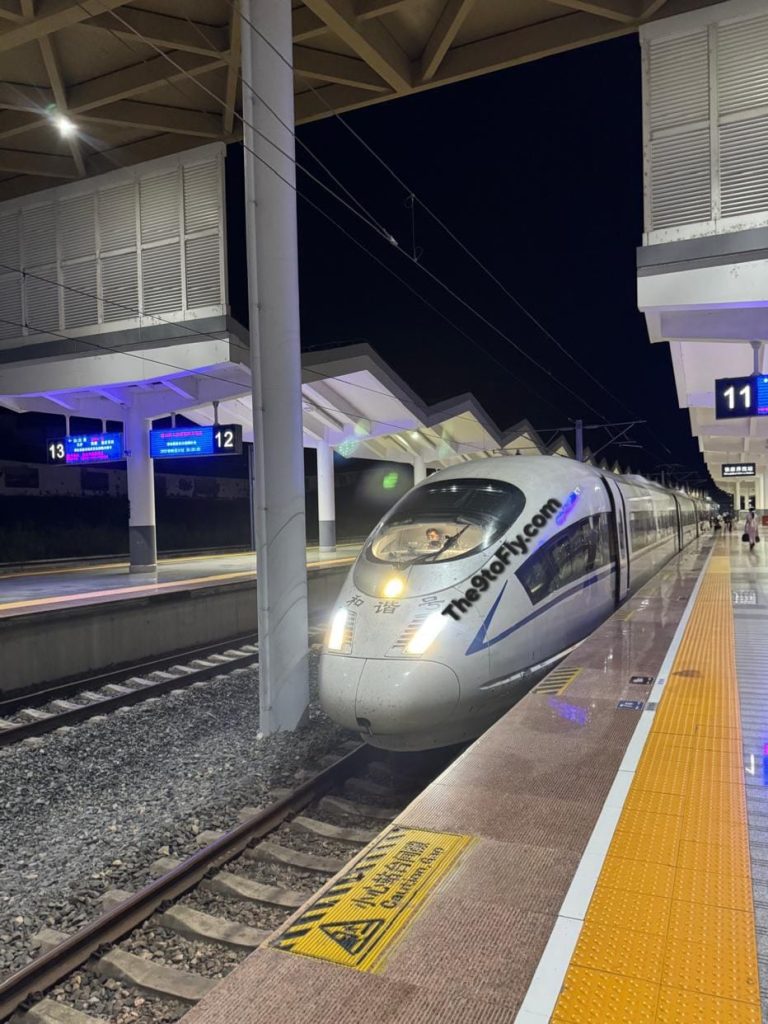
- Step 1: Zhangjiajie West to Changsha (high-speed train). We took an 8:30 PM train and arrived in Changsha around 10:30 PM. Clean, comfortable, super fast.
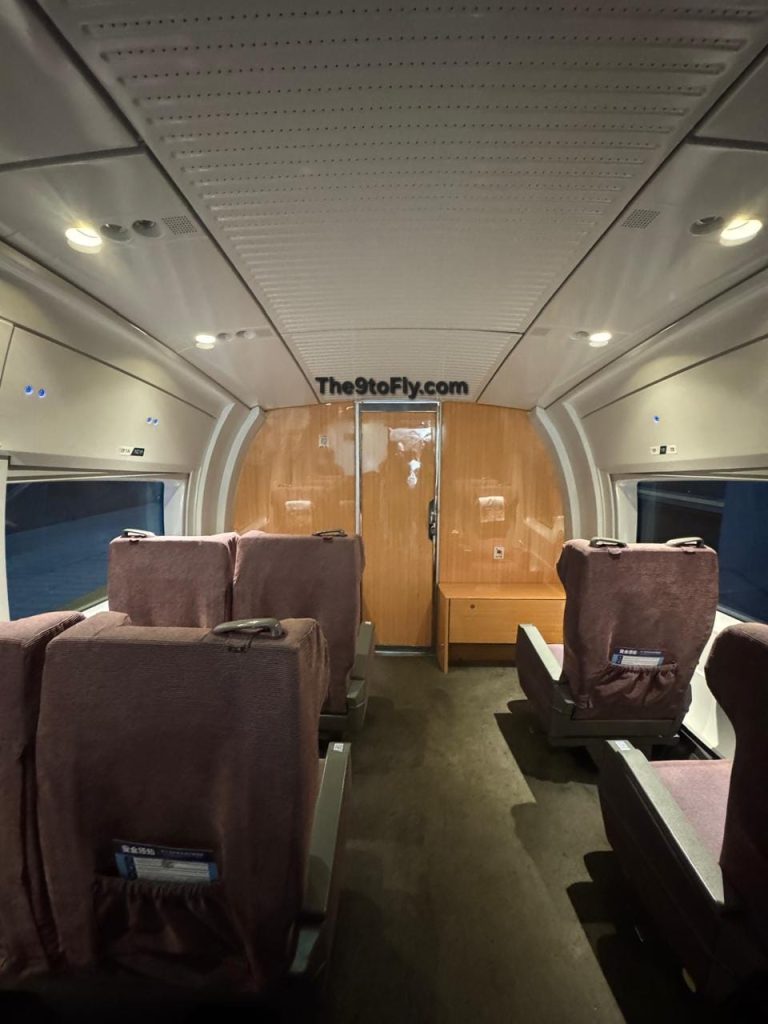
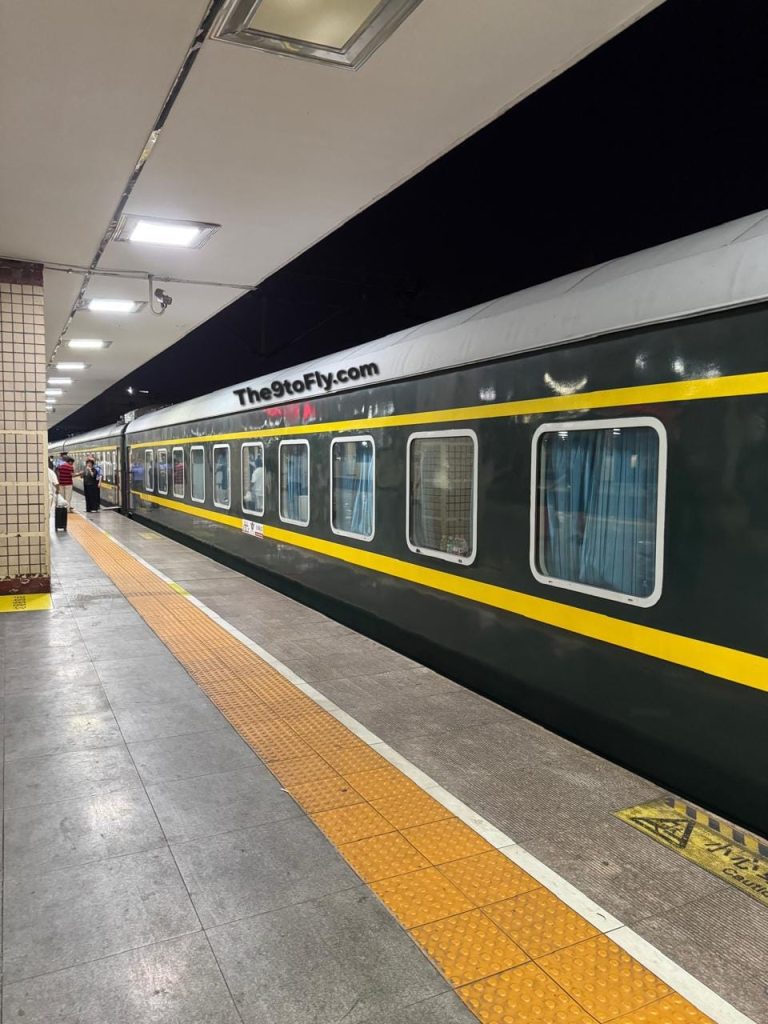
- Step 2: Changsha to Shangrao (overnight sleeper train). This was a regular local train with sleeping berths, departing Changsha at 12:30 AM and arriving at Shangrao around 7:30 AM. We were the only foreigners on board and slept the whole way. Clean & comfortable.
- Step 3: Shangrao station to Wangxian Valley (taxi). About 1.5 hours and CNY 120. There’s supposedly a local bus from Shangrao East Bus Station (around CNY 30), but we couldn’t find it and none of the translation apps were helping. The taxi was easier and honestly not that expensive.
Pro tip: Book all your train tickets through trip.com. The official Chinese railway website is there but it was confusing to use as a foreigner. Trip.com made the booking process painless and your passport details get linked automatically.
From Other Cities
If you’re coming from Shanghai, Nanchang, or Huangshan, the easiest route is a high-speed train to Shangrao Railway Station, then a taxi or bus to the valley. Trains from Shanghai Hongqiao to Shangrao take about 3 hours.
Where to Stay
There are two main options for accommodation near Wangxian Valley:
Option 1: Cliffside Homestays Inside the Valley
There are a few cliffside homestays built into the scenic area itself. The views are stunning and you get to wake up inside the valley, but they’re expensive (CNY 800 to 2,000 per night) and the reviews are mixed. Unless you really want the inside-the-valley experience, we’d skip them.
Option 2: Small Hotels and Homestays Nearby (What We Did)
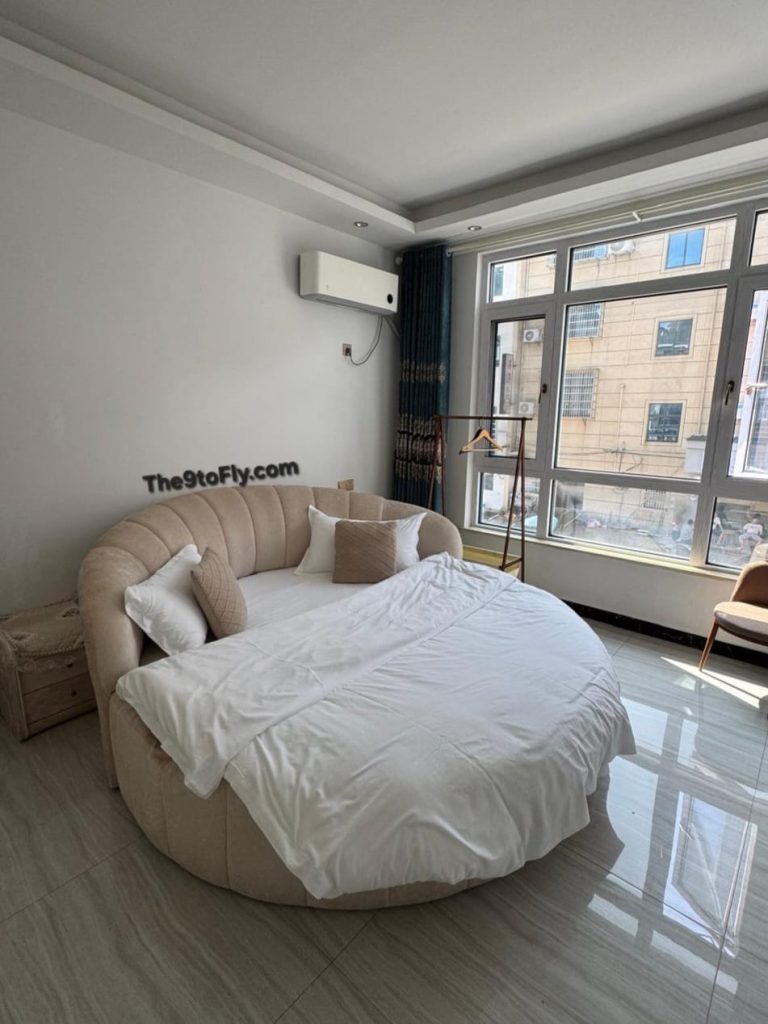
We stayed at Jiangnan Xiaozhu Ererjiang Xunwu Yashe, a small family-run hotel about 10 to 15 minutes by car from the valley entrance. The room was clean, comfortable, and cheap, and the bed was one of the better ones we had on the whole China trip.
The best part was the host. He spoke almost no English but communicated through a translator app and offered us free pickup from and drop-off to Wangxian Valley in his own car. We messaged him through Trip.com app when we were ready to leave and he showed up within 10 minutes. That alone saved us a ton of time and stress.
Prices for similar homestays in the surrounding villages range from CNY 180 to 300 per night. Great value, and way more comfortable than you’d expect.
When to Visit
Wangxian Valley is open year-round, but some times are better than others:
- Spring (March to May): Mild weather, blooming flowers, fewer crowds. One of the best times to visit.
- Autumn (September to November): Our favourite season for Wangxian. Cool, dry, beautiful colours, smaller crowds.
- Summer (June to August): Hot and humid, but rafting and water activities are in full swing. Go early morning or evening to avoid the heat.
- Winter (December to February): Quieter and colder. Snow can make it look magical but some activities shut down.
Avoid: Chinese National Day (first week of October), Labour Day (first week of May), and Chinese New Year. The valley gets packed with domestic tourists, ticket prices go up, and accommodation rates double. Not fun.
Entrance Tickets and Opening Hours
Here’s everything you need to know about tickets before you go:
- Adult ticket: CNY 120 per person (CNY 140 during major holidays)
- Child (1.2m to 1.5m) or senior 65 to 70: CNY 70 to 80
- Under 1.2m or over 70: Free
- Rafting combo: CNY 180 to 268 depending on the package (separate ticket, not included in entry)
- Opening hours: 9:30 AM to 11:00 PM (last entry at 9:00 PM)
- Important: No re-entry. Once you leave, your ticket is done.
You can buy tickets at the main entrance with your passport, no need to book in advance. We bought ours at the gate and it was quick, no queue to speak of on a regular weekday afternoon.
Pro tip: Because there’s no re-entry, plan your visit for the full afternoon-into-evening window. That way you get the daytime scenery, the sunset, and the night lights in one ticket. This is probably the single most important tip in this whole guide.
Our 1-Day Wangxian Valley Itinerary
We arrived at our hotel around 10:30 AM after the overnight train. It was sunny and we were exhausted, so we took a proper nap until about 2:30 PM. Our host drove us to the valley entrance around 3:00 PM, and we stayed until 9:00 PM. That gave us six solid hours inside, which was perfect.
Here’s how we’d break it down if you’re starting fresh:
3:00 PM to 5:00 PM: Explore the Cliffs and Stilt Houses
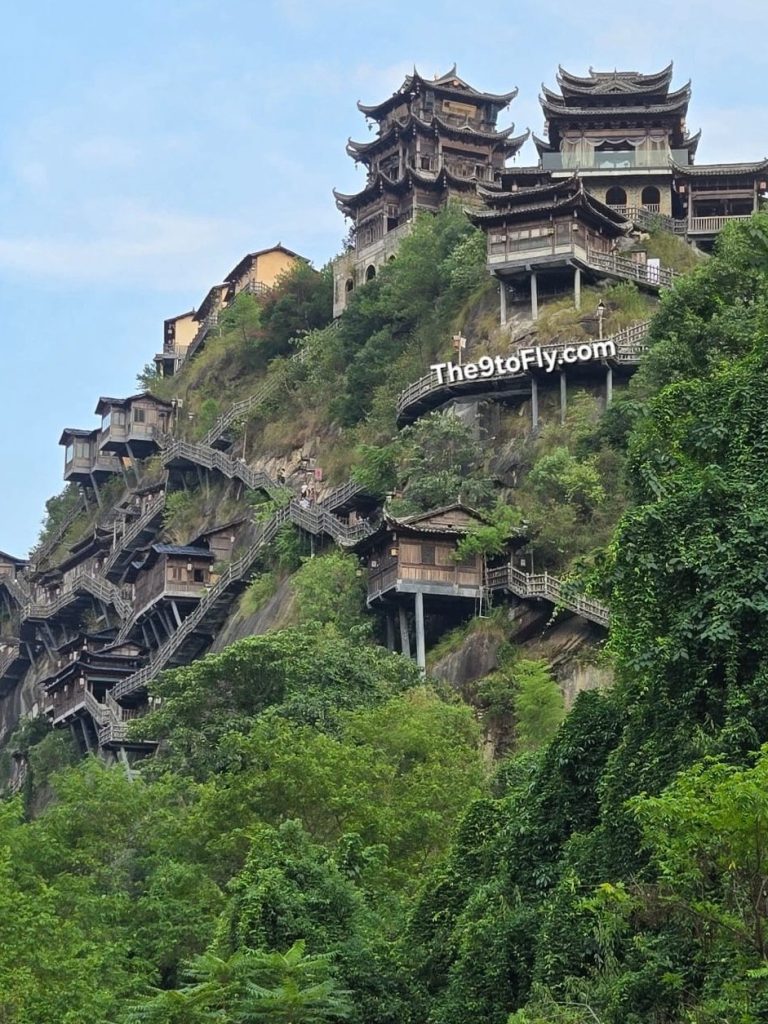
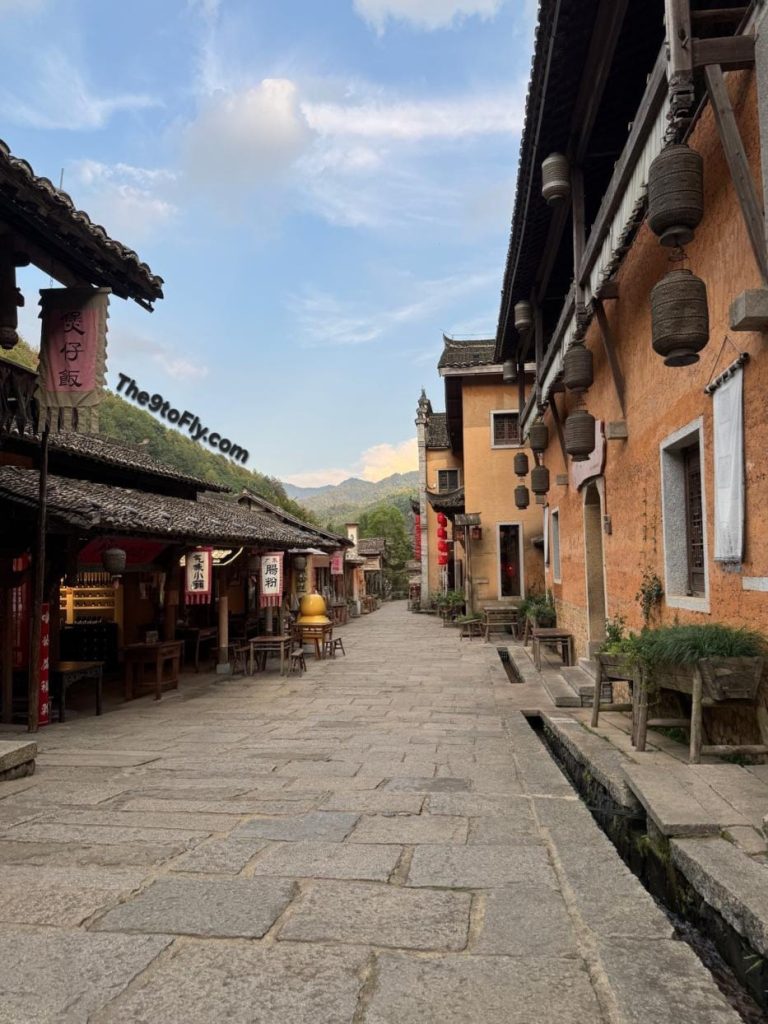
Once you walk through the main gate, the paths start to open up and lead you in different directions. Some go up the cliff, some go along the stream, and some cross over the valley on stone bridges. We went up first.
The stairs wind through wooden walkways and covered staircases, and every few minutes there’s a new viewpoint or photo spot. The cliff houses are incredible to see up close. Annie got some of her best shots of the trip here. If you love photography, bring a wide lens because the cliffs are massive and hard to capture otherwise.
5:00 PM to 6:30 PM: Portrait Sketch and Small Shops
On our way down, we stopped at a small shop where a local artist was doing colour portrait sketches. Me and Annie sat for him, and it took about 40 to 45 minutes. He did the whole thing in colour, not just pencil, and framed it at the end. While he was working, a small crowd of Chinese visitors gathered to watch, and for about an hour we felt like mini celebrities. It was easily one of our favourite moments in China.
There are dozens of small shops and craft stalls scattered around the valley. You can make your own souvenirs at some of them, including engraved wooden stamps, painted fans, and woven baskets. Most of it felt authentic, not the usual mass-produced tourist stuff you see at other Chinese attractions.

6:30 PM to 7:30 PM: Sunset and Food Street
Sunset is when things start getting interesting. The light softens, the cliffs take on a warm colour, and the first lanterns start switching on. Head to the main food street around this time and graze your way through the stalls.
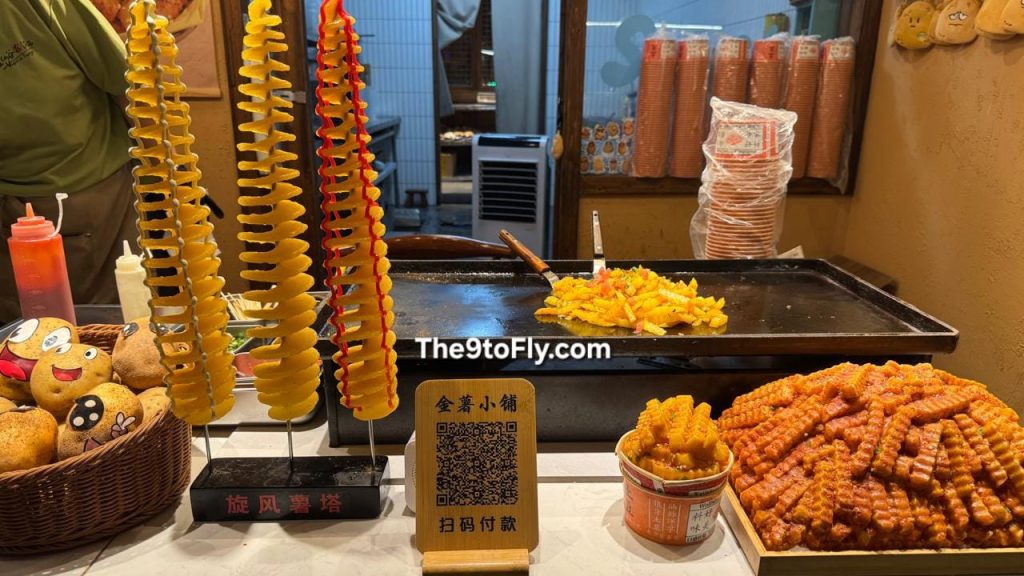
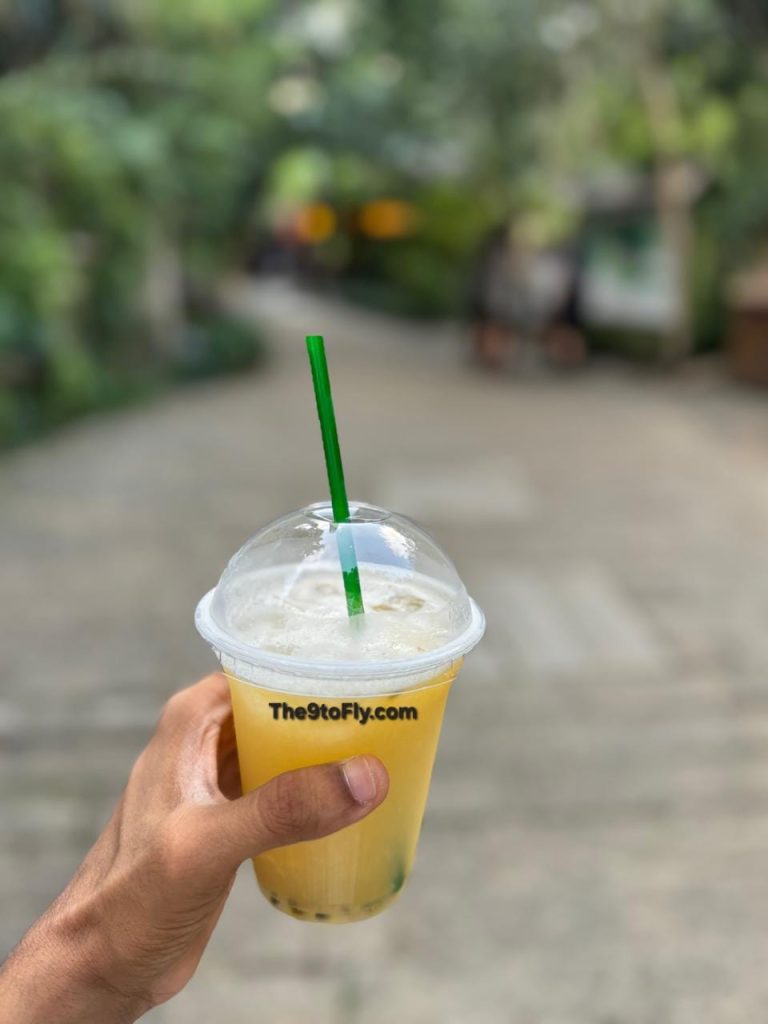
We had the famous twisted potato skewers, a fresh fruit punch, and some soda. Vegan options are limited but manageable. We’ll cover that properly below.
7:30 PM to 9:00 PM: Night Lights and Bonfire Dance
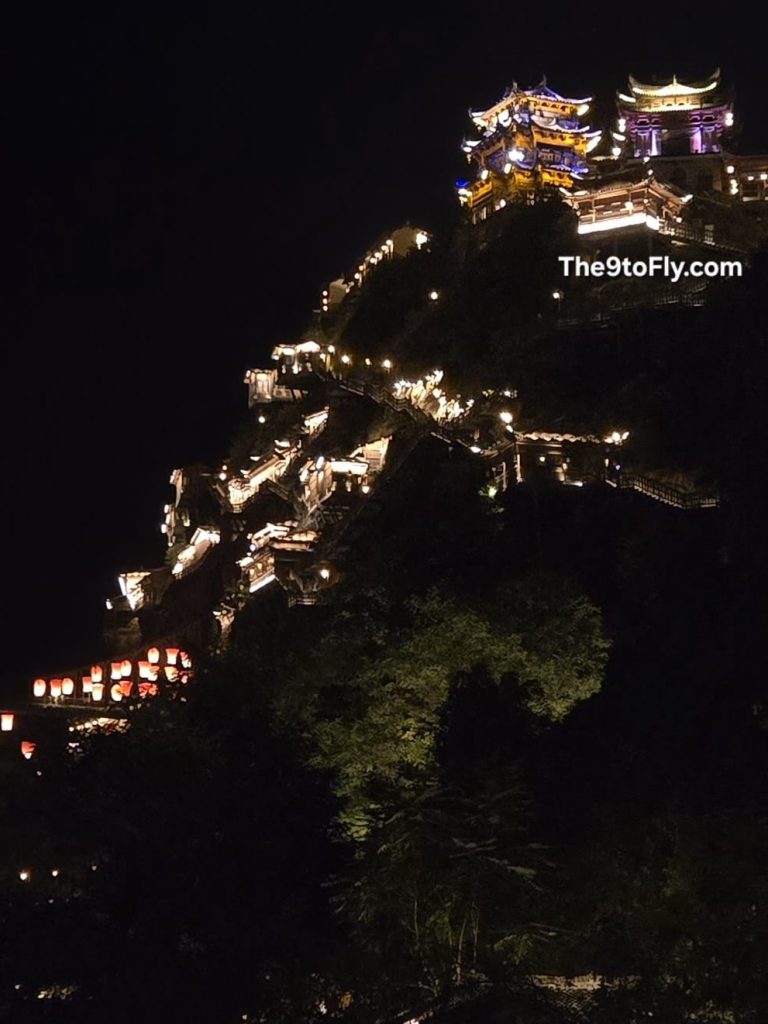
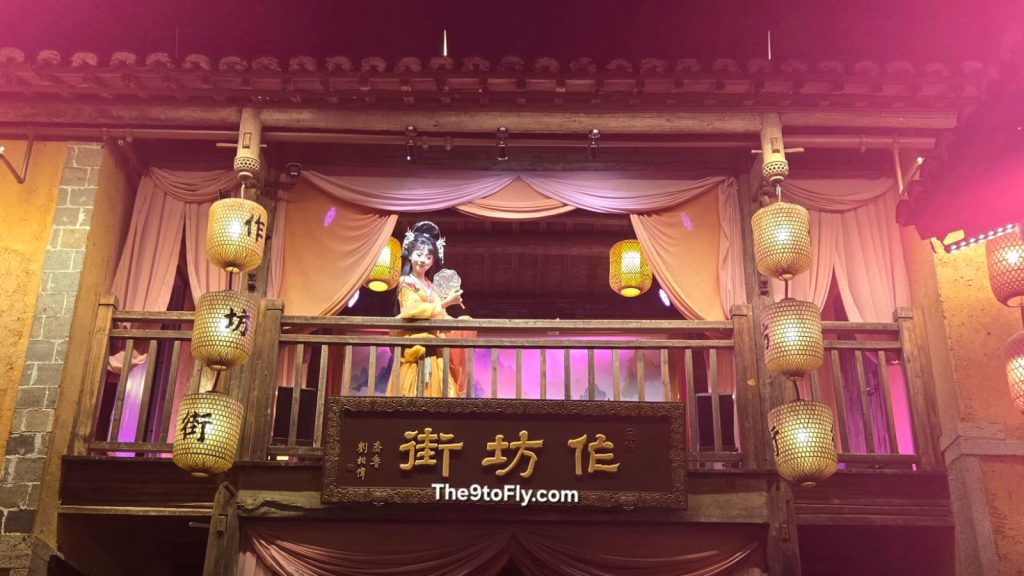
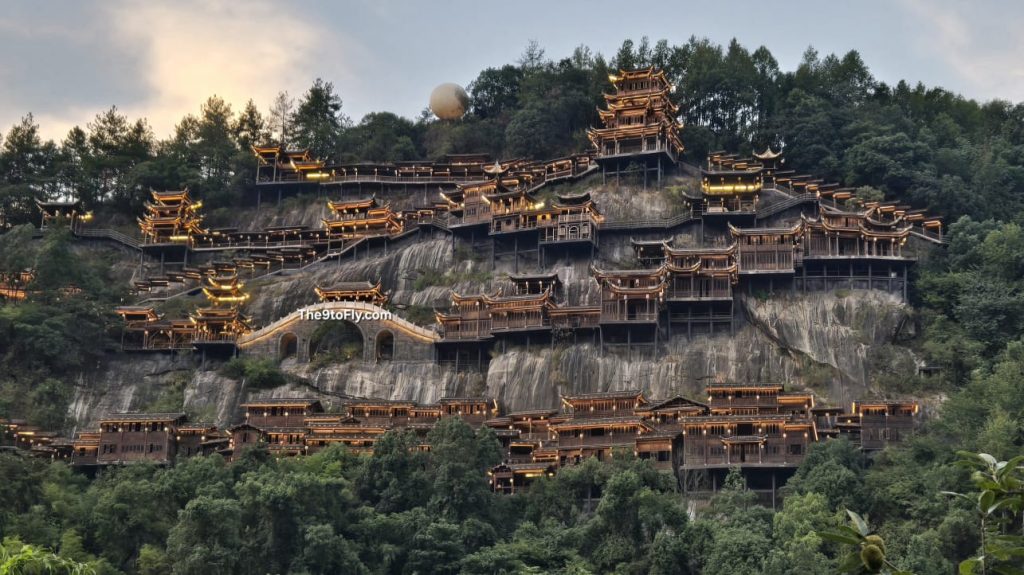
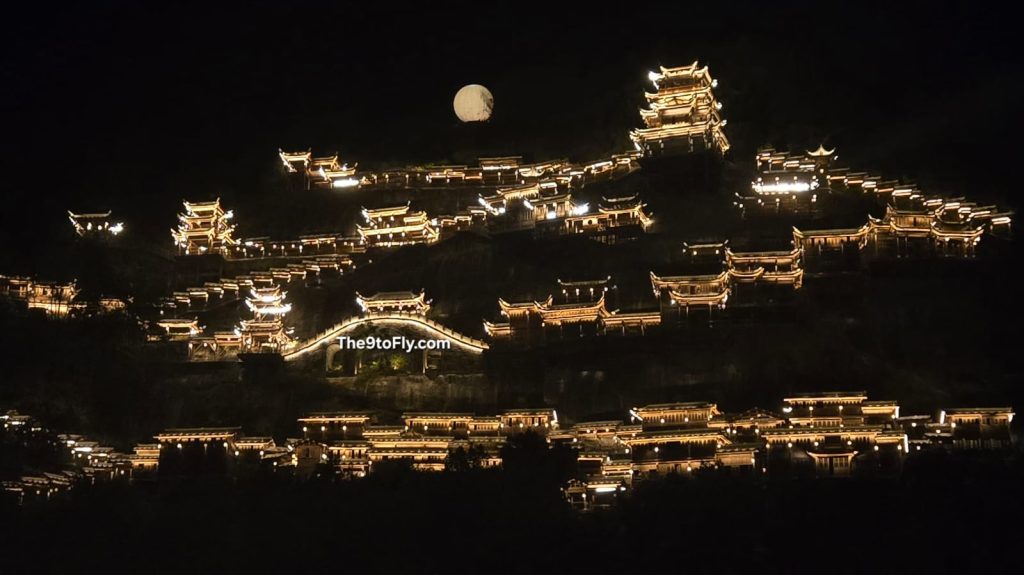
This is the highlight of the whole visit. Once the sun’s fully down, the entire valley lights up. Lanterns glow from every stilt house, beam lights sweep across the cliffs, and there’s a huge fake moon they put up behind the tree line that made us laugh but also looked kind of magical.
Around 7:45 PM, there’s a bonfire dance performance in the main square. Women in traditional dress dance around a fire pit while music plays and the cliffs light up around them. We also caught a fire-breathing show nearby (the kind where performers blow flames from their mouths), and there’s usually a mini DJ-style dance circle afterwards where locals join in. We mostly just watched, but it was a great atmosphere.
9:00 PM: Heading Back
We messaged our host through Trip.com app at around 8:45 PM and he met us at the entrance by 9:00 PM. Back at the hotel, exhausted and happy, by 9:30 PM. The next morning we were on a train to Shanghai.
What to Expect at Night
We kept hearing that the night views were the best part, and it’s completely true. Photos and videos don’t do it justice. When the sun goes down, the valley transforms into something that genuinely feels like a fantasy movie set. The cliff houses glow from the inside, lanterns hang everywhere, and the whole place has this warm, storybook quality that’s hard to describe.
If you can only visit during the day, you’ll still enjoy it. But if you can stay for the night lights, do it. That’s what makes Wangxian Valley different from other scenic areas in China.
Food and Vegan Options
The food street has loads of options. Noodle bowls, dumplings, grilled corn, tapioca desserts, fresh fruit drinks, and a bunch of local Jiangxi specialities like taro dumplings in broth. Prices are fair for a tourist spot, around CNY 15 to 30 per item.
For vegans and vegetarians, the options are limited but doable. Here’s what worked for us:
- Twisted potato skewers (plain, no meat, usually safe)
- Fresh fruit cups and fruit punches
- Steamed vegetable buns (check filling first)
- Stir-fried greens at the sit-down restaurants (ask using Alipay’s translator)
- Packaged snacks from the small grocery stalls scattered around
We’d recommend carrying some backup snacks from a supermarket before you come in. Cup noodles, nuts, crackers, fruit, whatever suits you. It just keeps things flexible.

Practical Tips
- Download Amap (Gaode Maps) before you arrive. Google Maps doesn’t work properly in China. Amap is the one everyone actually uses.
- Set up WeChat Pay and Alipay before you come. Most stalls and small shops don’t take cards. Cash works at the main ticket office but not much else.
- Carry your passport. It’s needed at the ticket counter and at accommodation check-in.
- Wear proper shoes. There are a lot of stone steps, wooden stairs, and uphill walking.
- Bring a portable charger. Your phone will take a beating from photos, videos, and maps.
- Learn a few basic Mandarin phrases or rely on Google Translate / Alipay’s built-in translator. Very few people here speak English.
- Don’t rush. Six hours inside is about right. The more the better. Any less and you’ll feel like you missed the best parts.
FAQs
Is Wangxian Valley worth visiting?
Yes. If you like photography, cliff side scenery, and atmospheric evenings, it’s one of the most unique spots in China. We were sceptical going in because the buildings aren’t ancient, but once you’re there, it really doesn’t matter. The night lights alone are worth the trip.
How long should you spend in Wangxian Valley?
One full day is enough. Ideally, you want to arrive around 2:00 to 3:00 PM and stay until 9:00 PM to catch the sunset and night lights. Any less than five or six hours and you’ll feel rushed.
Is Wangxian Valley a theme park?
Sort of, but not really. The scenery (cliffs, waterfalls, streams, mountains) is all real and naturally formed. The stilt houses are modern reconstructions in a traditional style. We’d call it a scenic area rather than a theme park. It feels more authentic than a Disney-style attraction but less authentic than a genuinely ancient town like Fenghuang.
How do I get to Wangxian Valley from Shanghai?
Take a high-speed train from Shanghai Hongqiao to Shangrao Railway Station (about 3 hours). Then take a taxi to Wangxian Valley (about 1.5 hours, CNY 120 to 150). The whole trip takes around 5 hours one way, so plan for an overnight stay near the valley.
Are there English signs or guides?
Some signs have English translations but not all. There are no official English-speaking guides inside the valley. You’ll mostly rely on Google Translate or Alipay’s translator for menus and shop interactions. It’s manageable but bring patience.
Planning the Rest of Your China Trip?
If you’re heading to or coming from Zhangjiajie like we did, these guides will save you hours of planning:
- Zhangjiajie 3-Day Itinerary: A Day-by-Day Travel Guide — Our exact day-by-day breakdown of how we spent 3 days in Zhangjiajie, including the Avatar Mountains, Tianmen Mountain, Yellow Dragon Cave, and the Grand Canyon Glass Bridge.
- 15 Best Things To Do in Zhangjiajie, China — The full list of everything worth doing in Zhangjiajie, from helicopter rides over the Avatar Mountains to bungee jumping off the Glass Bridge and catching the Charming Xiangxi night show.
Zhangjiajie pairs really well with Wangxian Valley. You can knock out both in about 5 days if you plan the train connections right.
Final Thoughts
Wangxian Valley completely surprised us. We went in half-sceptic because we’d read it was a reconstructed village, and we weren’t sure if it would feel fake or theme-park-ish. Instead, we left feeling like we’d stumbled onto one of the best-kept secrets in China. The scenery is genuine, the atmosphere at night is unlike anywhere else we’ve been, and the whole experience felt different from the usual big-name Chinese attractions.
If you’re already planning a Zhangjiajie or Huangshan trip, it’s worth the detour. Book your trains early through trip.com, stay at a small homestay near the entrance, plan for the full afternoon-to-evening window, and give yourself time to just wander and soak it in. You won’t regret it.
Next up on our China trip was Shanghai. Follow us here for that post coming soon.
Got questions about visiting Wangxian Valley? Drop them in the comments or send us a DM. We love helping other travellers plan this kind of trip.

![One Week in China: An Off-the-Beaten-Path Itinerary for First Timers [2026]](https://the9tofly.com/wp-content/uploads/2026/04/Furong-Town-768x432.jpeg)
![Zhangjiajie 3-Day Itinerary: All You Need to Plan Your Trip [2026 Guide]](https://the9tofly.com/wp-content/uploads/2026/04/Zhangjiajie-1-768x432.jpeg)
![One Day in Shanghai: The Perfect Itinerary for First-Time Visitors [2026]](https://the9tofly.com/wp-content/uploads/2026/04/WhatsApp-Image-2026-04-25-at-00.11.25-768x432.jpeg)