
One Day in Shanghai: The Perfect Itinerary for First-Time Visitors [2026]
The9toFly contains affiliate links. If you make a purchase using one of the links below, we may receive compensation at no extra cost to you. We only recommend products and services we use and trust. Read our disclaimer for more information.
Have a layover or just one day in Shanghai…
Full disclosure: Shanghai wasn’t really our main destination. Our China trip was all about Zhangjiajie and Wangxian Valley, the rural, mountain-and-cliffside side of China that most people don’t see on a first visit. Shanghai was our exit point. We had a flight home from Pudong Airport and figured if we were passing through anyway, we might as well stay a night and see what the fuss was about.
So this guide is not a deep-dive into everything Shanghai has to offer. It’s specifically written for people who have a layover, a single evening, or about 24 hours in the city and want to make the most of it. If you have two or three days in Shanghai, you’ll be able to cover much more ground. But for one day? The Bund area is where you want to be, and this is exactly how we did it.

Coming straight from five days in rural China, walking into Shanghai felt like arriving in a completely different country. The scale of it, the skyline, the traffic, the sheer number of people. It was a lot to take in all at once. But the Bund at night made all of that worthwhile. We’ve been to London, Tokyo, and plenty of other big cities, but the view across the river in Shanghai at night is genuinely one of the best things we’ve seen anywhere.
How We Got to Shanghai (from Wangxian Valley via Shangrao)
We left our hotel near Wangxian Valley around 7 AM and got to Shangrao Railway Station about an hour later by taxi. From Shangrao, we took a high-speed train directly to Shanghai. The journey takes about 2.5 hours on the fastest services, and there are over 50 trains a day running between Shangrao and Shanghai Hongqiao, so there’s no shortage of options. We were pleasantly surprised how beautiful the railway stations in rural China are. If you want a native experience, do opt for the high-speed trains.
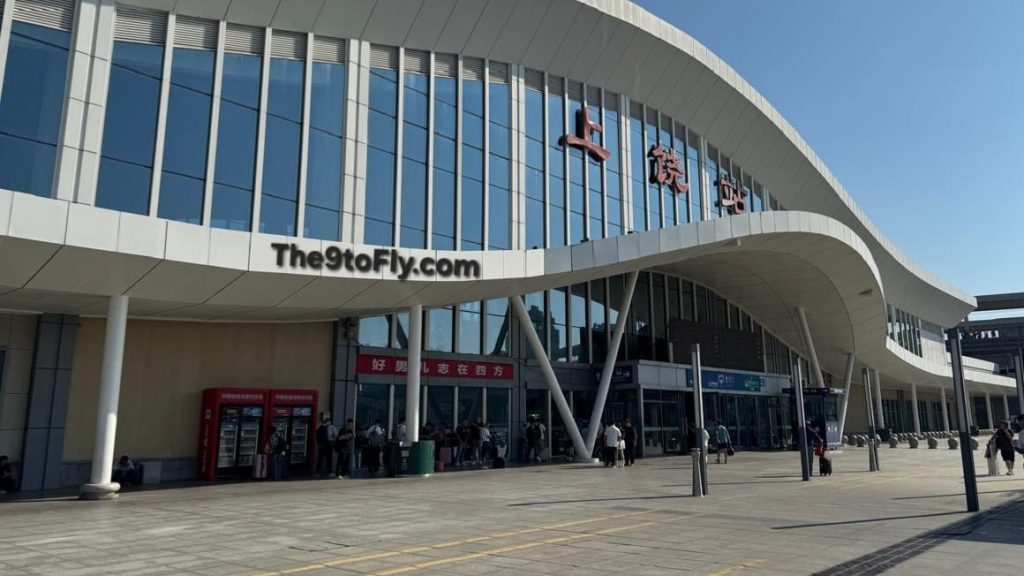
We arrived at Shanghai Hongqiao station around 12:30 PM. From there, we grabbed a taxi to our hotel in the Bund area. Simple in theory. Less simple in practice, because Shanghai traffic is something else entirely. More on that below.
Train tip: Book through trip.com if you’re a foreigner. We found the official Chinese railway site a bit confusing. Trip.com was easier to navigate through!
Where We Stayed
We stayed at HomeInn Selected Hotel, in the Bund area of central Shanghai. The interiors were nicer than anything we’d stayed in during the rural parts of our trip, comfortable rooms, clean, and well-designed. It was pricier than our Wangxian Valley homestay, but that’s just how it goes in Shanghai. Being in the Bund area means paying Bund area prices.
One warning: The hotel is in a narrow alleyway and a bit difficult to find. Our taxi driver didn’t speak English, and the translation apps were struggling. Save the hotel’s address in Chinese characters on your phone before you arrive and show it to the driver.
Getting Around: Taxis, Metro and the Maglev
Taxis
Taxis are metered, reliable, and pretty easy to find in Shanghai. The fares are higher than anywhere else we visited in China, but still reasonable compared to most major cities.
Current rates (as of 2025/2026):
- Starting fare: CNY 14 for the first 3 km (new energy taxis start at CNY 16)
- After first 3 km: CNY 2.7 per km
- Over 15 km: a 50% surcharge kicks in
- Night rate (11 PM to 5 AM): fares increase by about 30%
- Slow traffic waiting charge: equivalent to 1.5 km fare per 4 minutes
That last one is where it stings. We took a taxi 2 kilometres back to our hotel one evening and it took an hour. The meter just kept ticking through the traffic. For short distances, walking is almost always faster. We learned this the hard way.
Always make sure the driver starts the meter when you get in. DiDi (China’s ride-hailing app) also works well in Shanghai and shows the fare upfront before you confirm, which is useful.
Shanghai Metro
Honestly, the metro is the smarter option for getting around the city. It’s fast, clean, cheap (CNY 3 to 7 per trip depending on distance), and completely avoids the traffic problem. The network covers all the main tourist areas including the Bund, Nanjing Road, and Pudong. Download the Metro Shanghai app before you go and pick up a transit card at any station.
If we were doing this trip again, we’d use the metro for most day-to-day travel in the city and save taxis for the airport or late nights with heavy bags.
The Maglev Train (Pudong Airport)
If you’re flying in or out of Pudong Airport, there’s a magnetic levitation (Maglev) train that connects the airport to Longyang Road metro station in about 8 minutes. It runs at up to 431 km/h, which is insane to experience, and costs CNY 50 one-way (CNY 40 if you show a same-day flight ticket). From Longyang Road you can connect to the rest of the metro network. If you’re arriving at Pudong and want to get to the Bund area quickly without sitting in airport taxi queues, this is the way to go.
The Sightseeing Bus: Routes, Stops and How It Works
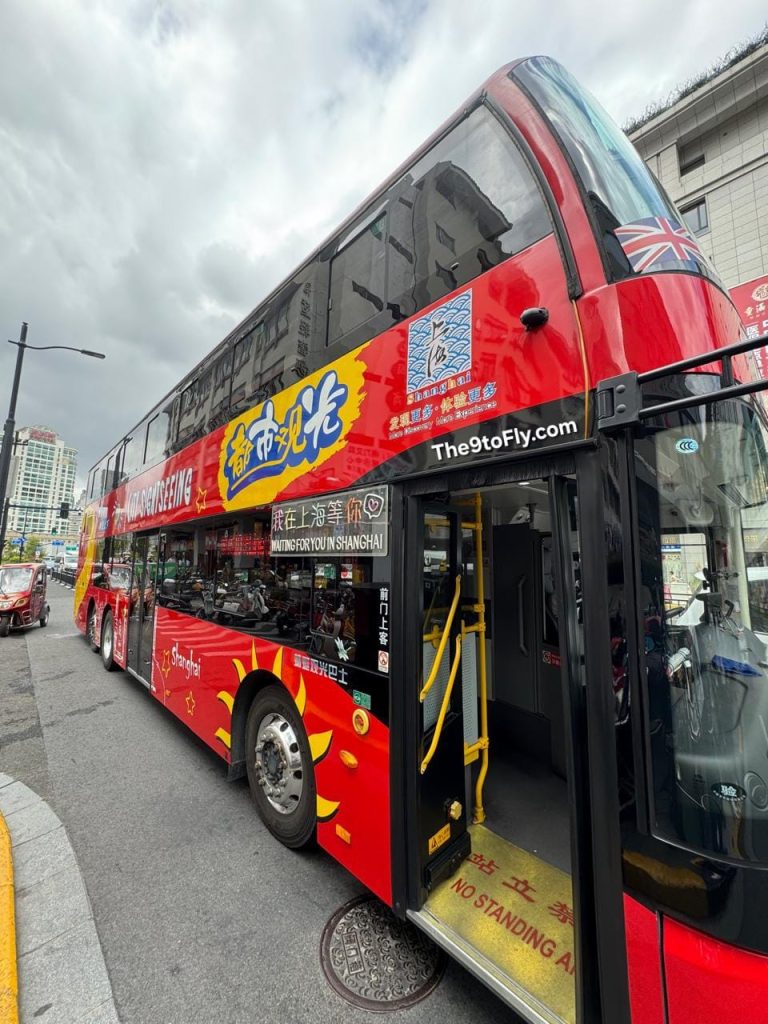
This was how we spent most of our time in Shanghai. There are a couple of companies running double-decker sightseeing buses around the Bund area. You’ll spot them easily: open-top, colourful, usually red or with colour-coded routes. Some operators also run enclosed buses, which are better on hot or rainy days.
The pass is valid for 24 hours from the time of purchase, which is why we could use it on both the evening we arrived and the morning of our second day. Each bus has an onboard audio guide available in multiple languages including English, so as you pass different streets and buildings, it explains what you’re looking at. That context makes the whole experience much more interesting, especially if you’re new to Shanghai.
Main Routes and Stops
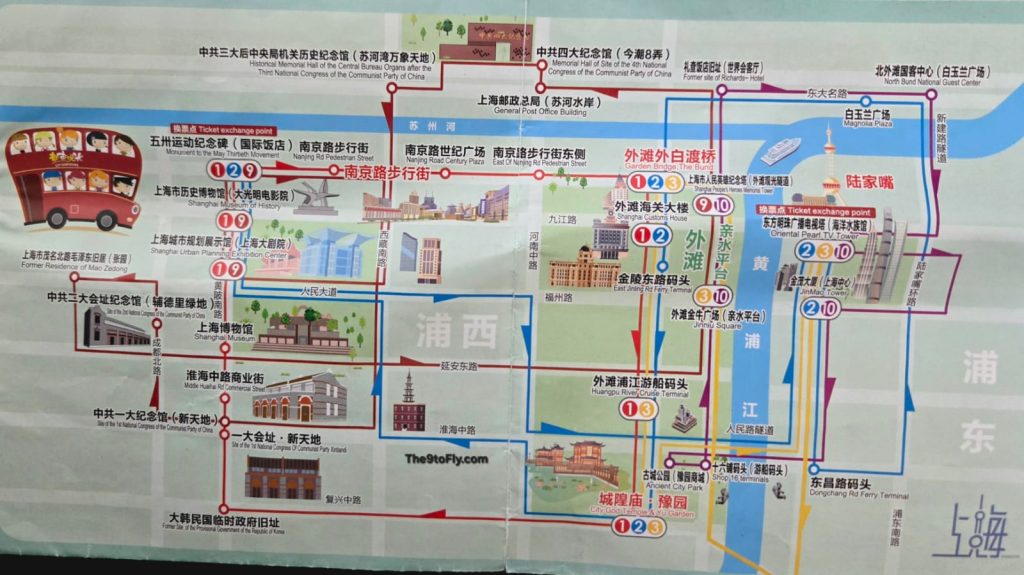
Line 1 (Red): Shanghai Museum, Urban Planning Exhibition Center, Shanghai Museum of History, Monument to the May Thirtieth Movement, Nanjing Road Pedestrian Street, Nanjing Road Century Plaza, East of Nanjing Road Pedestrian Street, Garden Bridge (the Bund), Shanghai Customs House, Huangpu River Cruise Terminal, City God Temple & Yu Garden, Former Site of the Provisional Government of Korea, Xintiandi, Middle Huaihai Road Commercial Street, Shanghai Museum
Line 2 (Blue) — Route Featuring “Story behind Old Architecture”: Monument to the May Thirtieth Movement, Oriental Pearl TV Tower, JinMao Tower (Shanghai Center), Dongchang Road Ferry Terminal, Magnolia Plaza, Garden Bridge (the Bund), Shanghai Customs House, East Jinling Road Ferry Terminal, City God Temple & Yu Garden, Monument to the May Thirtieth Movement
Line 3 (Yellow): Garden Bridge (the Bund), Huangpu River Cruise Terminal, City God Temple & Yu Garden, Oriental Pearl TV Tower, East Fuxing Road Ferry Terminal, Jinniu Square, Garden Bridge (the Bund)
Line 9 (Dark Red) — Closed on Mondays: Monument to the May Thirtieth Movement, Site of the 1st National Congress of the Communist Party of China, Site of the 2nd National Congress of the Communist Party of China, Shanghai Former Residence of Mao Zedong, Shanghai People’s Heroes Memorial Tower, General Post Office Building, Memorial Hall of the 4th National Congress of the Communist Party of China, Historical Memorial Hall of the Central Bureau, Urban Planning Exhibition Center, Shanghai History Museum, Monument to the May Thirtieth Movement
Line 10 (Purple) — Closed on Mondays: Ancient City Park, Shop 16 terminals, Jinniu Square, Shanghai People’s Heroes Memorial Tower, Former Site of Richards Hotel, North Bund National Guest Center, Oriental Pearl TV Tower, Pudong Development Exhibition Hall, JinMao Tower (Shanghai Center), Ancient City Park
Practical info:
- Tickets: 24-hour pass or 48-hour pass available. Buy at the ticket booths near the bus stops, or book through GetYourGuide or Klook in advance.
- You can hop on at any stop, but you’ll need to redeem your voucher at one of the main kiosks (People’s Square, the Bund, or Oriental Pearl Tower).
- Buses run roughly every 20 to 30 minutes depending on the route.
- Operating hours: 9:00 AM to 7:00 PM (some routes have Night Tour Lines operating from 4:30 PM to 9:00 PM)
Pro tip: Buy the pass in the afternoon and it stays valid through the following morning. That’s exactly the window we had, and we used it for both days without any issue.
Day 1 Afternoon and Evening
Afternoon: Train, Taxi, Check-In
We got to our hotel around 2:30 to 3:00 PM after a long morning of trains and traffic. Got freshened up and headed straight out. No time to waste.
We picked up the sightseeing bus pass near the Bund and jumped on the Red Route first. The bus takes you through the main streets of the Bund area, past Nanjing Road, the old colonial buildings, and eventually gives you a view of the Pudong skyline from across the river. The audio guide does a decent job of explaining what you’re looking at as you pass each stop.
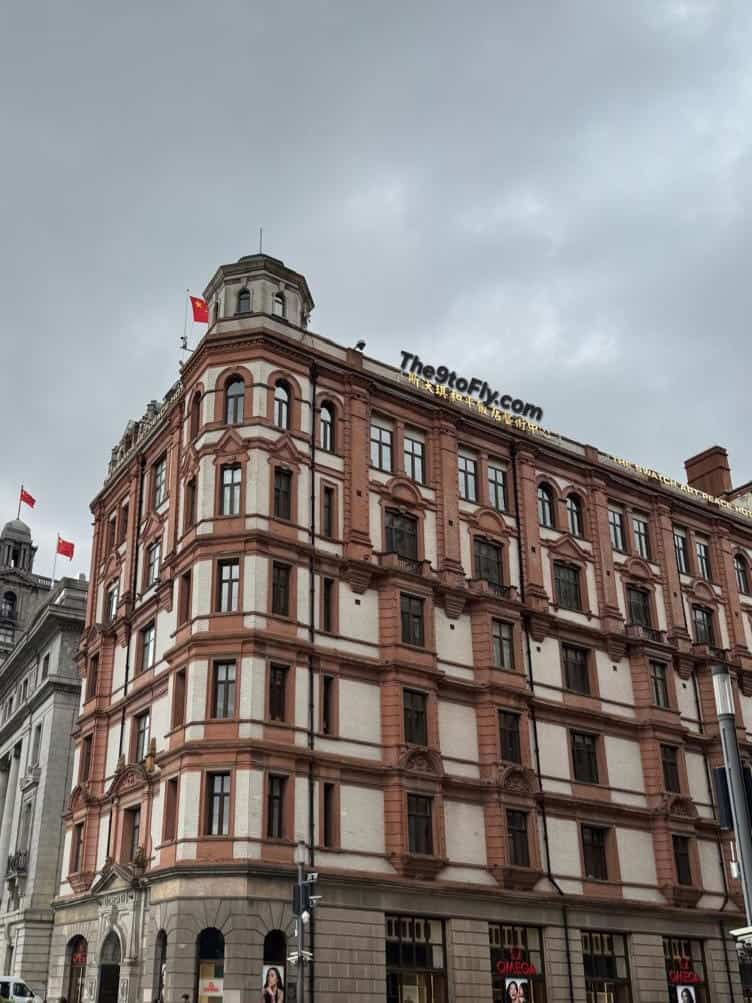
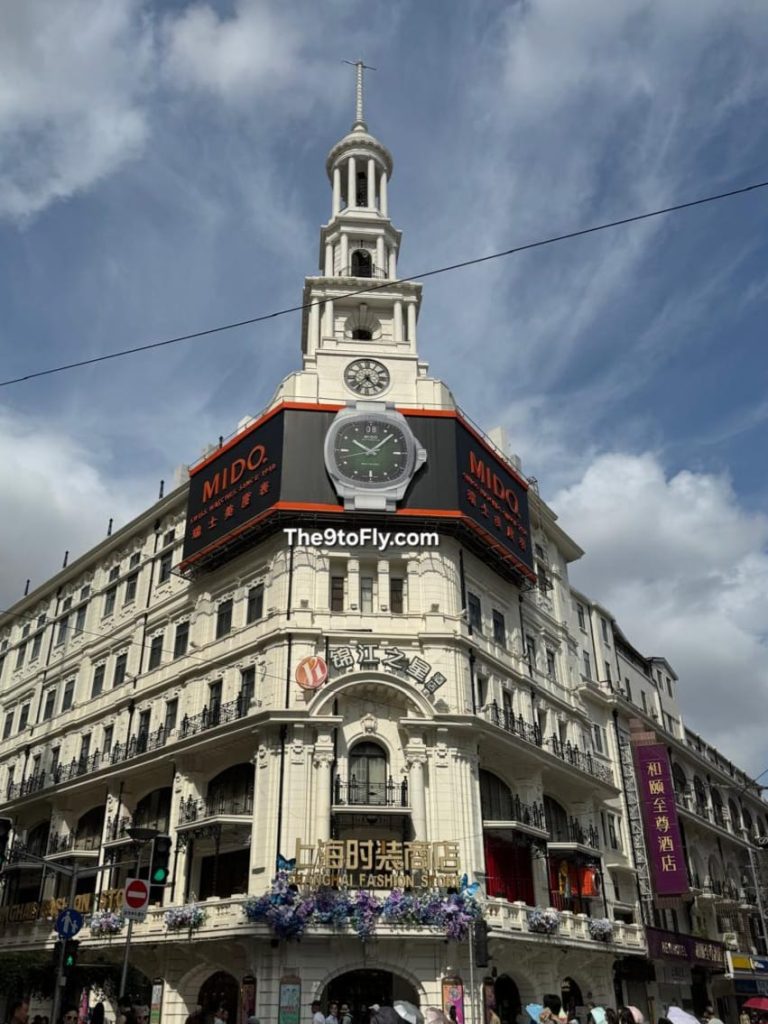
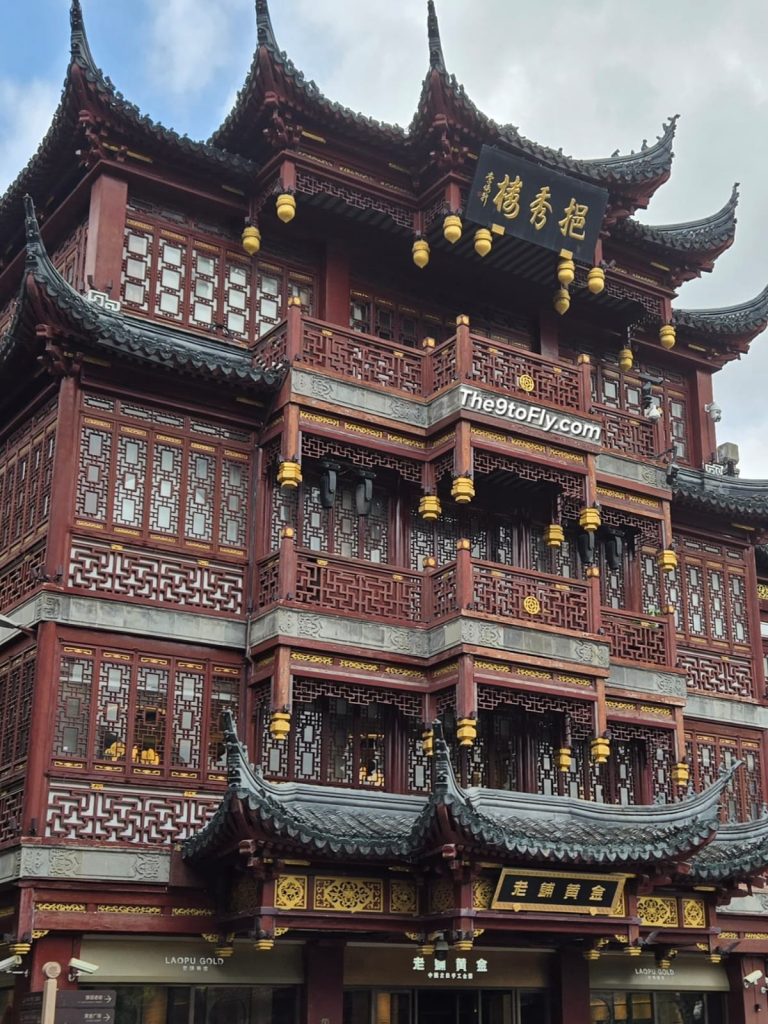
Nanjing Road is one of the world’s busiest shopping streets. We hopped off here for a bit to walk around. It’s lined with massive malls, local shops, and food stalls. Even if shopping isn’t your thing, just walking through it is an experience. The crowds, the lights, the scale of everything.
Evening: The Bund After Dark
The best version of the Bund is at night. We got back to the waterfront around sunset and spent the next couple of hours just walking along the river and watching the Pudong skyline light up across the water. The old stone buildings behind you, the skyscrapers glowing in front of you, the river in between. It’s a lot to take in.
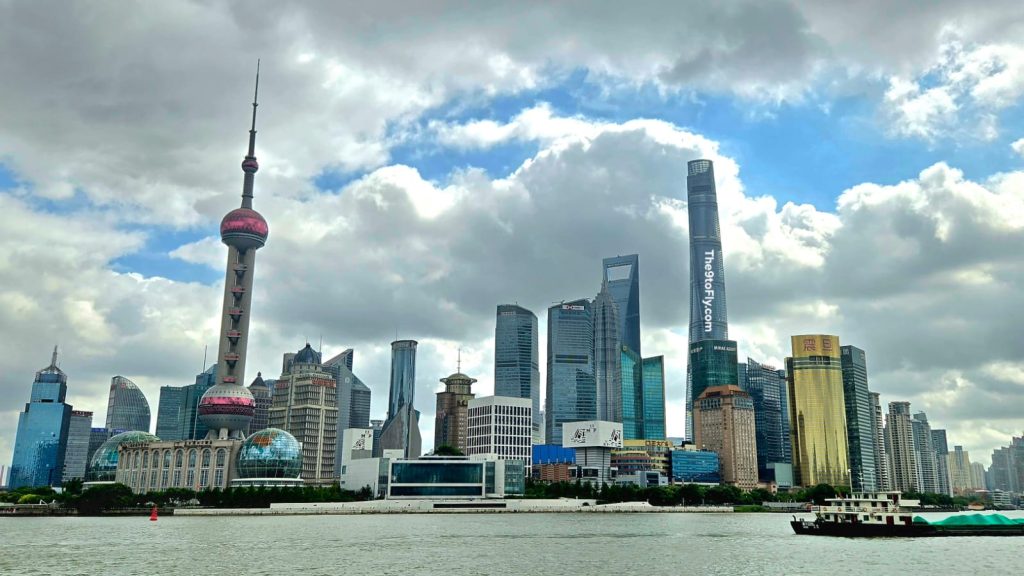
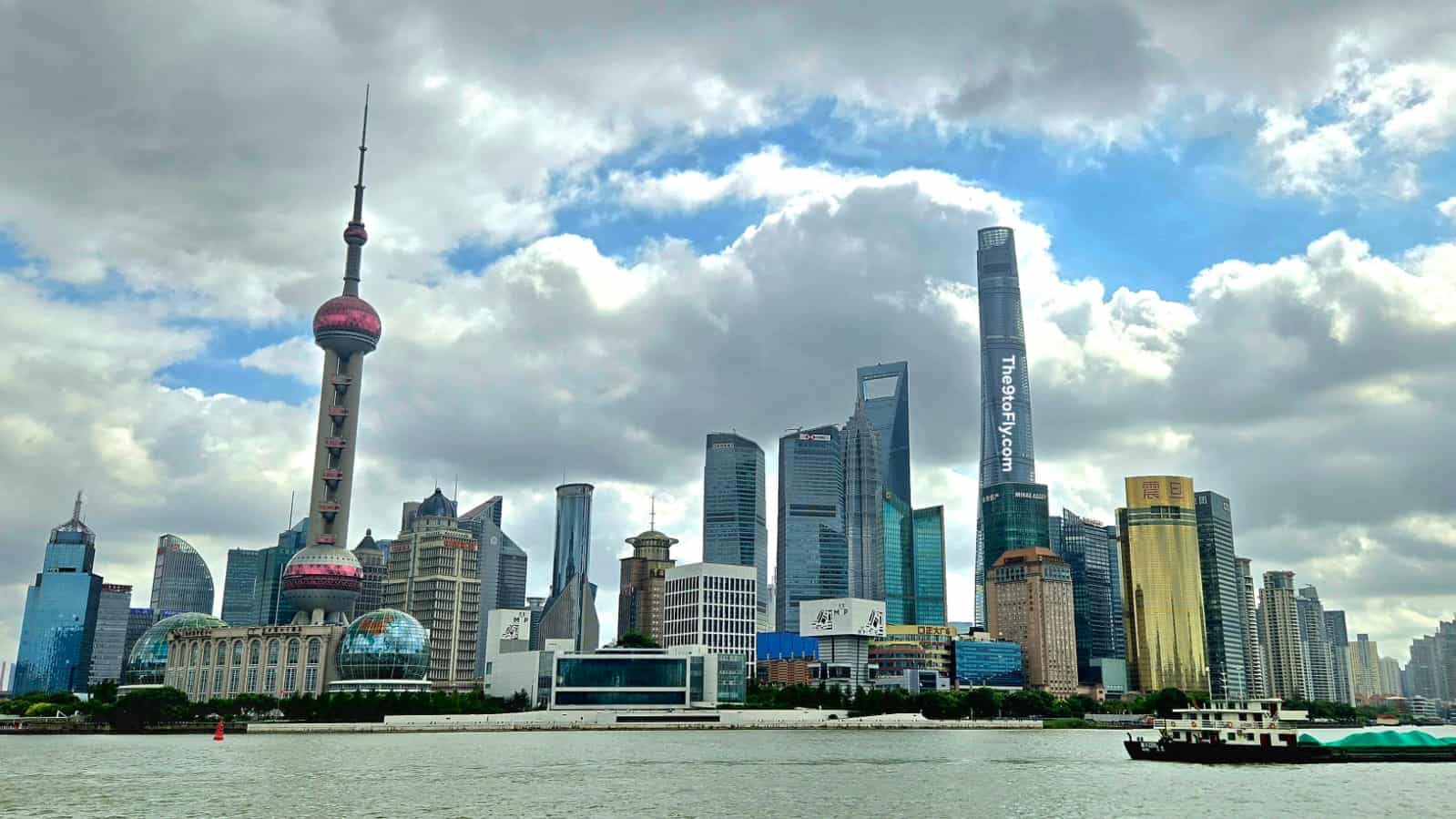
Across the river is Pudong, Shanghai’s financial district. The three towers you can’t miss:
- Shanghai Tower: 632 metres, the second tallest building in the world. Twisted glass design.
- Shanghai World Financial Center: 492 metres. Has a large opening near the top that everyone calls the bottle opener.
- Oriental Pearl Tower: 468 metres. The older, iconic one with the pink spheres. Very photogenic at night.
We walked the length of the Bund slowly, stopped for photos, and genuinely lost track of time. It was one of those evenings you don’t want to end.
Dinner
After the Bund, we stopped at a cafe for coffee and a sit-down. There are loads of options in the area, from high-end restaurants to quiet little spots down the side streets. We ended up at Subway for dinner. Not the most adventurous choice after a full China trip, but after five days of navigating menus we couldn’t read, pointing at something familiar felt like exactly what we needed. Zero regrets.
We tried to take a taxi 2 kilometres back to the hotel and it took an hour in evening traffic. If you’re in the Bund area on a weekday evening, just walk. The streets are safe, well-lit, and interesting. The taxi was a mistake.
Day 2 Morning: Last Loop Before the Airport
We checked out at noon, which gave us the whole morning to burn through the remaining hours on our bus pass.
Morning is the best time to see the Bund. There are fewer people, the light is good for photos, and you can actually stop and look at things properly. We did another loop on the Red and Blue routes, hopped off at a few stops we’d skipped the day before, and walked around a bit more. We caught stops including Yuyuan Garden, the Oriental Pearl Tower from the Pudong side, and a few streets around Xintiandi.
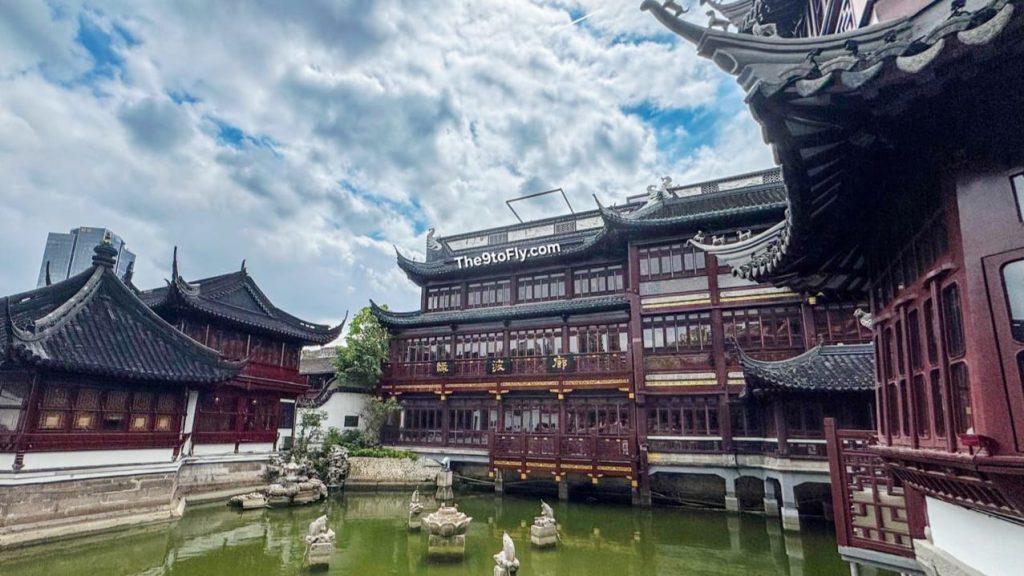
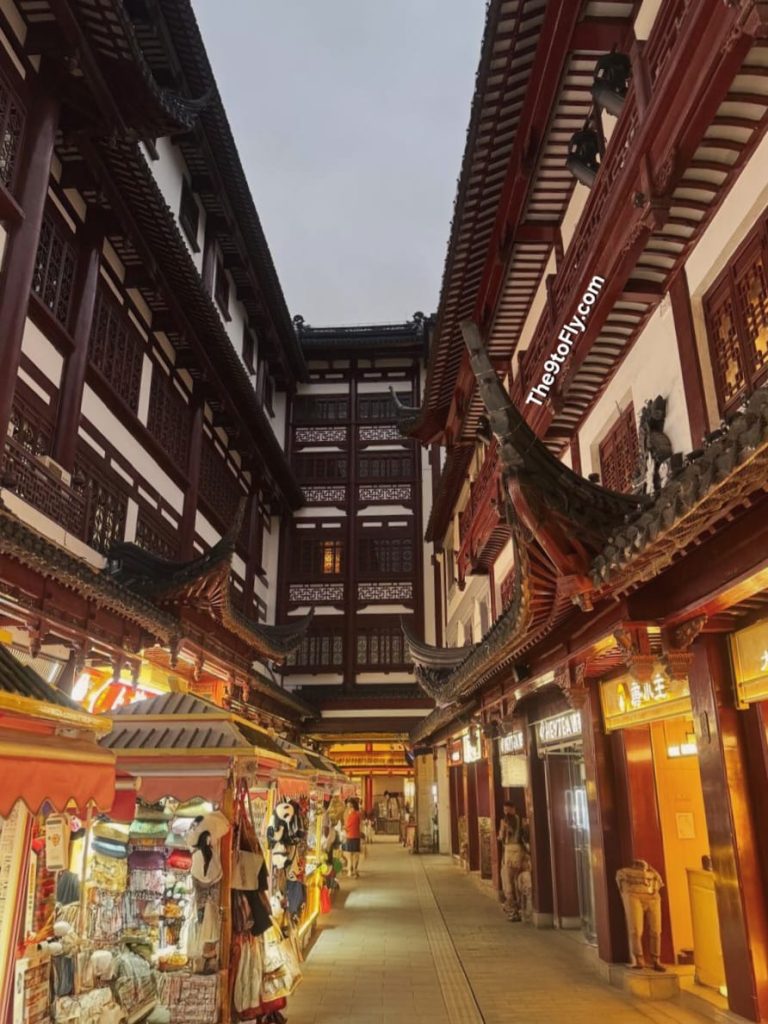
We grabbed a simple breakfast at a small shop near the hotel, walked back along the Bund one last time, then picked up our bags and headed to the airport.
Getting to Pudong Airport
Our flight was at 5 PM. We left the hotel around noon. With Shanghai traffic, give yourself at least 2 hours from the Bund area to Pudong Airport. The taxi took us just over an hour, and that was without any major holdups.
If you’re comfortable with your luggage, the fastest option is metro to Longyang Road, then the Maglev to the airport (8 minutes, CNY 50). If you have heavy bags or want a direct door-to-door ride, a taxi or DiDi is easier. Just leave more time than you think you need.
Lunch at Pudong Airport: The Highlight We Didn’t Expect
We had time to kill before our gate opened and found a small cafe in the departure terminal that was baking its own bread in-house. Proper pizza with fresh dough and good cheese. Kombucha that was actually good. And the staff spoke clear English, which after five days of relying entirely on translation apps, felt genuinely surreal.


We sat there way longer than we needed to. If you have a long wait at Pudong, explore the terminal properly before resigning yourself to a generic fast food chain. There are some decent spots in there.
Food in Shanghai
Shanghai’s food scene is huge, and we only scratched the surface. Around the Bund area you’ll find everything from street food to sit-down restaurants to international options. Here’s a quick rundown of what’s worth knowing:
For Vegetarians
Shanghai is significantly more manageable for vegetarians than rural China. Most restaurants have tofu and vegetable dishes. You’ll also find cafes around the Bund that serve Margherita pizza, which is an easy fallback when you’re not sure what’s in the local menu. Just point and order. It works.
For Vegans
Trickier, but still doable. Dedicated vegan restaurants do exist in Shanghai, mostly in the French Concession area which we didn’t get to cover. In the Bund area, your best bets are tofu-based dishes at local restaurants (use Alipay’s translator to explain what you need), fruit stalls, and the packaged snack shops you’ll find everywhere.
What We Actually Ate
Coffee at a Bund-area cafe. Subway sandwich for dinner. Breakfast from a small shop the next morning. And then genuinely good pizza and kombucha at Pudong Airport before our flight. Not the most adventurous food itinerary, but sometimes tired travellers just want to eat something easy.
If you have more time, Shanghainese soup dumplings (xiaolongbao) are a must. Nanjing Road and the streets around Yuyuan Garden have plenty of places serving them. Budget around CNY 20 to 40 for a basket.
Practical Tips for a Short Stay in Shanghai
- Save your hotel address in Chinese. Show it to the taxi driver on your phone. Don’t count on them knowing English or recognising the English transliteration of the address.
- Use the metro when you can. Traffic in Shanghai is genuinely bad, especially on weekday evenings. The metro is faster, cheaper, and less stressful than taxis for most journeys.
- Buy the sightseeing bus pass in the afternoon. It’s valid for 24 hours, so you can use it across two days if you time it right.
- Set up WeChat Pay and Alipay before arriving in China. Many small shops and food stalls don’t take cards.
- Download Amap (Gaode Maps) for navigation. Works better than Google Maps in China.
- The Bund is free to walk. You don’t need tickets or reservations to access the waterfront.
- Go to the Bund after dark. The Pudong skyline lit up at night is what makes this place worth the visit.
- If you’re staying near the Bund, walk for short distances in the evening. Taxis in rush hour traffic can sit still for a very long time.
Planning the Rest of Your China Trip?
We came to Shanghai via Zhangjiajie and Wangxian Valley. If you’re doing a similar rural China itinerary before or after Shanghai, these guides cover everything:
Zhangjiajie 3-Day Itinerary: All You Need to Plan Your Trip — Our exact route through the Avatar Mountains, Tianmen Mountain, Yellow Dragon Cave, and the Grand Canyon Glass Bridge.
Wangxian Valley, China: A Complete Guide for Foreigners — How we got from Zhangjiajie to Wangxian Valley, what the cliffside village looks like by day and by night, where to stay, and everything worth knowing before you go.
FAQs
How many days do you need in Shanghai?
For a proper visit, 2 to 3 days is ideal. That gives you enough time to cover the Bund, the French Concession, Yu Garden, Nanjing Road, and maybe a river cruise or one of the tower observation decks. If you only have 24 hours or a layover, you can still see the Bund area well and get a real feel for the city. You’ll just leave wanting to come back.
Is the Bund worth visiting?
Yes. It’s free, it’s central, and the view of the Pudong skyline from the river at night is genuinely impressive. Even if you only have a couple of hours in Shanghai, go to the Bund after dark. It’s the highlight.
How do I get from the airport to the Bund?
From Pudong Airport, the quickest option is the Maglev to Longyang Road metro station (8 minutes, CNY 50), then metro to the Bund area. A taxi or DiDi is easier if you have heavy luggage, but budget 1 to 1.5 hours depending on traffic.
Is Shanghai expensive?
Compared to the rest of China, yes. Accommodation and taxis are noticeably pricier than in smaller cities. But compared to Tokyo, London, or Sydney, it’s still affordable. You can eat a decent meal for CNY 50 to 80 per person at a local restaurant.
Do people speak English in Shanghai?
At major hotels, airports, and tourist spots, yes. At most local restaurants, taxis, and smaller shops, no. Keep a translation app running and have important addresses saved in Chinese characters on your phone.
How do I get the hop-on hop-off bus pass?
You can buy tickets at the booths near the bus stops at People’s Square or the Bund, or book in advance through GetYourGuide or Klook. The 24-hour pass covers all three routes (Red, Blue, Green). Buses run every 20 to 30 minutes from 9 AM to 9:30 PM.
Final Thoughts
We went into Shanghai with almost no expectations and left genuinely impressed. It’s a proper world-class city, and the Bund at night is one of those views that actually lives up to its reputation.
Coming straight from rural China made the contrast even sharper. After days in the mountains and cliffside villages, Shanghai was like pressing fast-forward on everything. Louder, faster, bigger. But also thrilling in its own way.
If you’re passing through on a longer China trip, even just one night is worth it. Walk the Bund after dark, use the sightseeing bus, eat well, and take a slow morning before your flight. You’ll leave wanting to come back for longer.
Got questions? Drop them in the comments. We love helping people plan these trips.

![One Week in China: An Off-the-Beaten-Path Itinerary for First Timers [2026]](https://the9tofly.com/wp-content/uploads/2026/04/Furong-Town-768x432.jpeg)
![Zhangjiajie 3-Day Itinerary: All You Need to Plan Your Trip [2026 Guide]](https://the9tofly.com/wp-content/uploads/2026/04/Zhangjiajie-1-768x432.jpeg)
![Wangxian Valley, China: A Complete Guide for Foreigners [2026]](https://the9tofly.com/wp-content/uploads/2026/04/WhatsApp-Image-2026-04-13-at-7.07.06-PM-768x432.jpeg)