

One Week in China: An Off-the-Beaten-Path Itinerary for First Timers [2026]
The9toFly contains affiliate links. If you make a purchase using one of the links below, we may receive compensation at no extra cost to you. We only recommend products and services we use and trust. Read our disclaimer for more information.
PLANNING A WEEK IN CHINA?
Most people who go to China for the first time do the same route: Beijing, Xi’an, Shanghai. Classic trip, no question. But it’s also the trip that every travel blog has covered a hundred times over.
We did something different. Our week was spent entirely in rural southern China: three days in Zhangjiajie for the mountains that inspired Avatar, one evening in Wangxian Valley for a cliffside village that has to be seen at night to be believed, and two days in Shanghai to close out the trip.
It was hectic, it was brilliant, and it showed us a side of China that most visitors never get to see. We work regular 9-to-5 jobs and planned this around one week of annual leave. This guide is the exact route we took, including all the trains, timings, costs, and honest takes on what was worth it.
The Route at a Glance
- Days 1 to 3: Zhangjiajie, Hunan Province
- Night of Day 3: Overnight train from Zhangjiajie to Changsha, then sleeper to Shangrao
- Day 4: Arrive Shangrao morning, travel to Wangxian Valley, explore from afternoon to night
- Day 5: Morning train from Shangrao to Shanghai (~2.5 hours), arrive midday, explore the Bund
- Day 6: More of Shanghai, fly home from Pudong Airport
The overnight train trick: Instead of paying for an extra hotel night and wasting a full day on travel, we took a sleeper train to cover the distance overnight. You arrive at the next destination in the morning, rested, with a full day ahead. It’s cheaper than a hotel and way more efficient than daytime travel.
Book trains through trip.com. It’s the most foreigner-friendly platform for Chinese rail. English interface, passport-linked booking, easy to navigate.
Before You Go: Apps and Payments
Mobile Payments
A lot of China runs on mobile payments. Street food, local buses, small restaurants, night market stalls. Many places don’t accept cards. You need either WeChat Pay or Alipay set up before you arrive. We used Alipay throughout the trip and it worked everywhere. Both can be linked to an international card, but the setup takes a few steps, so do it at home.
Maps and Navigation
Download Amap (also called Gaode Maps) before you go. This is what people in China actually use for navigation and it’s much more accurate for local shops, transport, and smaller towns than anything else. It was essential throughout our trip.
Translation
Alipay has a built-in translator that’s useful for menus and basic communication. Google Translate also works and its camera feature (pointing your phone at Chinese text) is particularly handy at restaurants. Very few people in Zhangjiajie or Wangxian Valley speak English, so you’ll be using one of these constantly.
Days 1 to 3: Zhangjiajie
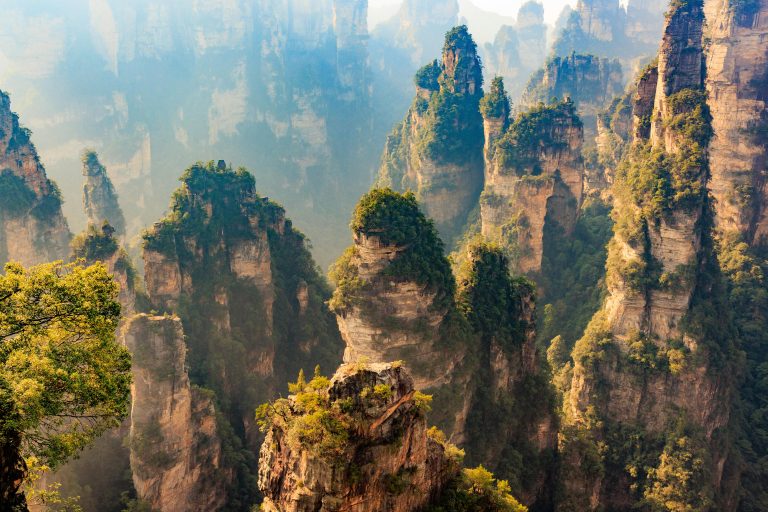
Zhangjiajie is in Hunan Province and is where the floating mountains from Avatar were based. A Hollywood photographer visited the area in 2008 and the photos he took became references for the film’s production team. After Avatar came out and became a global hit, one of the park’s most famous peaks was officially renamed the Hallelujah Mountain in 2010. When you see it in person, you understand the connection immediately.
Three days is the minimum we’d recommend here, but the more you have, the better. The main attractions are in different areas of the city and each needs its own day. Here’s how we split it:
Day 1: Zhangjiajie National Forest Park
Get to the East Gate (Wulingyuan entrance) by 7 AM. The park fills up fast and the early morning is the best time to be there.
From the gate, take the free park shuttle bus to the Bailong Elevator, a glass lift built into the cliff that takes you up to the main viewing area in about two minutes. At the top you’re in Yuanjiajie, where the Hallelujah Mountain is. Easy paved paths connect all the viewpoints.
In the afternoon, take the shuttle to Yangjiajie (quieter, less crowded, more dramatic) and then to Tianzi Mountain for the late afternoon views. The Tianzi Cableway brings you back down. Back in town, the night market around Xibu Street is great for dinner.
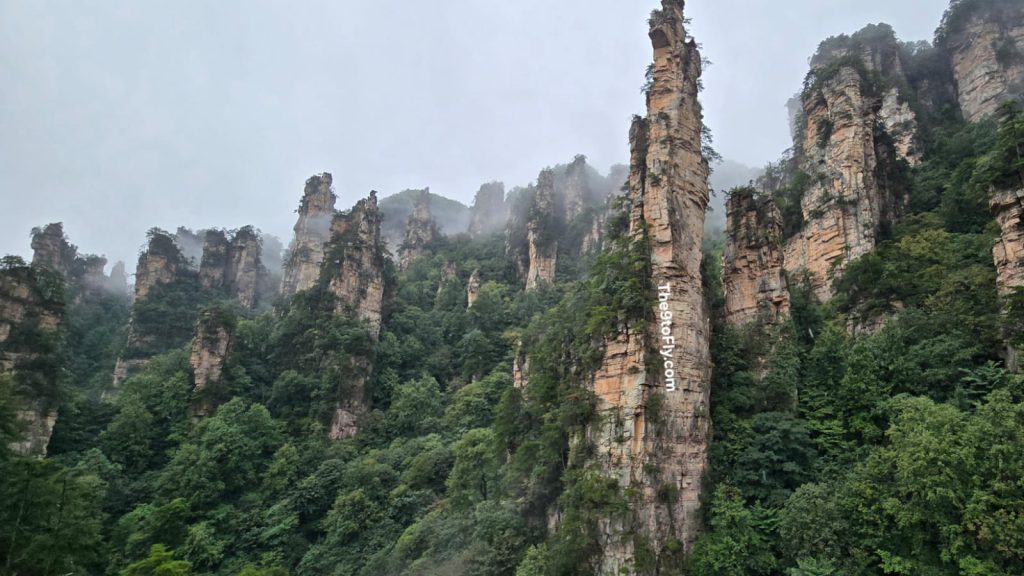
Good to know: Your park ticket is valid for 4 consecutive days from first use. Since June 2025, every re-entry (including days 2, 3, and 4) needs to be reserved in advance through the official WeChat mini-app. First-time visitors get priority during peak season, so book all your planned park days upfront when you buy the ticket.
Key costs:
- Park entry: CNY 227/person (covers all zones and free shuttle buses)
- Bailong Elevator: CNY 75/person one-way
- Tianzi Cableway: CNY 75/person one-way
Day 2: Tianmen Mountain + Yellow Dragon Cave
Tianmen Mountain is completely separate from the National Forest Park. The cable car station is right in Zhangjiajie City centre. The ride up is roughly 7 km and climbs over 1,200 metres. On the way you pass directly over the 99-Bend Road, a winding mountain road that looks properly dramatic from above.
At the top there’s a glass skywalk on the cliff face, a narrow ledge trail called the Guigu Cliff Path, and Tianmen Cave, a massive natural arch you can reach by climbing 999 steps or taking the escalator. We took the escalator. Start early and you should finish by around 1:00 to 1:30 PM.
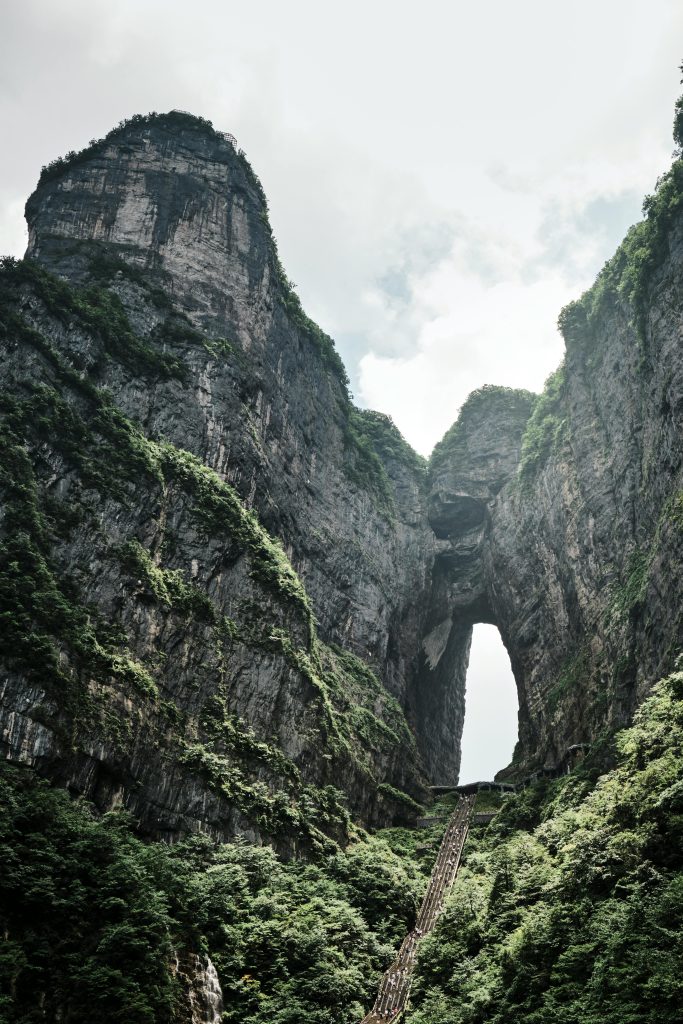
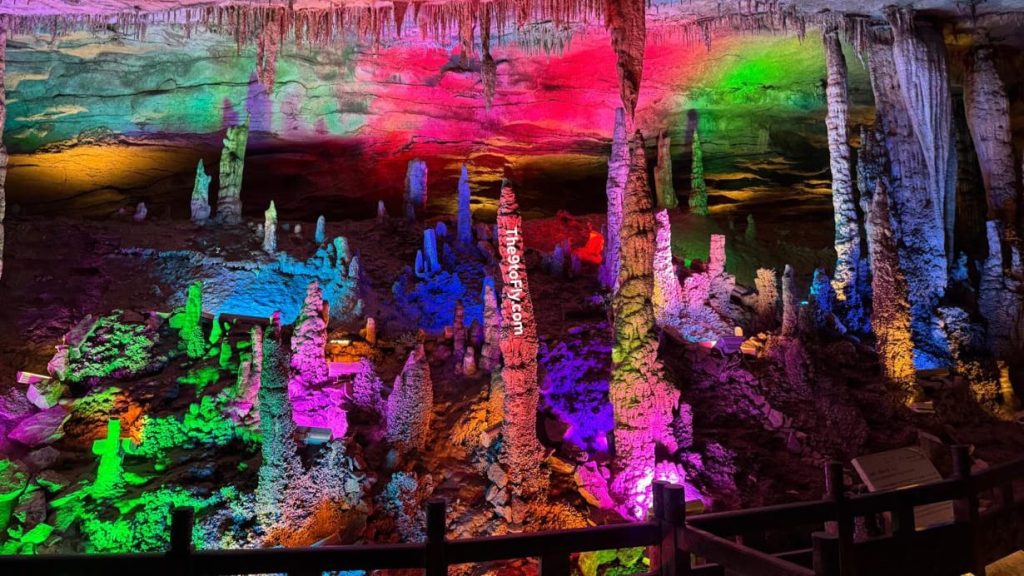
After Tianmen, grab a quick lunch and take a taxi to Yellow Dragon Cave. It’s a large underground cave system with enormous chambers, underground pools, and a short boat ride on an underground river. Very different from the mountain scenery, and a good change of pace.
Important: Yellow Dragon Cave closes around 5:30 to 6:00 PM in peak season (4:00 PM in off-season). Aim to arrive by 2:00 to 3:00 PM.
Key costs:
- Tianmen Mountain: CNY 278/person (includes cableways, shuttle bus, glass skywalk)
- Yellow Dragon Cave: CNY 60/person. Boat ride ~CNY 36 extra.
Day 3: Helicopter Tour + Grand Canyon
Our favourite day of the whole trip. We started early with a helicopter ride over the National Forest Park, then spent the rest of the day at the Grand Canyon.
The helicopter gives you an aerial view of the whole park in about 10 to 15 minutes. We took Route A (the short loop, around CNY 498/person) and it completely changed how we understood the landscape. The aerial photos made the whole trip worth it on their own.
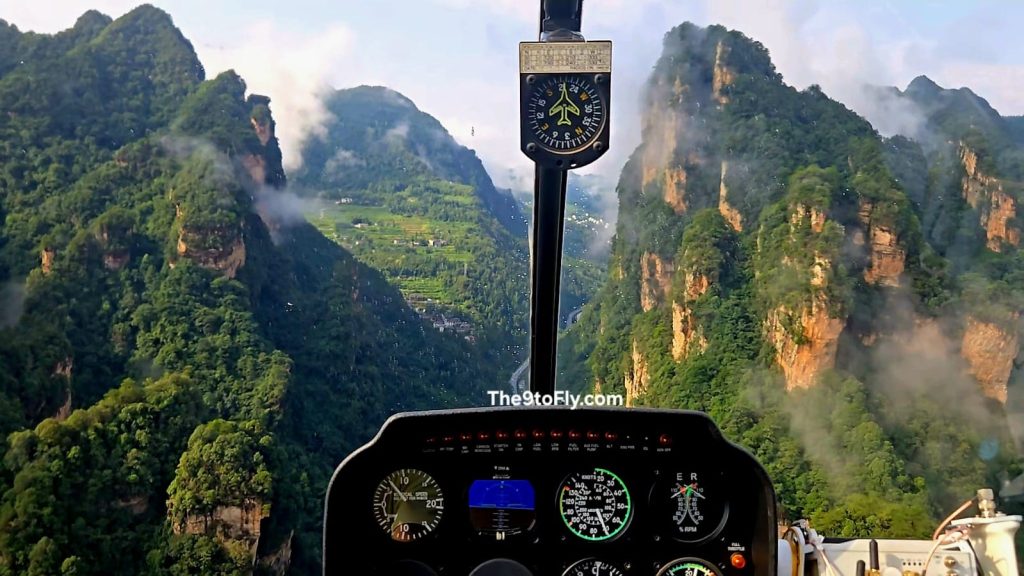
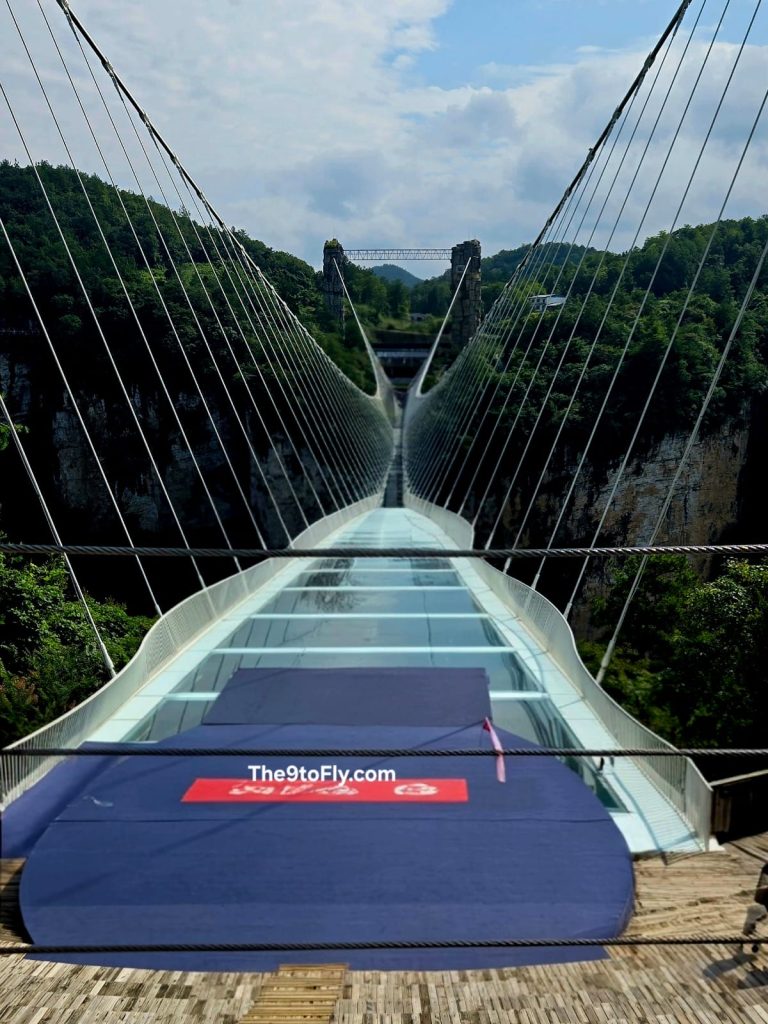
From there, the Grand Canyon is where Zhangjiajie goes full adventure mode. The glass bridge is the main draw, a long transparent walkway suspended high above the canyon with a clear view straight down. Beyond that we did the via ferrata (walking the cliff face on steel rungs and cables), zip-lining across the gorge, and a boat ride through the canyon at the end. We also watched one person do the bungee jump. Roughly 260 metres. We did not do the bungee jump.
In the evening, the Charming Xiangxi folk performance near Wulingyuan is worth going to if you have energy left. Traditional dances, fire-drumming, and an outdoor bonfire segment. Book through your hotel as seats sell out by afternoon.
Key costs:
- Grand Canyon + Glass Bridge: CNY 175/person
- Helicopter Route A: from ~CNY 498/person
- Via Ferrata: CNY 138/person
- Zip-line: CNY 50/person
- Charming Xiangxi show: CNY 158 to 198 depending on seat zone
Where we stayed: Yishu Yihua Inn, a 10-minute walk from the National Park entrance. Couldn’t have asked for a better location.
Full detailed guides:
- Zhangjiajie 3-Day Itinerary: All You Need to Plan Your Trip
- 15 Best Things To Do in Zhangjiajie, China
Night of Day 3: Overnight Train to Shangrao
After the show (or after dinner if you skip it), we took an evening train from Zhangjiajie towards Shangrao. The route goes in two legs:
- Leg 1: Zhangjiajie West to Changsha by high-speed train at 8:30 PM. Arrives around 10:30 PM.
- Leg 2: Changsha to Shangrao by local sleeper train. Departs around 12:30 AM, arrives around 7:30 AM. Sleeping berths, cheap, comfortable. We were the only foreigners on board and slept the whole way.
There is one direct high-speed train from Zhangjiajie to Shangrao, but it only runs once a day (around 7:30 AM). We didn’t want to rely on a single option, so the two-leg overnight route gave us flexibility and saved a hotel night at the same time.
Book through Trip.com. It’s the easiest way to book trains as a foreigner.
Day 4: Wangxian Valley (Afternoon to Night)
We arrived at Shangrao station around 7:30 AM. From there, it’s about 1.5 hours by taxi to the area around Wangxian Valley. The taxi cost us CNY 120. We tried to find the local bus but couldn’t locate it, and the translation apps weren’t much help in that conversation. The taxi was not expensive.
We arrived at our hotel around 10:30 AM, took a short rest, and were at the valley entrance by around 3:00 PM. We stayed until 9:00 PM. You do not need more than a half-day here: six hours from afternoon into the night is perfect because it means you catch the place in daylight, at sunset, and fully lit up after dark. No need to spend a full day.
What Wangxian Valley Actually Is
Wangxian Valley (also called Wangxiangu) is in Jiangxi Province. It used to be an abandoned mine before someone turned it into a scenic area by building traditional-style stilt houses into the cliffs. The buildings are modern replicas, not ancient. The natural setting (the cliffs, waterfalls, streams, and mountains) is completely real. We went in half-sceptical and left completely won over.
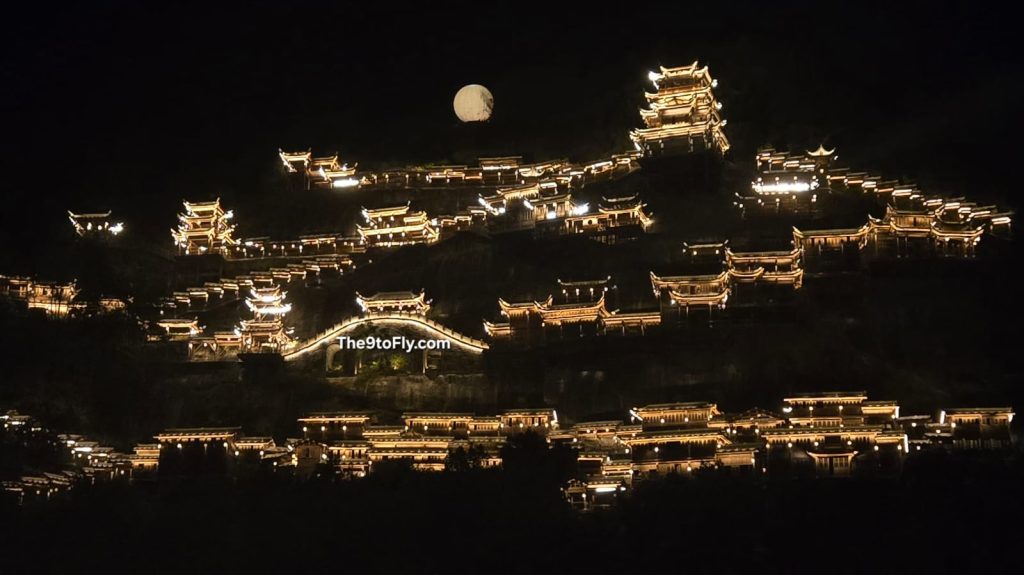
The reason to stay until night is simple: the night version of this place is on another level. Every stilt house lights up, beam lights sweep across the cliffs, and the whole valley takes on a warm, lantern-lit quality that photos genuinely cannot capture properly. It was one of the most beautiful things we’ve seen anywhere.
What We Did
The paths take you up and around the cliffs, through wooden walkways and covered staircases, past small waterfalls and streams. People do river rafting (separate ticket). There are craft stalls, small cafes, and cultural demonstrations scattered throughout.
We stopped at a small shop where a local artist was doing colour portrait sketches. The two of us sat for him for about 40 minutes. He did it in colour, framed it, and a small crowd gathered to watch. Easily one of our favourite moments of the whole China trip.
Around 6:30 PM the food street opens up. Around 7:45 PM there’s a bonfire dance performance in the main square, plus fire-breathing shows and a general folk festival atmosphere. We left around 9:00 PM. Our hotel host picked us up and we were back within 10 minutes.
Tickets and Hours
- Adult entry: CNY 120/person (CNY 140 during major holidays like Labour Day or National Day)
- Hours: 9:30 AM to 11:00 PM, last entry at 9:00 PM
- No re-entry. Plan to arrive in the afternoon and stay through the night.
Where we stayed: Jiangnan Xiaozhu Ererjiang Xunwu Yashe, about 10 to 15 minutes by car from the valley entrance. Clean, comfortable, cheap, and the host gave us free pickup and drop-off in his own car.
Full guide: Wangxian Valley, China: A Complete Guide for Foreigners
Day 5: Train to Shanghai, Arrive, Explore the Bund
The next morning we were back at Shangrao station and on a high-speed train to Shanghai. The journey takes about 2 hours 13 minutes on the fastest services, with over 50 daily departures. We arrived around midday.
From Shanghai Hongqiao station to the Bund area takes one and a half to two hours by taxi depending on traffic. Shanghai traffic is no joke, especially on weekday afternoons. Use the metro if you can: it’s faster, cheaper (CNY 3 to 7 per trip), and completely sidesteps the traffic issue.
Where We Stayed
We stayed at HomeInn Selected Hotel in the Bund area. Great interiors, comfortable rooms. Pricier than the rural accommodation but this is Shanghai and the Bund location is worth it for a short stay. The hotel is in a narrow alleyway and genuinely tricky to find. Save the address in Chinese characters on your phone and show it to the taxi driver.
The Sightseeing Bus
After checking in, we grabbed the 24-hour hop-on hop-off sightseeing bus pass. These are double-decker tourist buses that loop around the Bund area on three colour-coded routes, each with a different set of stops. The pass is valid for 24 hours from purchase, has an audio guide in English, and costs around CNY 120 to 180 depending on the package. Buses run every 20 to 30 minutes from 9:00 AM to 9:30 PM.
Red Route (Shanghai City Tour): People’s Square, Nanjing Road, the Bund, Yuyuan Garden, Xintiandi
Blue Route (Pudong Tour): The Bund, Oriental Pearl Tower, World Financial Center and Jin Mao Tower, Cool Docks
Green Route (Temple Tour): Nanjing Road, Shanghai Museum, Huaihai Road, Jing’an Temple
Buy at the ticket booths near the Bund or book through GetYourGuide or Klook in advance.
The Bund at Night
The Bund is the riverfront in central Shanghai. Old stone buildings from the early 1900s on one side, the Pudong financial district glowing across the water on the other. Coming straight from a week of rural mountains and cliffside villages, the scale of Shanghai hit us hard. The Bund at night is genuinely one of the best views we’ve seen anywhere. Entry is completely free.
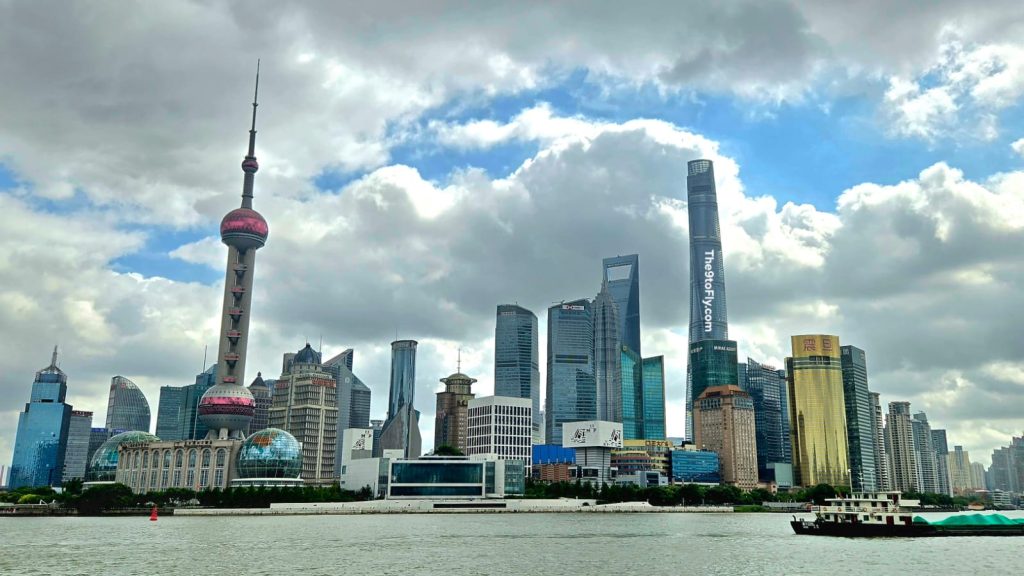
The three towers you can’t miss across the river in Pudong:
- Shanghai Tower: 632 metres, second tallest building in the world
- Shanghai World Financial Center: 492 metres, has a large opening near the top
- Oriental Pearl Tower: 468 metres, the older iconic one with the pink spheres
We walked the Bund slowly, stopped for coffee at a quiet cafe, and ended up at Subway for dinner. After five days of Mandarin menus, pointing at something familiar was exactly what we needed. Zero regrets.
Day 6: More of Shanghai Before the Airport
Check-out was at noon. We used the remaining hours on the sightseeing bus pass and had the whole morning to cover spots we’d skipped the day before.
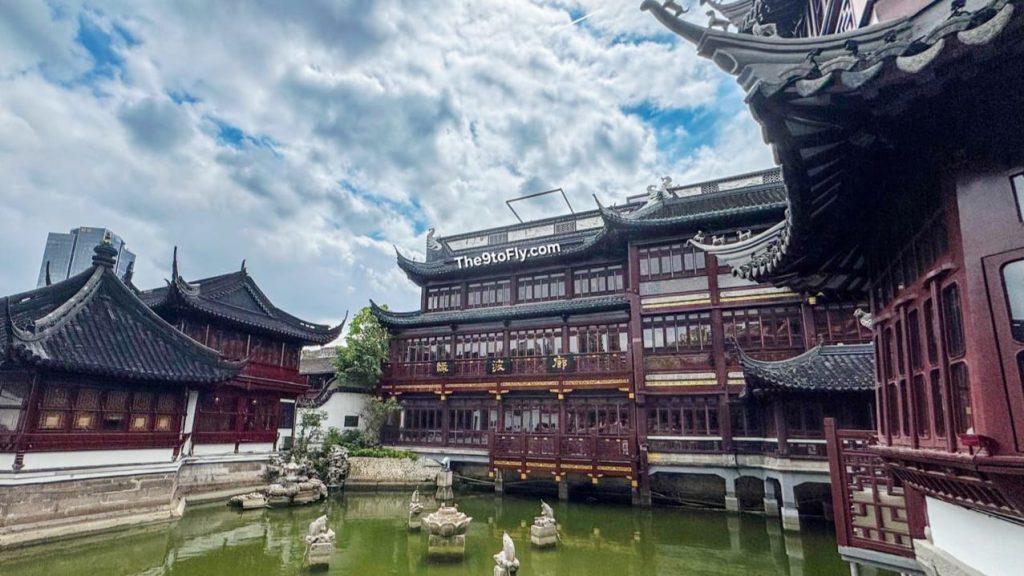
Morning at the Bund is a different experience from the evening. Fewer people, softer light, you can actually stop and look at things properly. We did loops on the Red and Blue routes, hopped off at Yuyuan Garden, the Oriental Pearl Tower side in Pudong, and a few streets around Xintiandi.
Other Shanghai Spots Worth Knowing About
We didn’t get to these on our short visit, but they’re worth knowing if you have more than a day in Shanghai:
- Yu Garden (Yuyuan Garden): A classical Chinese garden in the Old City area. Free to walk around the surrounding bazaar, CNY 40 to enter the garden itself. Gets crowded by mid-morning.
- French Concession: A neighbourhood of tree-lined streets, cafes, and old colonial buildings. Great for a slow walk or brunch. Very different feel from the Bund.
- Tianzifang: A maze of narrow alleyways in the French Concession filled with small shops, cafes, and art studios. Good for an hour of wandering.
- Xintiandi: A modern development around restored 1930s lane houses. More polished and expensive than Tianzifang but worth a look, especially in the evening.
- Nanjing Road: One of the world’s busiest shopping streets. Pedestrianised and lined with malls and food stalls. Worth walking even if shopping isn’t your thing.
Getting to Pudong Airport
Our flight was in the mid-afternoon. We left the hotel at noon. Give yourself at least two hours from the Bund area to Pudong Airport. Traffic can add significantly to the journey time.
Fastest option: metro to Longyang Road, then the Maglev train to the airport (8 minutes at up to 431 km/h, CNY 50 one-way). If you have heavy bags, a taxi or DiDi is easier door-to-door but takes longer in traffic.
We had time before our gate and found a small cafe in the departure terminal baking its own bread in-house. Fresh pizza, good kombucha, and staff who spoke clear English. After a week of translation apps, that felt like a proper send-off.
Full Shanghai guide: One Day in Shanghai: The Perfect Itinerary for First-Time Visitors
Getting Around: Train Tips for the Whole Route
- To Zhangjiajie: Fly into Zhangjiajie Hehua Airport, or take a high-speed train to Changsha from most major cities (~3 hours) then connect to Zhangjiajie West (~3 hours).
- Zhangjiajie to Shangrao: High-speed train to Changsha (8:30 PM, ~2 hours), then overnight sleeper from Changsha to Shangrao (departs ~12:30 AM, arrives ~7:30 AM). Alternatively, there is one direct high-speed train from Zhangjiajie to Shangrao departing around 7:30 AM.
- Shangrao to Shanghai: High-speed train, ~2 hours 13 minutes, 50+ daily departures.
Use trip.com for all bookings. English interface, passport-friendly, and by far the easiest way to book trains in China as a foreigner.
Budget Breakdown
Rough per-person estimate for the week, excluding international flights:
- Zhangjiajie National Forest Park: CNY 227
- Bailong Elevator + Tianzi Cableway: CNY 150
- Tianmen Mountain: CNY 278
- Yellow Dragon Cave (entry + boat): CNY 96
- Grand Canyon + Glass Bridge: CNY 175
- Helicopter Route A: from CNY 498 (optional but worth it)
- Via Ferrata + Zip-line: CNY 188
- Wangxian Valley: CNY 120
- Trains across the full route: roughly CNY 300 to 500 depending on class
- Accommodation (6 nights): CNY 900 to 1,800 depending on choices
- Food: CNY 100 to 200/day is very comfortable in rural areas. Shanghai is pricier.
Total rough estimate (excluding international flights): around CNY 2,500 to 3,500 per person, depends on the choice of activities and stay.
Vegan and Vegetarian Tips
Zhangjiajie: Stir-fried greens and tofu are available at most restaurants. The Wulingyuan night market has some vegetable stalls. Use Alipay’s translator to communicate. Carry snacks from local supermarkets as backup.
Wangxian Valley: The food street is meat-heavy. Twisted potato skewers, fresh fruit, fruit juice, and packaged snacks from the small grocery stalls are your safest bets.
Shanghai: Much more manageable. Cafes in the Bund area serve Margherita pizza and other vegetarian options. Dedicated vegan restaurants exist in the French Concession. Alipay’s translator helps at local spots.
General tip: Pick up snacks at a supermarket every morning. Nuts, fruit, crackers. Keeps your day flexible and means you’re never stuck with nothing to eat.
FAQs
Is one week enough for China?
For this specific route, one week works well. It’s a hectic pace but completely doable if you use overnight trains smartly. That said, this itinerary covers only a small part of China. If you want to include Beijing, Guilin, Chengdu, or other major destinations, you’d need two weeks or more. This is a solid week if you want rural China and don’t mind moving fast.
Is this route difficult to navigate as a foreigner?
It’s off the beaten path, so yes, there’s more friction than a standard Beijing-Shanghai trip. Most people in Zhangjiajie and Wangxian Valley don’t speak English. The overnight sleeper train feels unfamiliar at first. But with Amap, Alipay’s translator, addresses saved in Chinese, and trip.com for booking, we managed the whole thing without speaking any Mandarin. You can do it.
What’s the best time of year for this route?
Spring (March to May) and autumn (September to November). Mild weather, good visibility, fewer domestic tourists. Avoid Labour Day (early May) and National Day (early October) when prices go up and the parks get very busy.
Can I do this on a budget?
Yes. The overnight train saves a hotel night. Budget homestays in rural areas cost CNY 180 to 300. Food is cheap outside Shanghai. The main costs are the park tickets and adventure activities. Skipping the helicopter saves CNY 500 and the rest of the experience is still well worth the trip.
Read the Full Guides for Each Destination
Zhangjiajie 3-Day Itinerary: All You Need to Plan Your Trip — Our complete day-by-day route with timings, costs, and tips for all three days.
15 Best Things To Do in Zhangjiajie, China — Every attraction in Zhangjiajie covered in detail.
Wangxian Valley, China: A Complete Guide for Foreigners — Full guide to visiting Wangxian Valley including how to get there, where to stay, and what to expect at night.
One Day in Shanghai: The Perfect Itinerary for First-Time Visitors — Everything you need for one day in Shanghai, from the Bund to the airport.
Final Thoughts
This route is not for everyone. It’s fast, there’s a lot of transit, and you’ll spend two nights on trains. But if you want to see China beyond the standard tourist circuit, it delivers. The mountains in Zhangjiajie, the valley at Wangxian, the contrast of arriving in Shanghai after five days in rural China. None of it felt like a highlight reel. All of it felt real.
We came back with sore legs, full memory cards, and a long list of places in China we still want to visit. That’s the best outcome any trip can give you.
Got questions about this route? Drop them in the comments below. We’ve done every part of it and are happy to help.

![Wangxian Valley, China: A Complete Guide for Foreigners [2026]](https://the9tofly.com/wp-content/uploads/2026/04/WhatsApp-Image-2026-04-13-at-7.07.06-PM-768x432.jpeg)
![One Day in Shanghai: The Perfect Itinerary for First-Time Visitors [2026]](https://the9tofly.com/wp-content/uploads/2026/04/WhatsApp-Image-2026-04-25-at-00.11.25-768x432.jpeg)
![Zhangjiajie 3-Day Itinerary: All You Need to Plan Your Trip [2026 Guide]](https://the9tofly.com/wp-content/uploads/2026/04/Zhangjiajie-1-768x432.jpeg)