
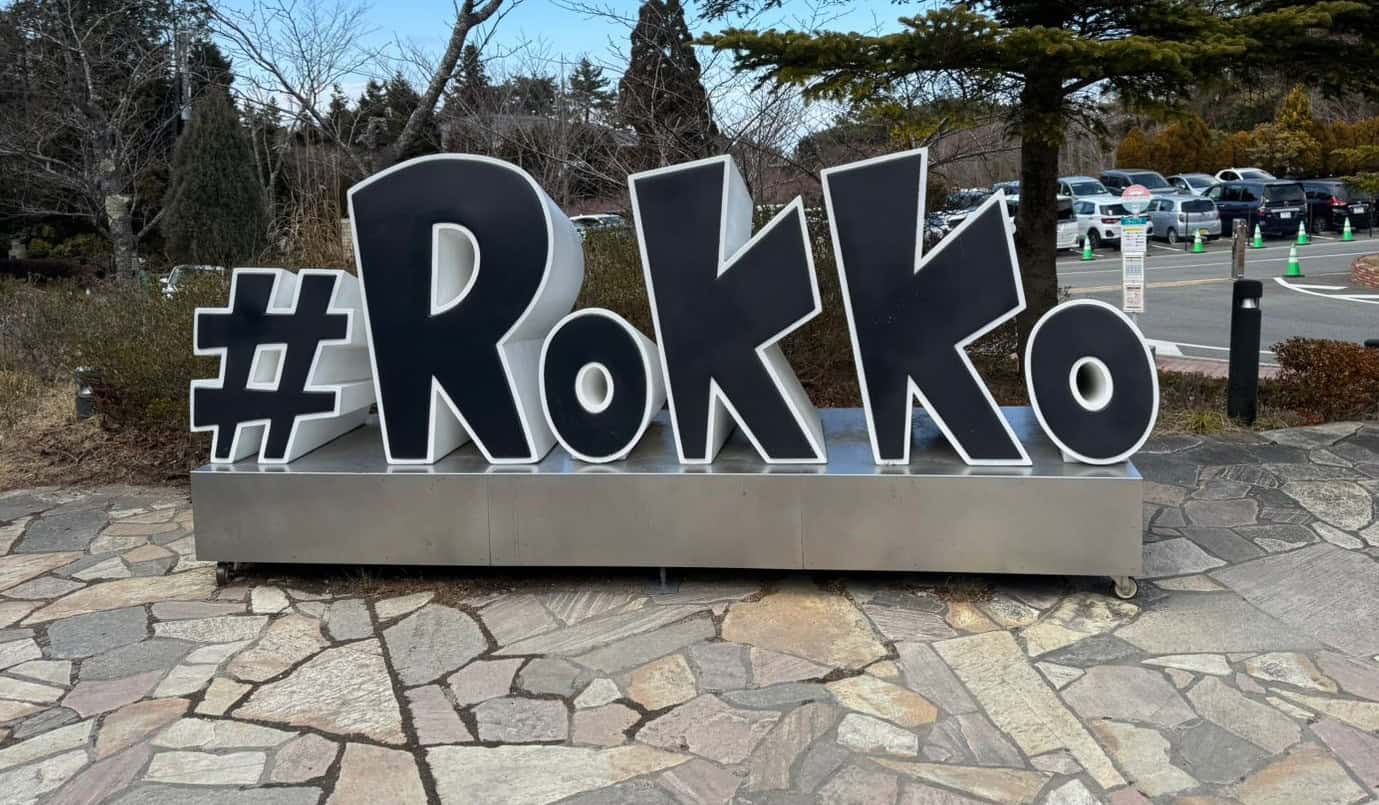
The Ultimate Mount Rokko & Arima Onsen Day Trip from Kobe [2026 Guide]
The9toFly contains affiliate links. If you make a purchase using one of the links below, we may receive compensation at no extra cost to you. We only recommend products and services we use and trust. Read our disclaimer for more information.
Look, we get it.
You’ve built your entire Japan itinerary around Tokyo, Kyoto, and Osaka. The golden route. The classics. And then somewhere along the way, someone mentioned Kobe. Maybe it was the beef. Maybe it was a random travel blog. Maybe your flight lands at KIX and you realized Kobe’s right there.
And now Mount Rokko and Arima Onsen are on your radar, except you’ve got exactly one day to squeeze them in before your Shinkansen back to Tokyo.
We’ve been there. Literally. We live in Kobe.
Both Mount Rokko and Arima Onsen absolutely deserve their own full day. You could spend an entire morning hiking Rokko’s trails, an afternoon at the botanical gardens, and still have time for sunset drinks at the Garden Terrace. Arima alone could be a weekend trip if you’re doing the ryokan thing properly.
But if you’re short on time (working life, tight itinerary, we really do get it), combining both into a single day trip is completely doable. We’ve done it multiple times. Cable cars, ropeways, mountain views, ancient hot springs, and somehow still making it back for dinner.
This is exactly how we pulled it off, including the transport connections that confused us the first time, the onsen that was randomly closed when we showed up, and the Italian restaurant in a hot spring town that became our unexpected dinner hero.
Getting to Mount Rokko from Kobe (Step-by-Step)
The route to Mount Rokko involves a few transfers, but once you’ve done it once, it becomes second nature. Here’s the exact path we take from Sannomiya:
Step 1: Sannomiya to Rokkomichi Station
Take the JR Kobe Line (Tokaido-Sanyo Line) from Sannomiya Station. If you’re on a local train, Rokkomichi is just the third stop. Quick and easy.
Step 2: Rokkomichi Station to Rokko Cable Shita
From JR Rokkomichi Station, catch Kobe City Bus #16 to Rokko Cable Shita (the base station for the cable car). The bus takes about 10 minutes.
Alternatively, if you’re coming from Hankyu Rokko Station, the same bus passes through there too.
Step 3: Rokko Cable Shita to Rokko Sanjo Station
This is where the fun begins. The Rokko Cable Car has been running since 1932, and it’s a beautiful 10-minute ride up the mountainside. You’ll climb about 500 meters in elevation, with views of Kobe city and Osaka Bay spreading out below you.
Important: The Rokko Cable Car is suspended from January 5 to April 10, 2026 for construction work. During this period, a replacement bus service operates instead. Plan accordingly if you’re visiting during these dates.
Step 4: Getting Around Mount Rokko
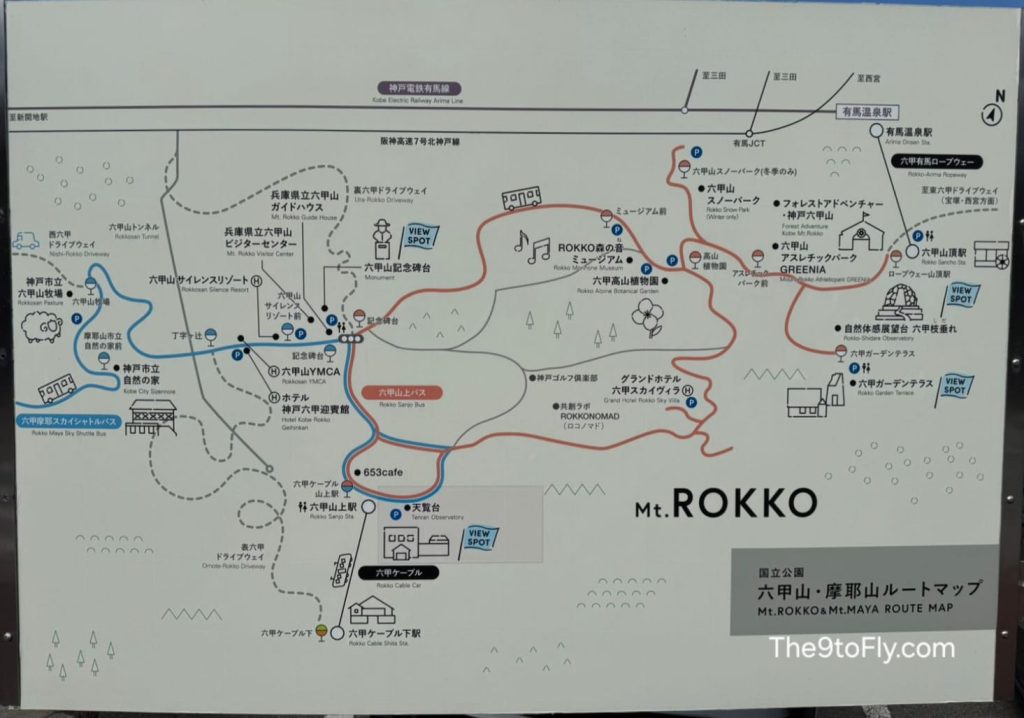
From Rokko Sanjo Station, the Rokko Sanjo Bus connects all the major attractions on the mountain. The bus runs in a loop, stopping at places like the Snow Park (Greenia stop), Garden Terrace, Alpine Botanical Garden, and the Ropeway Station.
Officially, the ride from Rokko Sanjo Station to the Garden Terrace area takes about 13 minutes.
Reality check: If you’re going on a weekend or public holiday, throw that 13-minute estimate out the window. We were stuck in traffic for 30-40 minutes on a Sunday. The mountain roads get congested, especially during peak seasons. Leave earlier than you think you need to.
Money-Saving Tickets
There are a few discount passes that can save you serious yen:
Rokko-Arima One-Way Ticket (¥2,450): Includes the cable car, Rokko Sanjo Bus, and ropeway to Arima Onsen. Perfect if you’re doing a one-way trip like us.
Arima & Rokko One-Day Excursion Pass: Available in Hankyu and basic versions. Includes all transport plus a voucher for either Kin no Yu or Gin no Yu onsen. Sold at Hankyu stations and information counters.
Things to Do on Mount Rokko (By Season)
Mount Rokko transforms completely depending on when you visit. Here’s what to expect:
Year-Round Attractions
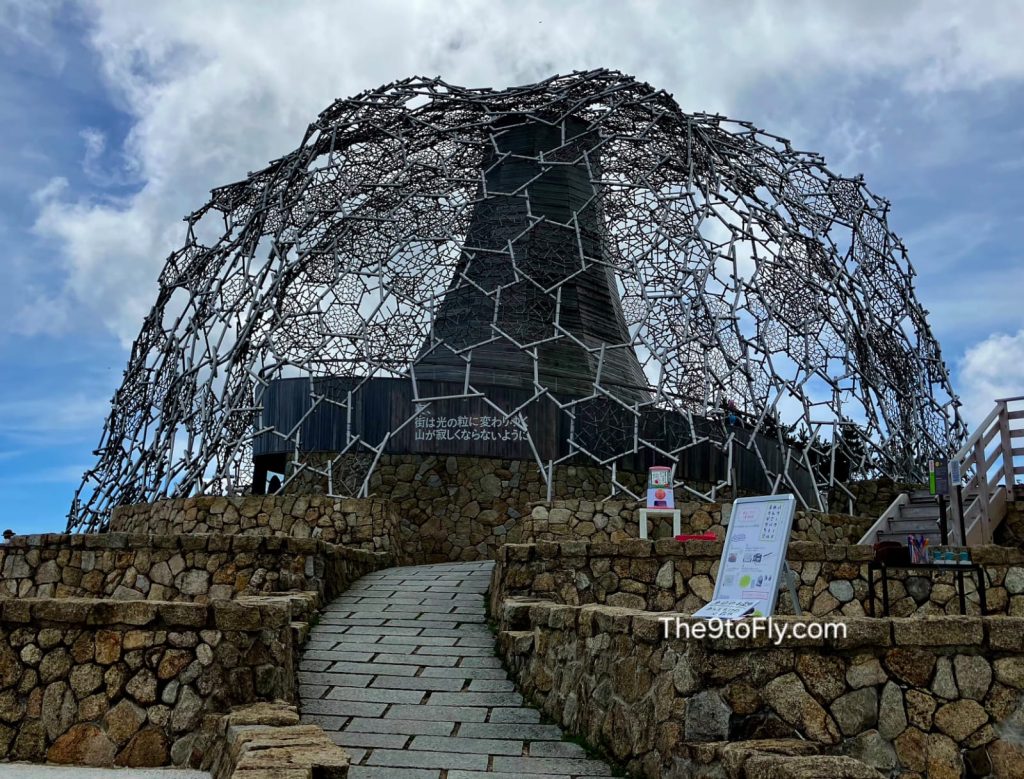
Rokko Shidare Observatory: A wooden lattice observation deck with 360-degree views of Kobe, Osaka, and on clear days, as far as Wakayama. At night, it’s one of Japan’s famous “10-million-dollar night views.” We went after our snow park session, grabbed some cheesecake and hot cocoa from nearby, and just sat there watching the city below. Sometimes that’s enough.
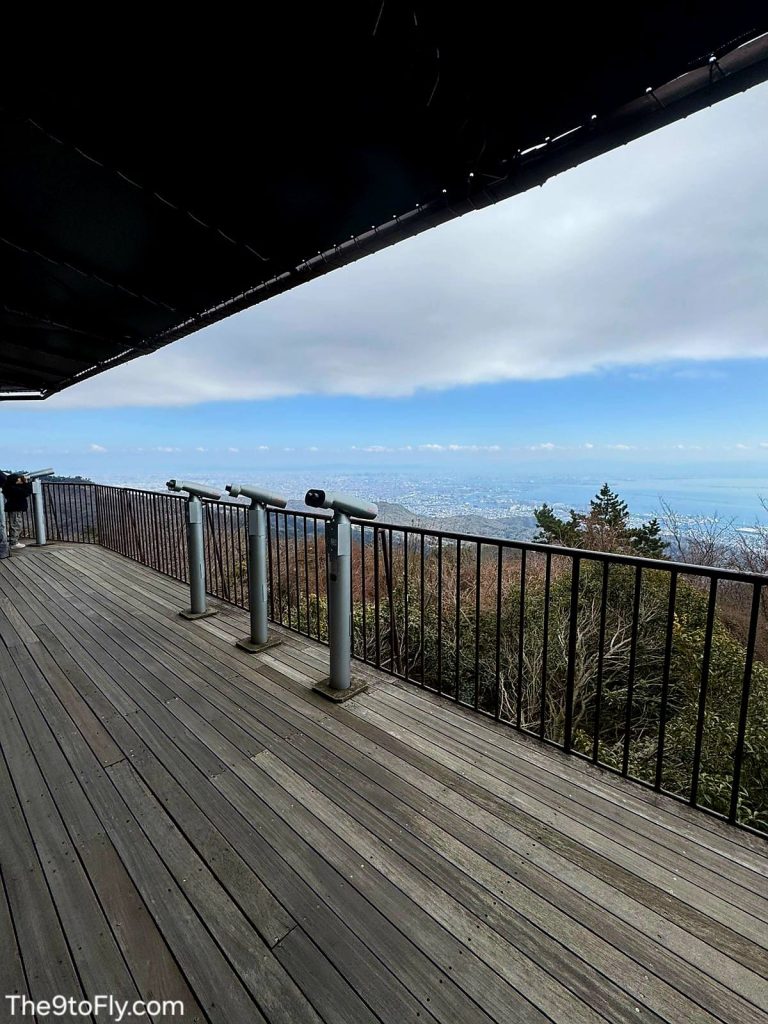
Rokko Garden Terrace: A complex with restaurants, cafes, and shops at 880 meters elevation. Good place to rest, refuel, and enjoy the panoramic views.
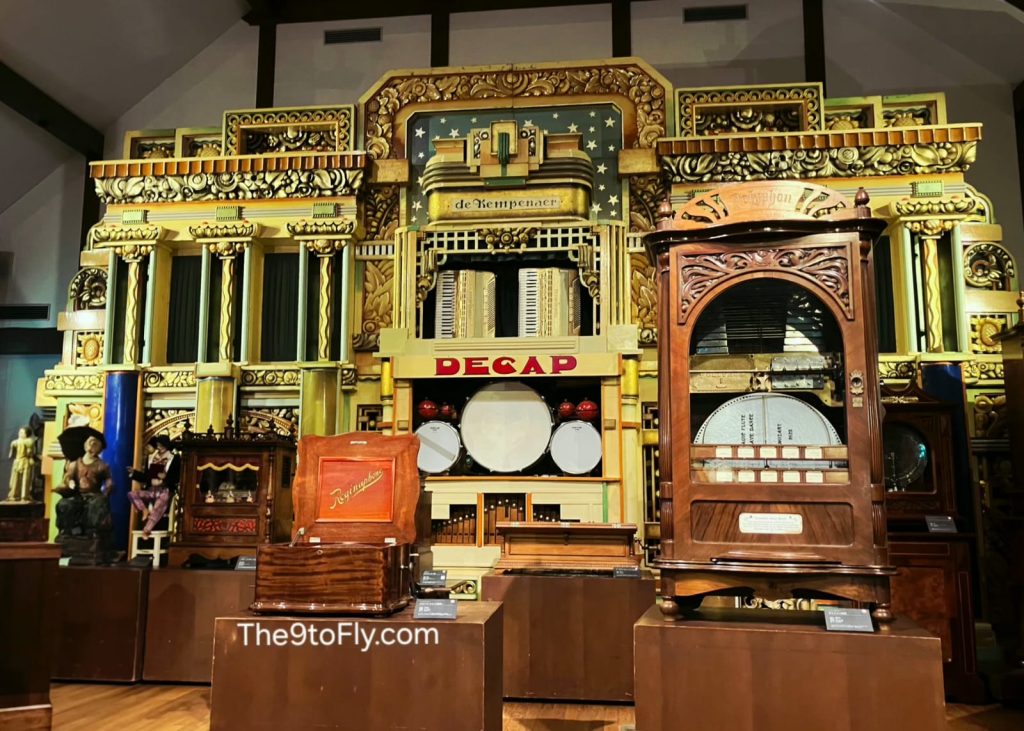
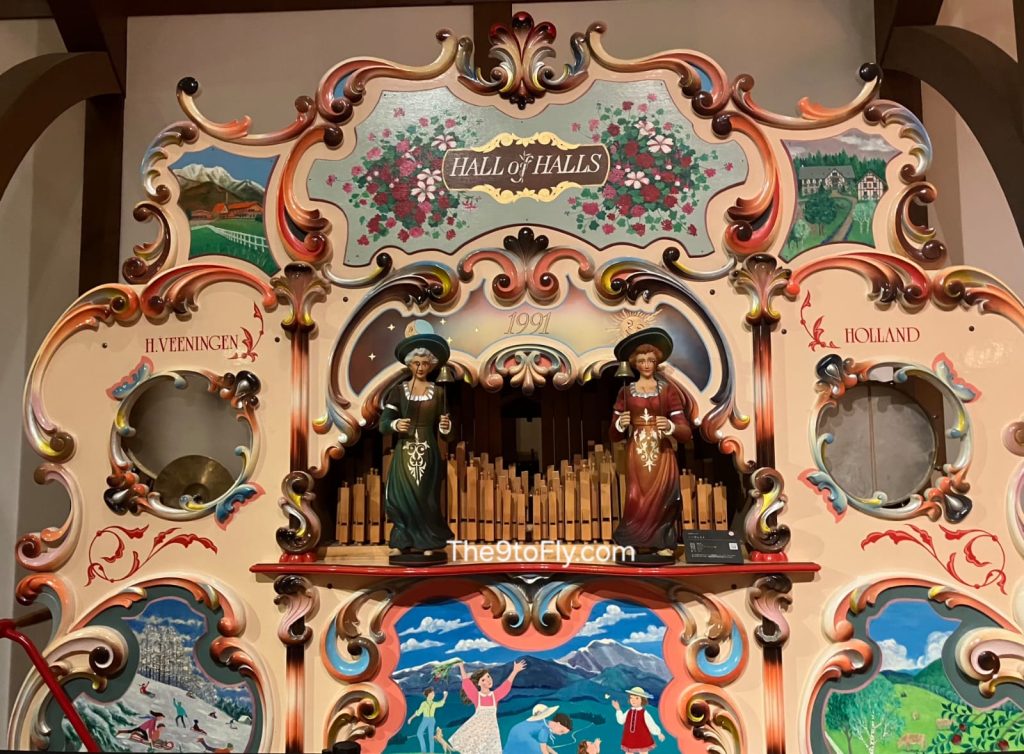
Rokko Musical Box Museum & Gardens MORINONE: A surprisingly charming museum featuring antique music boxes from the 19th and 20th centuries. You can even make your own.
Spring & Summer (April – October)
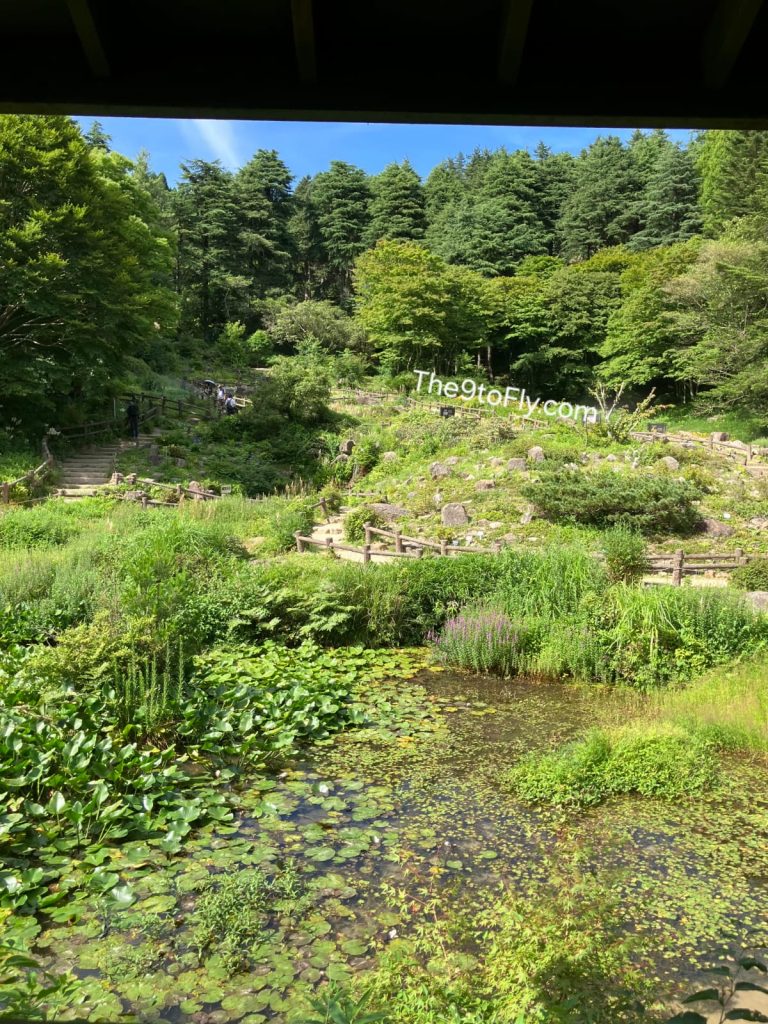
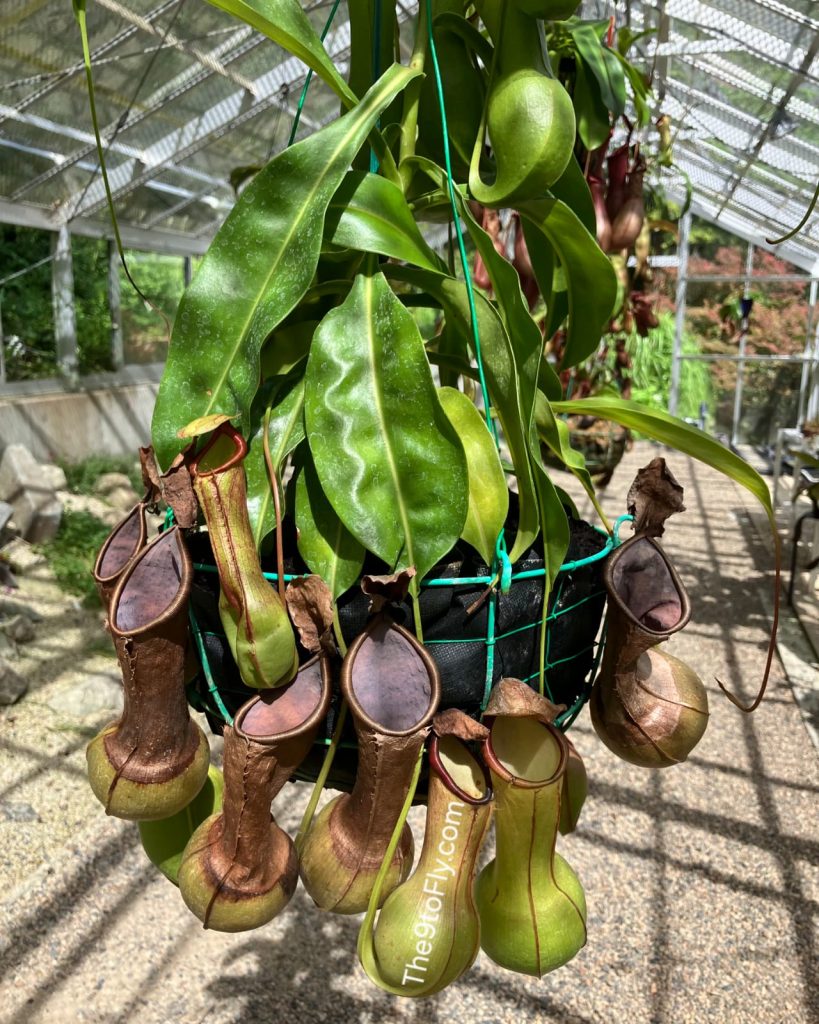
Rokko Alpine Botanical Garden: Over 1,500 species of alpine plants from around the world. Peak bloom is late spring through summer.
GREENIA Athletic Park: A massive outdoor adventure park with rope courses, zip lines, and obstacle challenges. It operates from spring through autumn in the same location as the winter Snow Park.
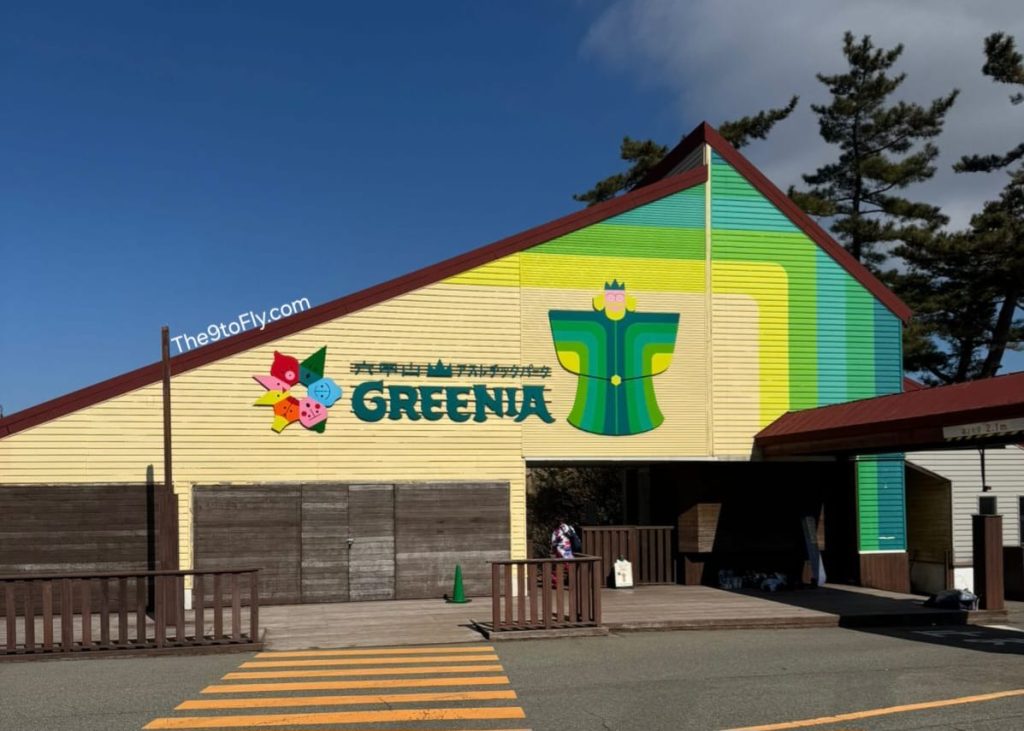
Forest Adventure Kobe Mount Rokko: More adventure activities including tree-top courses. Good for families with older kids. (Was under maintenance while we were there… sad)
Autumn (November)
The fall foliage on Mount Rokko is stunning. Mid-November is usually peak season. The Rokko Meets Art festival also runs during autumn, with contemporary art installations scattered across the mountain.
Winter Only: Rokko Snow Park (December – March)
Rokko Snow Park is not going to give you powder runs or backcountry thrills. It’s an artificial ski resort, close to the city, designed primarily for beginners and families who want a taste of snow without traveling hours.
We went on a Sunday in February, and it was packed. Like, really packed. The slopes are small, the runs are short, and if you’re anything beyond a complete beginner, you’ll probably get bored after a few hours.
That said, if you’re learning to ski, bringing kids, or just want a chill day playing in Snow Land (sledding, snow play area), it works. The location is convenient, rentals cover everything, and there’s a dedicated kids’ zone with new attractions.
For actual skiing with proper slopes and variety, check out our Biwako Valley day trip guide instead. It’s further from Kobe but worth it for real runs.
Biwako Valley Ski Resort Day Trip from Kobe [2026 Guide] – the9tofly
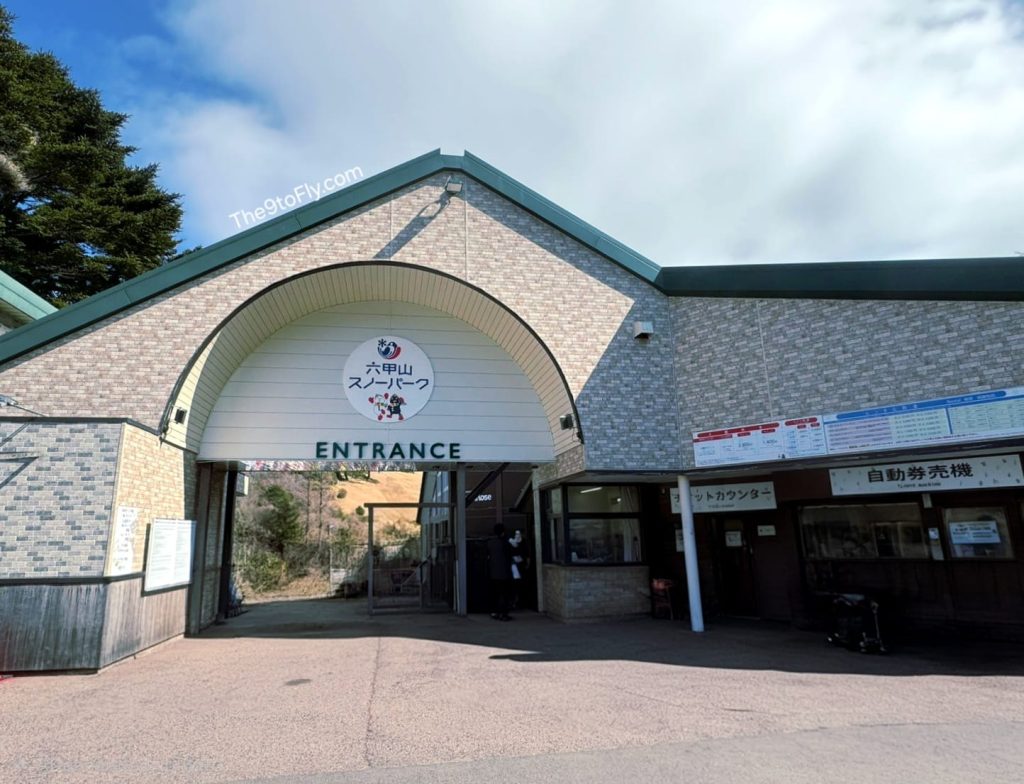
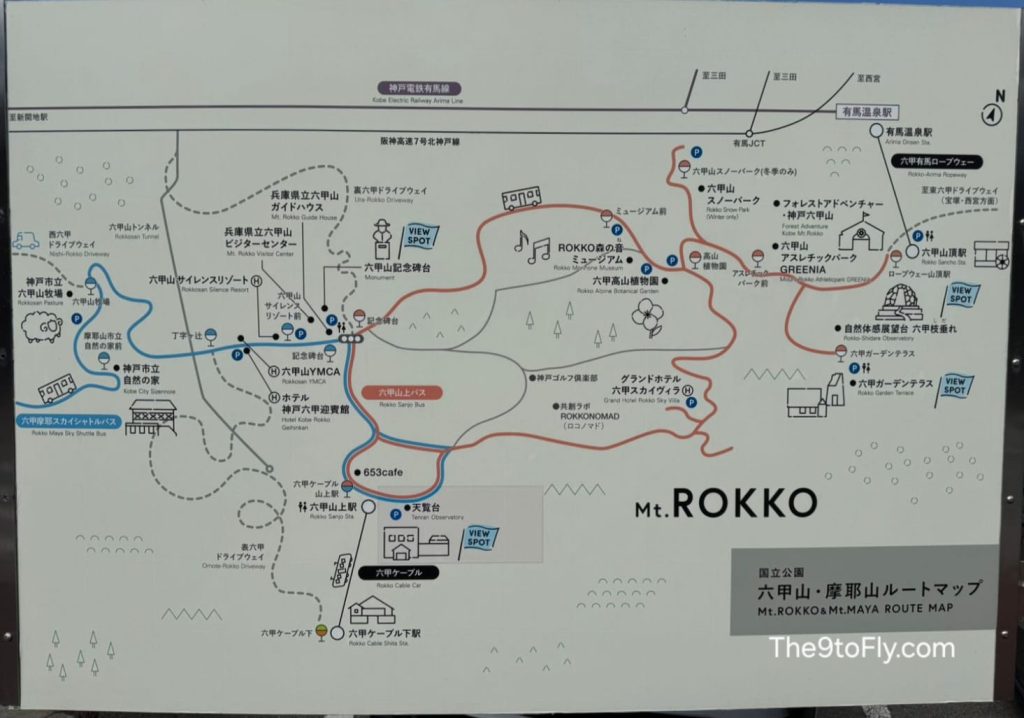
Rokko Snow Park Costs (2025-2026 Season)
Entry Ticket:
Adults: ¥2,800
(Children are ¥1,500-2,000 cheaper across all categories)
Lift Ticket (separate, required for skiing/snowboarding):
Weekday 1-Day Pass: ¥1,600
Weekend/Holiday 1-Day Pass: ¥3,300
Rental Options:
Ski Set (skis + boots + poles): ¥4,500
Ski + Clothing Set: ¥6,000
Snowboard + Boots: ¥5,500
Snowboard + Clothing Set: ¥7,000
Ski Wear Only (top + bottom + gloves): ¥4,000
Hours: 9:00 AM – 5:00 PM (weekdays) / 9:00 AM – 8:00 PM (weekends, with night skiing)
Yeah, it adds up. For people coming solely for serious skiing, this probably isn’t worth the cost. It’s more of a “let’s experience snow for a few hours” kind of place.
Taking the Rokko-Arima Ropeway to Arima Onsen
This is the highlight of the day trip for us. The Rokko-Arima Ropeway connects the summit of Mount Rokko directly to Arima Onsen, gliding over forested valleys and mountain ridges for about 12 minutes.
To catch the ropeway, take the Rokko Sanjo Bus to Ropeway Sancho Station (the last stop on the East Rokko route). The gondolas depart every 20 minutes (Be careful, the last ropeway to Arima station is at 5pm)
Ropeway Costs:
One-way: ¥1,400 adult
Round-trip: ¥2,520 adult
Note: If you bought the Rokko-Arima One-Way Ticket (¥2,450) at Rokko Cable Shita, the ropeway is already included. Don’t accidentally buy another ticket.
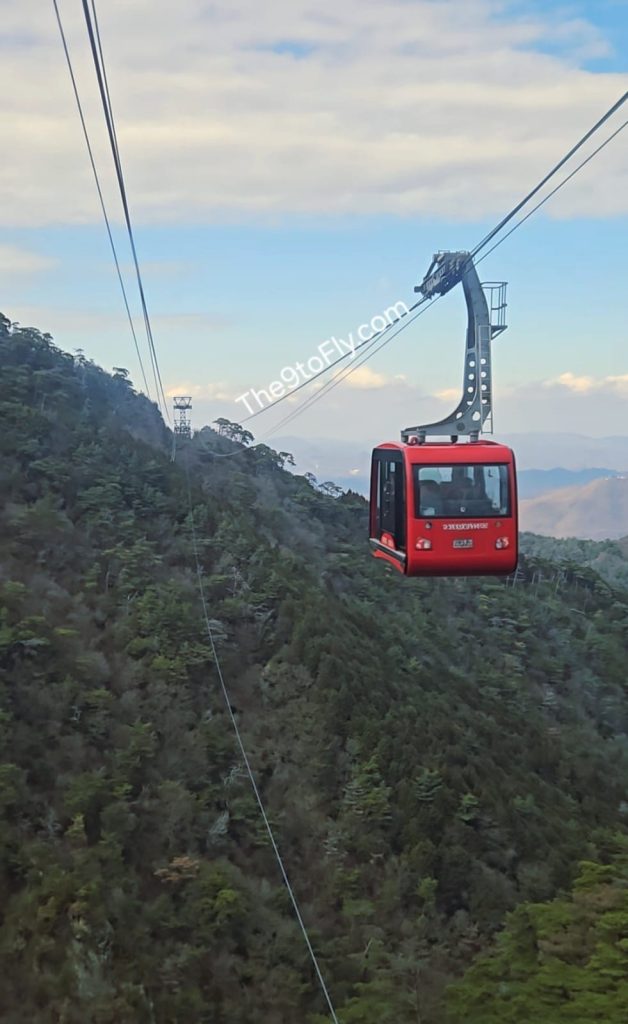
Exploring Arima Onsen Town
Arima Onsen is one of Japan’s oldest hot spring towns, with records dating back over 1,300 years. Emperors soaked here. Toyotomi Hideyoshi loved this place so much he rebuilt it. Buddhist monks came seeking healing.
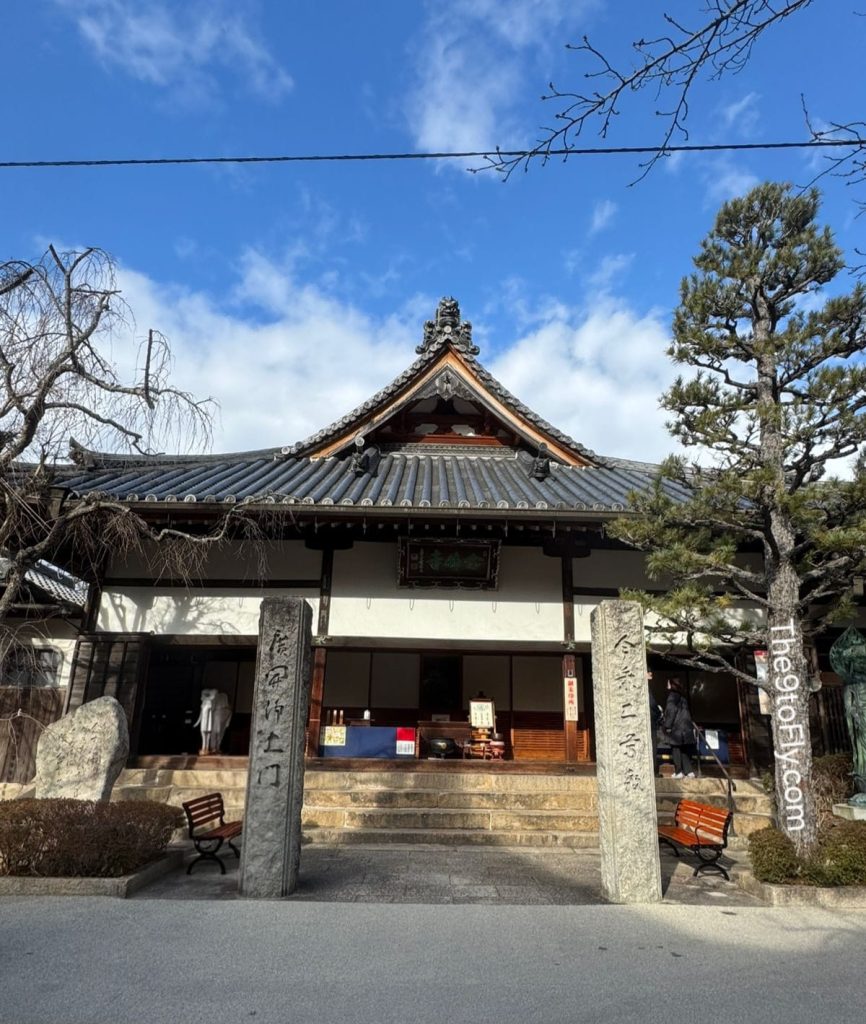
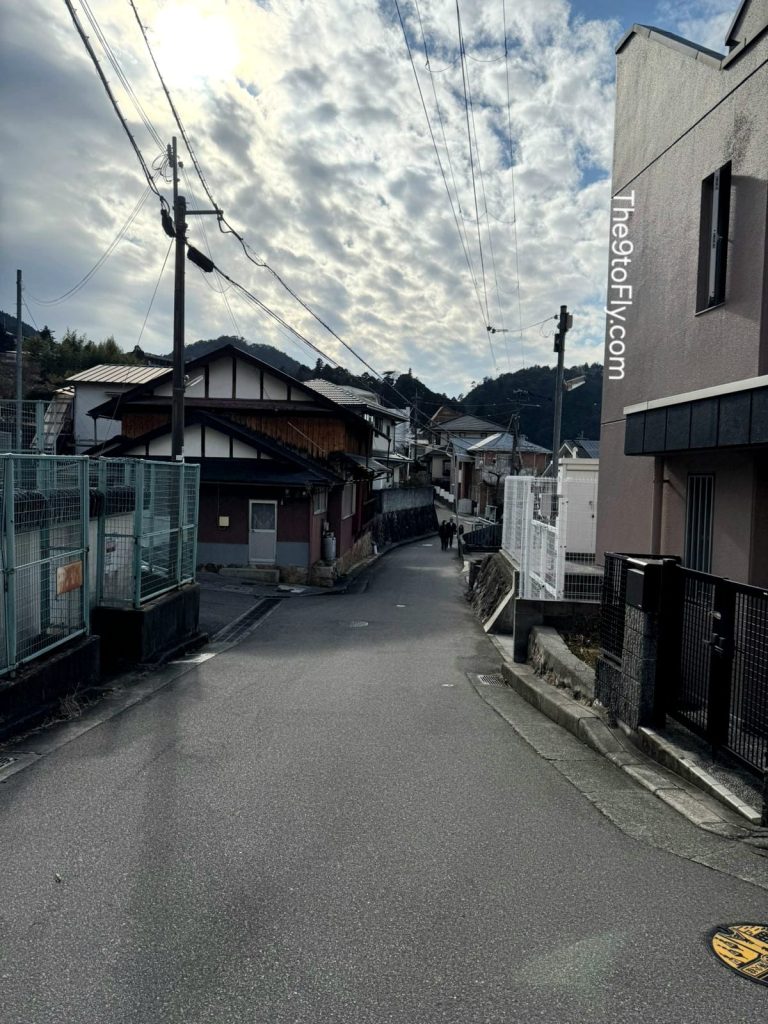
The town itself is compact and walkable. Traditional wooden buildings line narrow streets, small shrines pop up around every corner, and the smell of sulfur mingles with fresh senbei crackers from the shops.
We spent a couple hours just wandering. No agenda. Found a tiny shrine tucked behind a ryokan, watched locals dipping their feet in the free foot baths, tried the famous Tansan Senbei (carbonated crackers with a surprisingly nice crunch).
The weather that day was great, clear skies and good vibes all around. Made for some nice photos of the traditional architecture.
What to See in Arima
Tosen Shrine: A small but historically significant shrine connected to Arima’s hot spring discovery.
Onsen-ji Temple: Founded by the Buddhist monk Gyoki, who helped establish Arima as a healing destination.
Gosho Sengen: The original source of Arima’s famous gold water. You can see steam rising from the ground here.
Free Foot Baths: Several free ashiyu (foot baths) are scattered around town. The one near Kin no Yu is a good preview of the golden waters.
The Famous Hot Springs: Kin no Yu, Gin no Yu & Taiko no Yu
Arima is famous for having two distinct types of hot spring water, which is pretty rare:
Kin no Yu (Gold Bath)
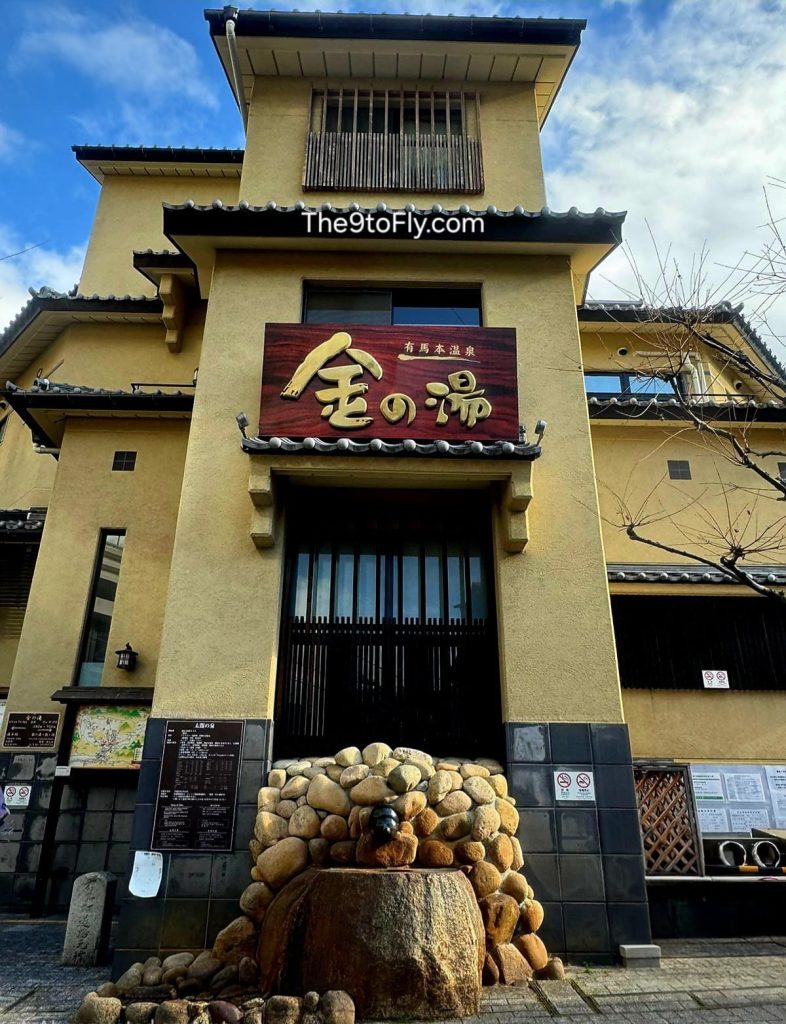
This is the star attraction. The “Kinsen” or gold water is reddish-brown, rich in iron and salt. It’s actually colorless when it first emerges from the ground but oxidizes when exposed to air, turning that distinctive amber color.
The water is hot (42-44°C) and has a slightly metallic smell. It’s said to be good for muscle pain, joint issues, and skin conditions.
Our experience: This was the one we wanted to visit on our most recent trip. We’d already been to Gin no Yu and Taiko no Yu on previous visits, so Kin no Yu was the goal. Showed up, found it closed for maintenance. Classic.
Hours: 8:00 AM – 10:00 PM (last entry 9:30 PM)
Weekday price: ¥600 / Weekend-holiday: ¥800
Closed: 2nd and 4th Tuesday of each month
Tattoo-friendly: Yes
Gin no Yu (Silver Bath)
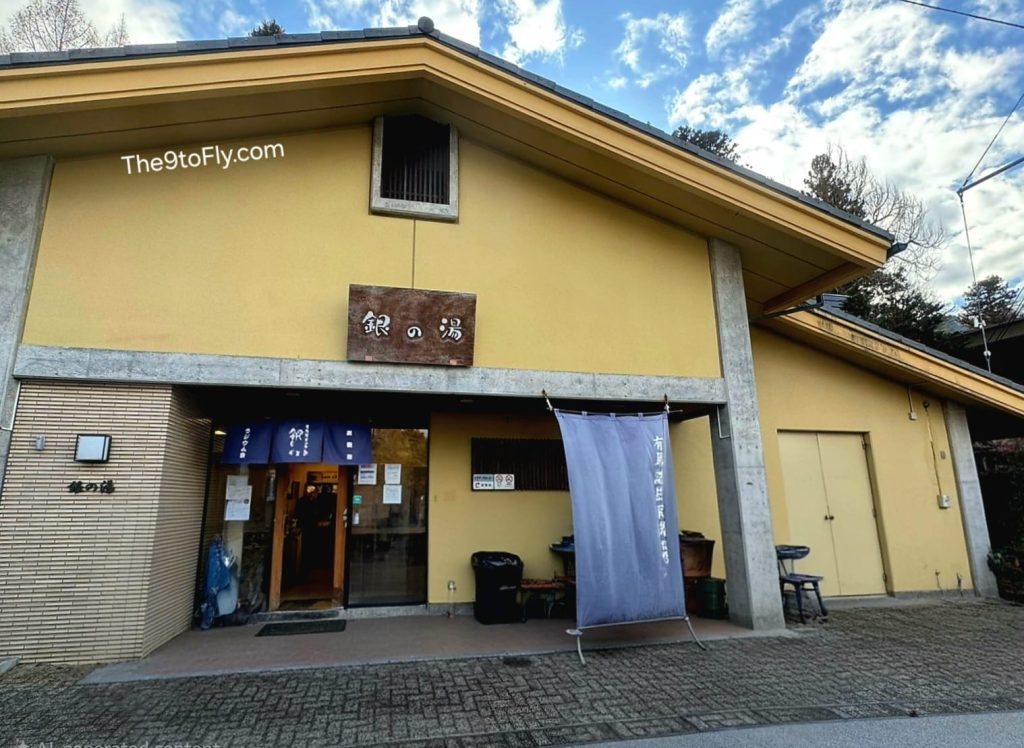
The “Ginsen” or silver water is clear and carbonated, containing radium and carbonate. Different experience from Kin no Yu, more subtle but equally therapeutic.
The bathhouse is modeled after rock baths where Toyotomi Hideyoshi supposedly bathed. Includes a main bath, vibra bath (with bubbles), waterfall shower, and steam sauna.
Our experience: We’d been to Gin no Yu on a previous trip, so we weren’t planning to go again this time. When Kin no Yu turned out to be closed, we thought about doing Gin no Yu instead, but it was quite crowded with long wait times (probably because everyone else had the same idea). We decided to skip onsen entirely that day and come back another time.
Hours: 9:00 AM – 9:00 PM (last entry 8:30 PM)
Weekday price: ¥550 / Weekend-holiday: ¥700
Closed: 1st and 3rd Tuesday of each month
Tattoo-friendly: Yes
Combo ticket: ¥1,200 for both Kin no Yu and Gin no Yu
Taiko no Yu
The premium option. A large modern spa facility with both gold and silver waters, plus 26 different bath types, outdoor rotenburo, saunas, restaurants, and rest areas.
Our experience: We’ve been here on a previous trip. It’s spacious, less crowded than the public baths, and you can spend hours there. Nice if you want a full spa day, but significantly more expensive.
Hours: 10:00 AM – 10:00 PM (last entry 9:00 PM)
Weekday price: ¥2,750 / Weekend-holiday: ¥2,970
Where to Eat in Arima Onsen (Vegetarian Options)
Let’s address the elephant in the room: Arima Onsen is not particularly vegetarian-friendly. Most restaurants serve traditional Japanese fare heavy on fish, meat, and dashi. Street food is mostly Kobe beef croquettes and meat buns.
If you’re a meat eater, you’ll have plenty of options. Street food stalls, local restaurants, even an Arima Brewery if you want craft beer with your meal. Lots of choices.
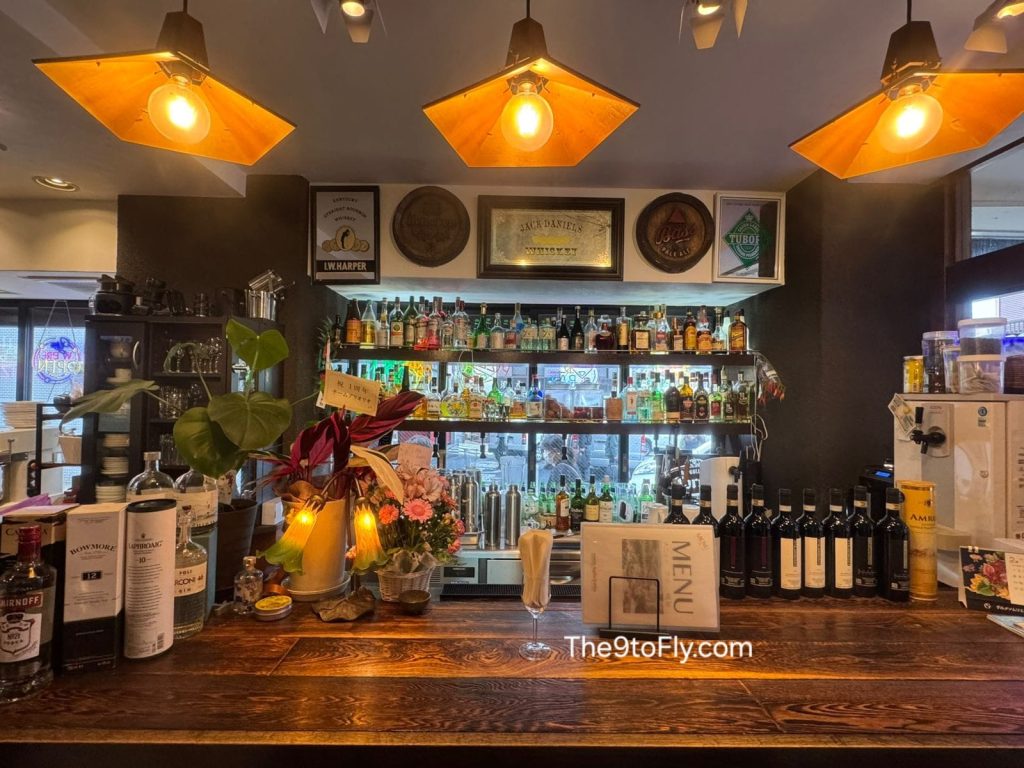
For us vegetarians though, it took some hunting. After walking around getting increasingly hungry, we found Porco Aglio Olio.
Porco Aglio Olio (Our Vegetarian Savior)
An Italian cafe right next to Arima Station (the train station, not the ropeway). Is Italian food what you’d expect in an ancient Japanese hot spring town? No. Did it save our hungry vegetarian selves? Absolutely.
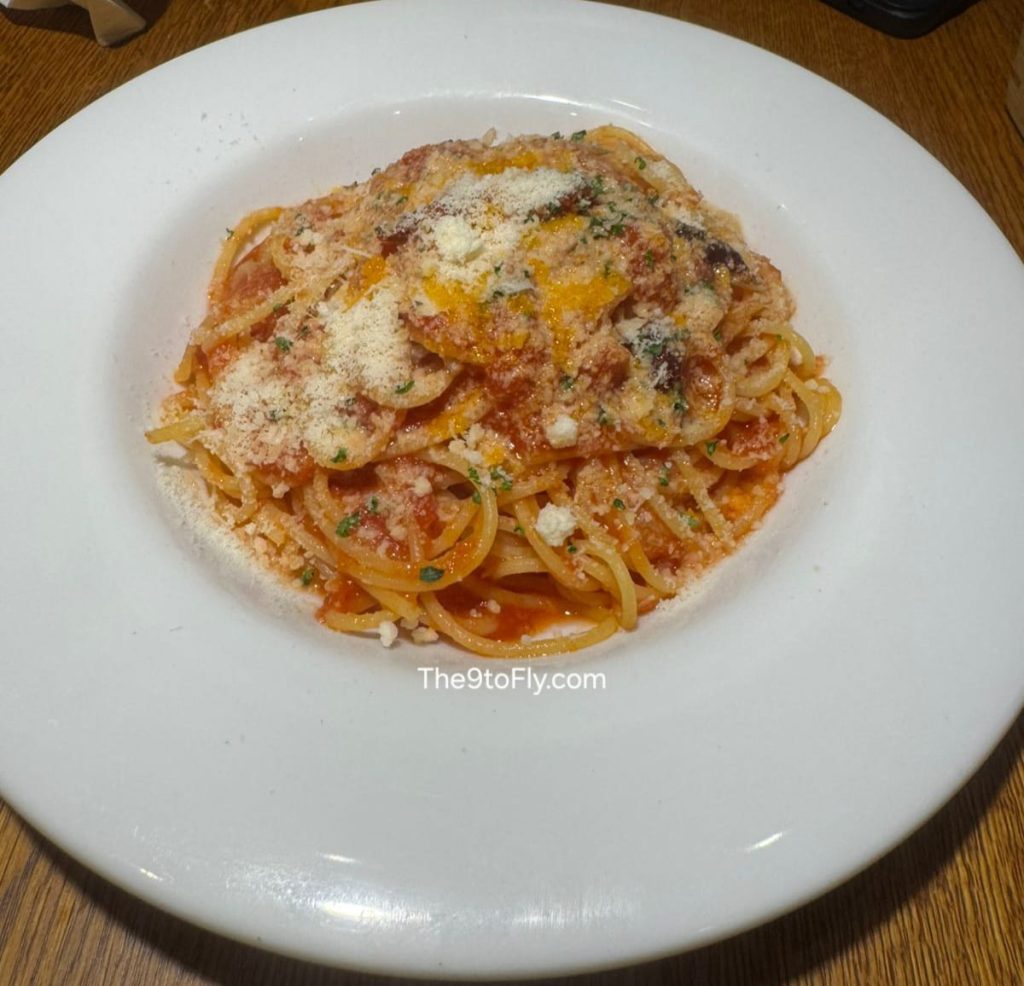
We had a gorgonzola pizza (blue cheese with honey drizzle, surprisingly good combo), spicy arrabbiata spaghetti, and garlic toast. Cozy vibe inside, friendly staff, left full and happy.
Sometimes the unexpected dinner wins.
Other Options
Tansan Senbei shops: The carbonated rice crackers are vegan by default. Good for snacking between sights.
Gelato shops: There’s an award-winning gelato place using local Rokko milk. Vegetarian-friendly (not vegan).
Arima Brewery: Craft beer using Rokko subterranean water. Good if you want a drink while exploring.
Cafes: Several traditional cafes serve coffee, matcha, and Japanese sweets. Good for a break between baths.
Getting Back to Kobe from Arima Onsen
Here’s the exact train route we took back to Sannomiya:
Train Route (What We Did)
Step 1: From Arima Station (right next to Porco Aglio Olio), take the Kobe Dentetsu Arima Line to Arima-guchi Station. Just one stop, about 5 minutes.
Step 2: At Arima-guchi, change to a train heading towards Shinkaichi. Get off at Tanigami Station. About 15 minutes.
Step 3: At Tanigami, transfer to the Kobe Municipal Subway (Seishin-Yamate Line). This takes you directly to Sannomiya.
Total time: About 35-40 minutes
Total cost: Around ¥700-800
Alternative: Highway Bus
Direct buses run between Arima Onsen and Sannomiya/Shin-Kobe. Faster if you can catch one, but less frequent in the evening. [CHECK THE SCHEDULE]
Time: About 30 minutes to Sannomiya
Cost: Around ¥800
Complete Cost Breakdown
Here’s roughly what this day trip costs:
Transport (using individual tickets):
JR Sannomiya to Rokkomichi: ~¥140
Bus to Rokko Cable Shita: ~¥230
Rokko Cable Car (one-way): ¥900
Rokko Sanjo Bus (unlimited): ¥370
Rokko-Arima Ropeway (one-way): ¥1,400
Train back to Sannomiya: ~¥800
Transport subtotal: ~¥3,840
Or use the Rokko-Arima One-Way Ticket: ¥2,450 + train back ¥800 = ¥3,250 (saves ~¥600)
Winter Activities (Rokko Snow Park):
Entry: ¥2,800
Lift ticket (weekend): ¥3,300
Ski + clothing rental: ¥6,000
Snow Park subtotal: ~¥12,100
Onsen:
Kin no Yu or Gin no Yu: ¥550-800
Combo ticket (both): ¥1,200
Taiko no Yu: ¥2,750-2,970
Food:
Snacks/lunch on mountain: ¥500-1,500
Dinner in Arima: ¥1,500-3,000
Realistic totals per person:
Summer/spring/autumn visit (no skiing): ¥6,000-9,000
Winter visit with skiing: ¥15,000-20,000
Is This Day Trip Worth It?
If you’ve got a day to kill between your Kyoto-Osaka itinerary, this is a solid option. You get mountain scenery, hot spring town vibes, and scenic transport all in one package.
This day trip is perfect if: You’re short on time and want mountain + onsen in one day. You enjoy scenic cable cars and ropeways. You’re okay with a sampler experience rather than deep exploration of either location.
Consider separate trips if: You want to do serious hiking on Mount Rokko. You want the full ryokan overnight experience in Arima. You’re visiting in autumn and want to really soak in the fall foliage without rushing.
For us, the combined trip works when we’re showing visiting friends around or when we just want a quick escape from the city. Living in Kobe means we can always come back for dedicated Mount Rokko or Arima days later.
Mountains, ropeways, hot springs, and unexpected Italian food. Could be worse ways to spend a day.
More Day Trips from Kobe
If you found this helpful, check out our other guides:
Biwako Valley Ski Resort Day Trip from Kobe [2026 Guide] – the9tofly
17 Reasons Why Kobe Is Worth Visiting (+ Why It’s Not) [2026] – the9tofly
20 Best Things To Do In Kobe Japan Handpicked By A Pro [2026 Edition] – the9tofly
Questions about this day trip? Drop them in the comments or DM us. Always happy to help fellow travelers navigate Kobe and beyond.

![Biwako Valley Ski Resort Day Trip from Kobe [2026 Guide]](https://the9tofly.com/wp-content/uploads/2026/02/WhatsApp-Image-2026-02-25-at-10.44.46-PM-768x399.jpeg)
![20 Best Things To Do In Kobe Japan Handpicked By A Pro [2026 Edition]](https://the9tofly.com/wp-content/uploads/2025/10/Be_Kobe-768x432.jpg)
![17 Reasons Why Kobe Is Worth Visiting (+ Why It’s Not) [2026]](https://the9tofly.com/wp-content/uploads/2025/09/Kobe-mosaicharbourland-scaled-e1770735482379-768x612.jpg)
![Hidden Cherry Blossom Spot in Kobe: The Cycling Road Tourists Don’t Know About [2026]](https://the9tofly.com/wp-content/uploads/2026/03/Yamada-Sakura-2-768x1024.jpeg)