
Hidden Cherry Blossom Spot in Kobe: The Cycling Road Tourists Don’t Know About [2026]
The9toFly contains affiliate links. If you make a purchase using one of the links below, we may receive compensation at no extra cost to you. We only recommend products and services we use and trust. Read our disclaimer for more information.
If you’ve ever visited Japan during sakura season, you know the drill. You see those gorgeous cherry blossom photos on Instagram—peaceful paths, soft pink petals, barely a person in sight. And then you actually show up to places like Maruyama Park in Kyoto or Osaka Castle, and it’s wall-to-wall people. Everyone’s queuing for that one perfect photo spot, the paths are packed, and the whole experience feels more like a crowd simulation than a peaceful spring day.
We’ve been there. Multiple times. We love Kyoto and Osaka, but after living in Kobe for a while, we started looking for somewhere we could actually enjoy the cherry blossoms—somewhere quiet, somewhere where you can just take your time and be surrounded by nature without the tourist rush.
And we found it: the Kande Yamada Cycling Road (thank us later!).
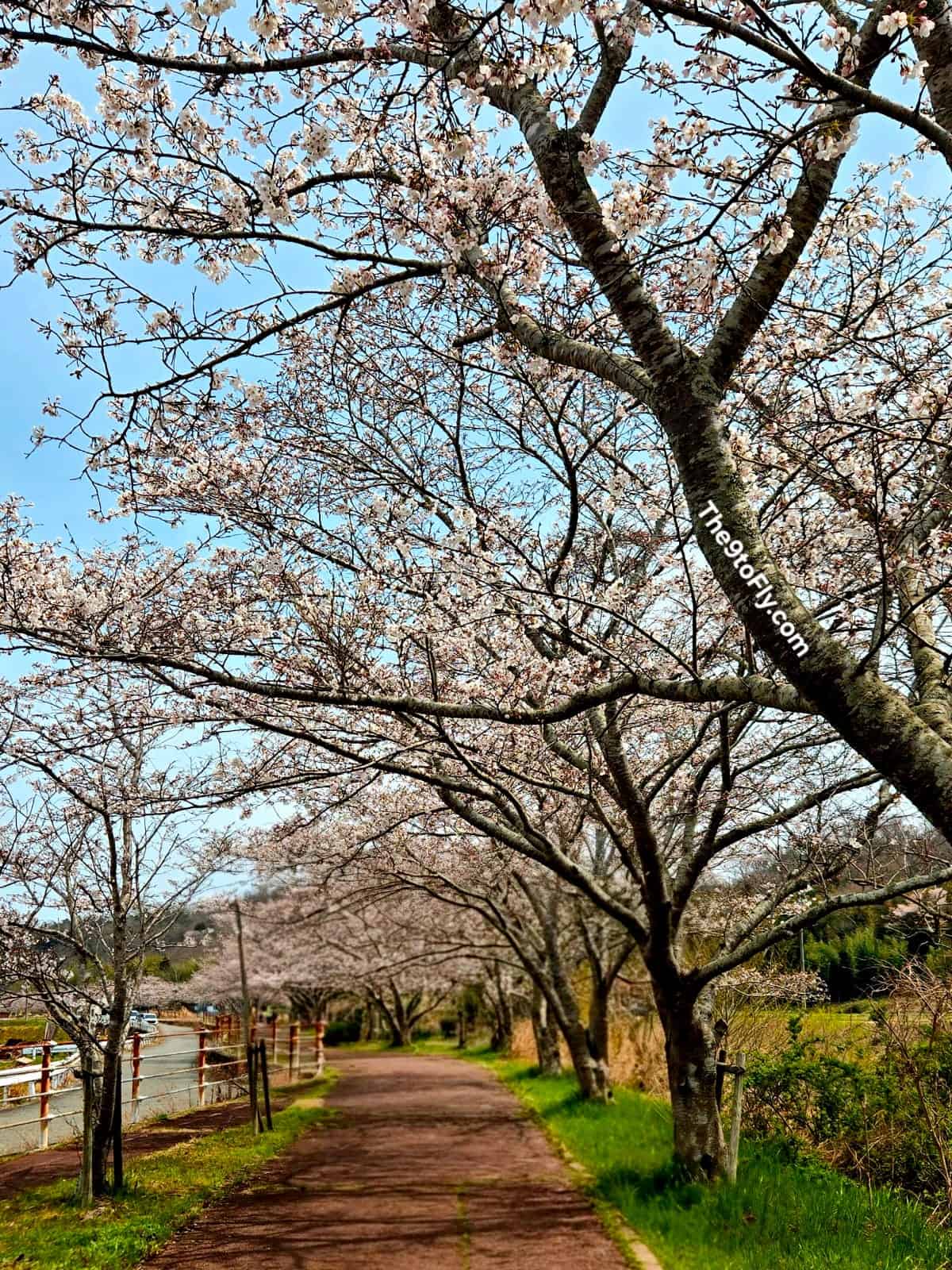
It’s a 19.3-kilometer cycling path tucked into Kobe’s satoyama—the rural countryside on the north side of the city. During sakura season, the entire route is lined with cherry blossom trees, and there’s practically nobody there. You rent a bike, pack some snacks, and spend the whole day pedaling through pink-canopied paths, along a beautiful lake, and through the kind of rural Japan scenery that most tourists never get to see.
Here’s our complete guide to doing it yourself.
What Is the Kande Yamada Cycling Road?
The Kande Yamada Cycling Road (神出山田自転車道) is a paved cycling path that connects Yamada-cho in Kobe’s Kita Ward to Kande-cho in Nishi Ward. It stretches about 19.3 kilometers through Kobe’s satoyama—the rural, mountainous countryside that most visitors to Japan don’t even know exists. Think rice paddies, quiet streams, forested hills, and the beautiful Lake Tsukuhara.
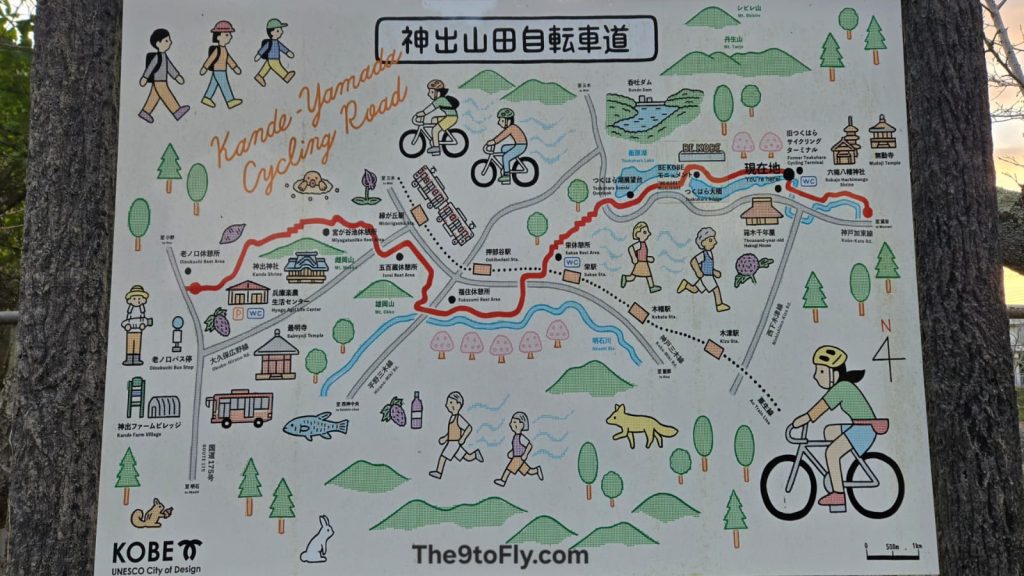
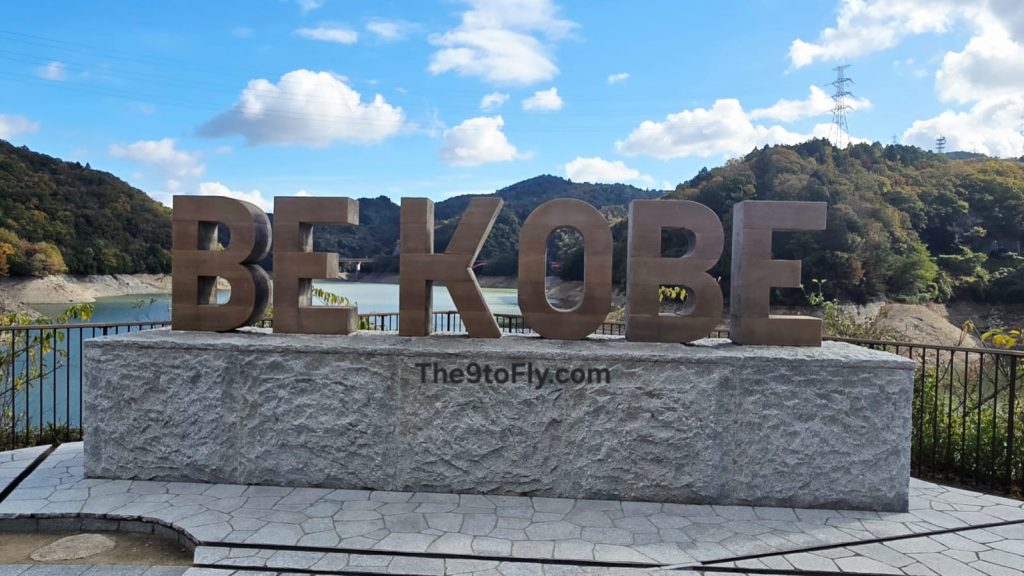
The road was renovated and reopened in 2019, and in 2020, a BE KOBE monument was installed on the lakeshore—the first one in a satoyama area. The path is well-maintained with rest stops, vending machines, benches, washrooms, and even a free cabin with showers for cyclists.
What makes this place special is that it’s genuinely off the tourist radar. On our ride, we passed maybe a dozen other people the entire day. If you’re used to the crowded sakura spots in Kyoto or Osaka, this will feel like a completely different world.
Why It’s Perfect for Sakura Season
Cherry blossom trees line long stretches of the cycling path, especially around the Lake Tsukuhara area. During late March and early April, the route turns into a pink-and-white canopy—and because it’s a dedicated cycling road (not a park or temple), you get to ride through the blossoms rather than just stand next to them.
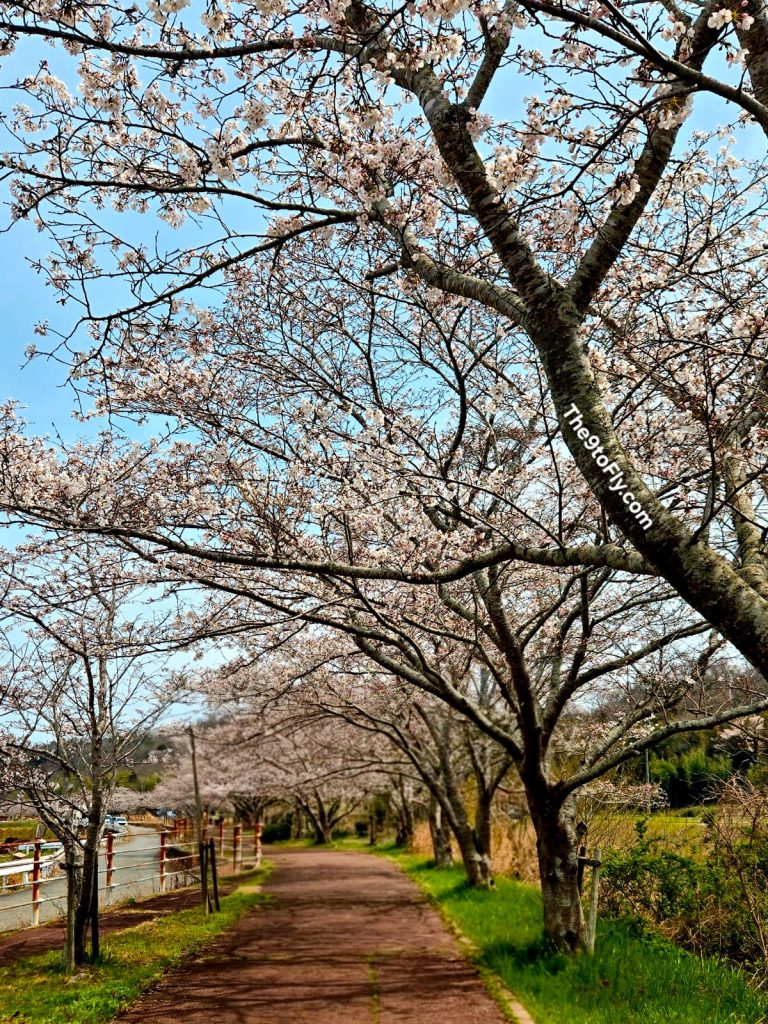
The trees reflecting in the lake, petals drifting onto the path, birds singing, and barely another person around—it felt like we’d found our own private sakura viewing spot, just about an hour from downtown Kobe. Annie stopped at least three times just to stand there and take it all in.
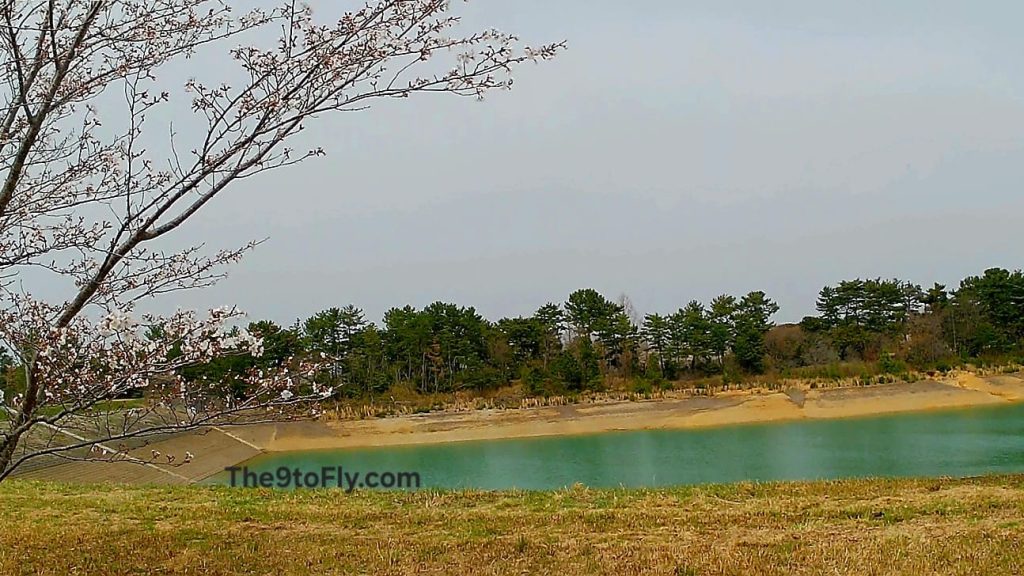
And beyond the cherry blossoms, you get to experience something most tourists never see: rural Japan. The satoyama countryside is beautiful in a completely different way from the cities. Small farms, traditional shrines, quiet roads—it’s a side of Japan that’s worth the trip on its own.
How to Get There from Sannomiya
Getting to the cycling road from central Kobe takes about an hour by bus, with one transfer. Here’s the route:
Step 1: Sannomiya to Minotani Station (Bus #64)
From Sannomiya Bus Terminal, take the Kobe City Bus #64 heading toward Minotani/Kobe Kitamachi (箕谷駅前・神戸北町). The ride takes about 19 minutes and costs ¥470. Buses run frequently throughout the morning.
Step 2: Minotani Station to Tsukuhara (Bus #111)
At Minotani Station bus stop (箕谷駅前), transfer to the Kobe City Bus #111 heading toward Tsukuhara (衝原). This is the last stop on the route, and it takes about 15–20 minutes. The Tsukuhara Cycling Terminal is right near the bus stop—that’s where you pick up your bike.
The total journey from Sannomiya to the cycling terminal is roughly 50–60 minutes including the transfer. Use an ICOCA or Suica card for both bus rides—just tap on and off. And check Google Maps on the morning of your visit for the latest bus schedule, since times can vary on weekends.
Tip: Since bike rentals start at 10:00 AM and the last return is 4:30 PM, we’d recommend catching a bus that gets you to Tsukuhara by around 9:30–10:00 AM. That way, you’ll have a solid 6–7 hours to enjoy the full cycling experience without rushing.
Renting a Bike (Prices, Types & How to Book)
You don’t need to bring your own bike. Kobe City runs a seasonal share cycle program with four rental and return points along the route. For spring 2026, the program runs from March 14 to May 31 (weekends and national holidays only).
Rental Locations
- ① Tsukuhara Cycling Terminal — the main hub, right by the lake
- ② Nel Drip Coffee “Kōhī-ya” — near Tanigami Station
- ③ Cup ~Sweets & Coffee~ — near Sakae Station (closed Monday & Tuesday, even on holidays)
- ④ Rakunou Café Five Country Cafe — inside Hyogo Rakunou Life Center
You can pick up your bike at one location and return it at a different one, which is really convenient if you want to ride one way and bus back.
Bike Types & Prices (Weekends/Holidays)
- Cross Bike: ¥2,200 for adults / ¥1,100 for kids (elementary and under). Available in sizes S (135–150cm) and M (155–170cm).
- Electric-Assist Bicycle: ¥2,750. Minimum height: 145cm. This is the one we’d recommend—the extra cost is worth it for a comfortable, full-day ride.
- Kids’ Bicycle: ¥1,100. Minimum height: 125cm.
- Child Trailer: ¥1,650. For kids under 105cm / 18kg (12 months+). Only available at the Tsukuhara Terminal and limited to the Lake Tsukuhara area.
All rentals include a helmet. The cross bikes are Giant ESCAPE models—solid, well-maintained, and they come with a lock and light.
Hours
- Open: 10:00 AM
- Last rental: 4:00 PM
- Final return: 4:30 PM
How to Book
Advance reservation is required. Book through the official website:
https://trek-kobe-tsukuhara.jp
You can also call: 080-4826-9926
We’d strongly suggest booking a few days in advance, especially on sunny weekends during Sakura peak. Slots fill up quickly especially for the E-bikes, and you don’t want to make the trip out there only to find everything’s taken.
What the Route Looks Like
The entire cycling path is paved, mostly flat, and completely car-free. It’s not a mountain biking trail—it’s a relaxed, scenic route where you can ride side by side and actually have a conversation. Perfect for couples, families, or solo riders who just want a chill day outdoors.
Into the Satoyama
As soon as you enter the cycling road, the city noise disappears. You’re riding alongside a quiet stream with overhanging trees and scattered cherry blossoms. The path is peaceful and well-paved. We barely saw another person for the first stretch, and the transition from city to countryside happens surprisingly fast.
The Lake Tsukuhara Section
This is the highlight. The path wraps around the north side of Lake Tsukuhara, and during sakura season, the trees along the lakeshore are in full bloom. The reflections in the water are stunning—this is where you’ll want to slow down, pull over, and take your time.
There’s a large rest area at Tsukuhara Ohashi with a lookout point, benches, and the BE KOBE monument (more on that below). It’s a great spot to park your bike, sit down, and just take everything in.
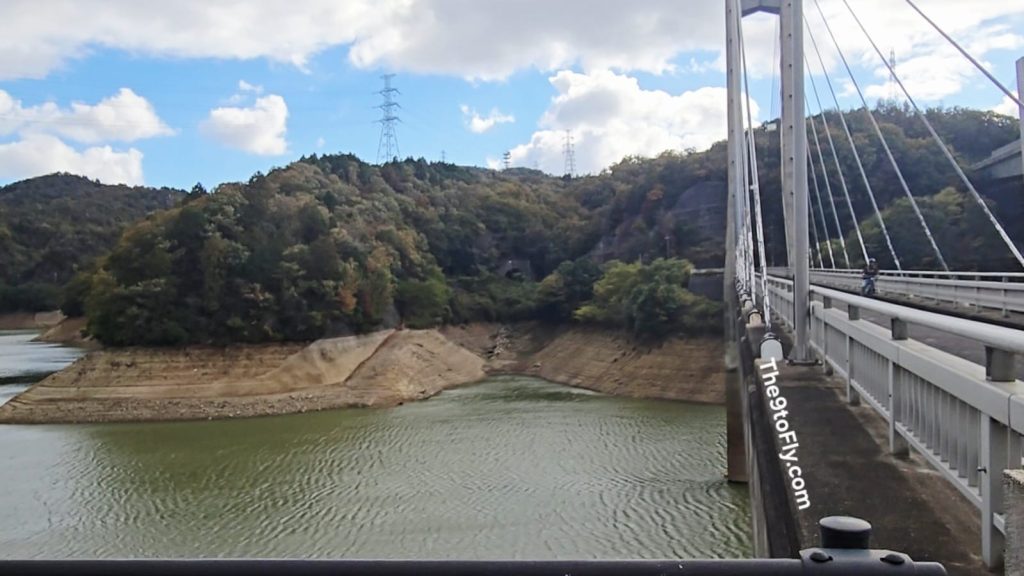
The Rural Stretch
Depending on your direction, the route continues through rice fields, small shrines, and local farms. This is the part where you really feel like you’re seeing a different side of Japan—quiet, green, and miles away from the tourist trail. It’s the kind of scenery that makes you think, “This is what rural Japan looks like,” and it’s beautiful.
Rest Areas, Snacks & Washrooms
The cycling road has several rest stops along the way, so you won’t be stranded. Here’s what’s available:
- Tsukuhara Cycling Terminal: The main hub with washrooms, vending machines (drinks and snacks), tables, and the free TREK KOBE Tsukuhara Cabin nearby with showers and toilets (open 8 AM – 8 PM, until 5 PM in winter months).
- Tsukuhara Ohashi Rest Area: Overlooking the lake with benches and a scenic lookout. Great spot for a break.
- Along the route: You’ll find a few additional rest benches, vending machines, and lookout spots scattered throughout.
- Cafés near rental points: The Kōhī-ya (near Tanigami) and Cup ~Sweets & Coffee~ (near Sakae) are both nice spots for a coffee or a light meal if your route takes you past them.
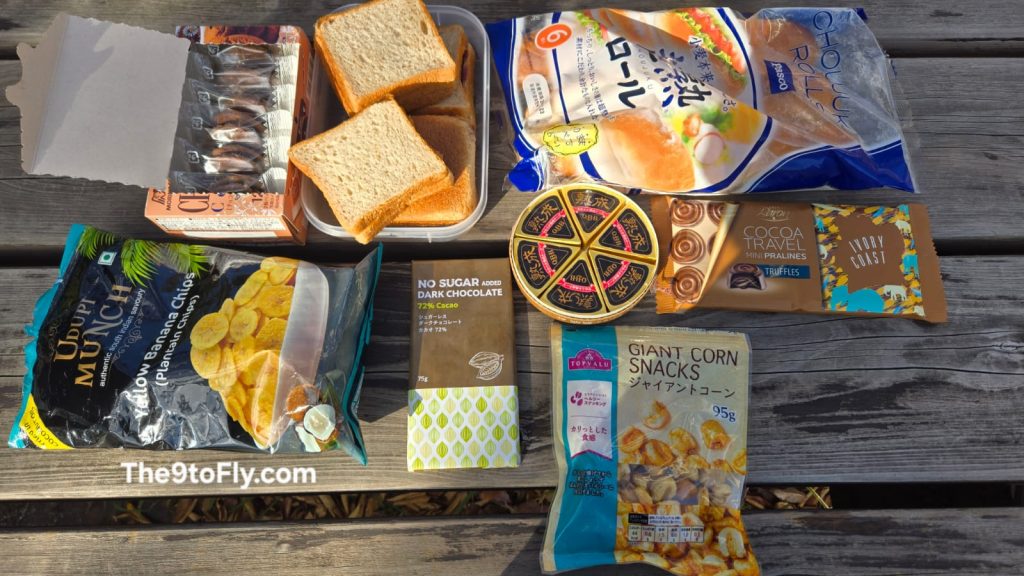
Our advice: Bring your own snacks. The cafés are nice but small, and depending on your timing, you might not pass one when you’re hungry. We had packed some sandwiches, cookies and chocolates—and honestly, having a lakeside picnic with cherry blossoms overhead was one of the best parts of the day. There are plenty of benches and resting areas along the route where you can sit down and enjoy your food.
The BE KOBE Monument at Lake Tsukuhara
You might know the famous BE KOBE sign at Meriken Park in downtown Kobe. But there’s a lesser-known one right here at Lake Tsukuhara. Installed in June 2020, it was the first BE KOBE monument placed in a satoyama area.
It’s photogenic, it’s free, and unlike the Meriken Park version, there’s no line. We spent a good while here just taking photos and enjoying the view. If you’re looking for a unique photo spot in Kobe that most tourists haven’t discovered, this is it.
Getting Back to Sannomiya
Getting home is simply the reverse of your morning trip:
- From the Tsukuhara bus stop, take Bus #111 back to Minotani Station (箕谷駅前).
- At Minotani, transfer to Bus #64 heading to Sannomiya. About 19 minutes, ¥470.
The whole return trip takes about the same 50–60 minutes. Just make sure you return your bike by 4:30 PM and give yourself enough time to catch the bus back. Late afternoon buses can be a bit less frequent, so don’t cut it too close.
Local Tip: Aim to finish your ride by 3:30–4:00 PM so you have a comfortable buffer for returning the bike and catching the bus.
Tips Before You Ride
- Book your bike in advance. This is the most important thing. Reservations are required, and weekends during sakura season fill up fast. Also, the electric bikes are limited in number, so book early.
- Bring your own snacks and water. There are vending machines along the way, but your own bento, onigiri or snacks makes for a much better lakeside picnic. Trust us on this one.
- Wear comfortable clothes. Nothing fancy—shorts or track pants, sneakers, and maybe a light jacket for the morning. It can be a bit cool in the satoyama area in early spring.
- Sunscreen. Spring sun in Japan is easy to underestimate. You’ll be outside all day, so come prepared.
- Charge your phone. You’ll need it for checking bus times and for photos. A portable charger is a good idea.
- Aim to arrive by 10 AM. Rentals open at 10 AM and close at 4:30 PM. Getting there early gives you a full 6–7 hours to enjoy the route without rushing.
- Consider the electric bike. The route is mostly flat, but if you’re planning to do the full 19.3 km or want a more relaxed ride, the electric-assist bike makes a real difference. The extra cost over the cross bike is well worth it.
- Check Google Maps on the day. Bus schedules can vary on weekends vs. holidays. A quick check in the morning will save you any surprises.
FAQs
Is the Kande Yamada Cycling Road suitable for beginners?
Yes, completely. The path is paved, mostly flat, and car-free. If you can ride a bicycle, you can do this route. There’s also a beginner-friendly course map on the official website if you don’t want to tackle the full distance.
Can I bring my own bike?
Absolutely. If you have your own bicycle, you can ride to the cycling road from nearby stations. There’s also free parking at the Tsukuhara Cycling Terminal if you’re driving. The Kobe Dentetsu line occasionally offers a cycle train service on select dates—check the TREK Tsukuhara website for details.
Are there washrooms along the route?
Yes. Washrooms are available at the Tsukuhara Cycling Terminal, the Sakae rest stop area, and the Hyogo Rakunou Life Center. The free TREK Cabin near the terminal also has showers and toilets.
What if it rains?
The share cycle still operates in light rain, but cycling in the rain isn’t the best experience. If the forecast looks uncertain, check the official website or call ahead. You can usually adjust your reservation.
Is there food for vegetarians or vegans?
The cafés along the route are small and mostly Japanese-style, so options for strict vegans might be limited. Your best bet is to bring your own food. We always grab snacks from a convenience store—the konbu (seaweed) and ume (plum) varieties are vegan/ vegetarian-friendly and perfect for a cycling day.
When is the best time to visit for cherry blossoms?
Cherry blossoms in Kobe typically bloom in late March and reach full bloom in early April. The exact timing changes every year, so we’d recommend checking the latest sakura forecast closer to your visit. The share cycle program runs from mid-March through the end of May, so you have a good window to catch the blossoms.
Final Thoughts
We’ve lived in Kobe long enough to know where the crowds go during sakura season—and this isn’t one of those places. The Kande Yamada Cycling Road is one of those experiences that feels personal, like you’ve found something that most visitors to Japan simply don’t know about.
You don’t need to be a cyclist. You don’t need special gear. Just a sunny weekend, a rented bike, some snacks, and a willingness to swap the city crowds for something quieter and more beautiful.
If you’re visiting Kobe during cherry blossom season and want something truly different from the usual tourist spots, give this a try. Rent a bike, ride through the countryside, have a picnic by the lake, and enjoy sakura season the way it’s meant to be enjoyed—slowly, peacefully, and surrounded by nature.
Got questions about cycling in Kobe or planning your sakura trip? Drop them in the comments or send us a message—we always love helping fellow travelers plan something memorable.
Planning more adventures around Kansai?
Check out our other guides:
20 Best Things To Do in Kobe: A Local’s Guide
Is Kobe Worth Visiting? 17 Reasons Why You Should Go
Save this for later!

![17 Reasons Why Kobe Is Worth Visiting (+ Why It’s Not) [2026]](https://the9tofly.com/wp-content/uploads/2025/09/Kobe-mosaicharbourland-scaled-e1770735482379-768x612.jpg)
![The Ultimate Mount Rokko & Arima Onsen Day Trip from Kobe [2026 Guide]](https://the9tofly.com/wp-content/uploads/2026/03/Logo-768x448.jpeg)
![Biwako Valley Ski Resort Day Trip from Kobe [2026 Guide]](https://the9tofly.com/wp-content/uploads/2026/02/WhatsApp-Image-2026-02-25-at-10.44.46-PM-768x399.jpeg)
![20 Best Things To Do In Kobe Japan Handpicked By A Pro [2026 Edition]](https://the9tofly.com/wp-content/uploads/2025/10/Be_Kobe-768x432.jpg)