

Cao Bang Travel Guide: 2 Days, Ban Gioc Waterfall & Angel Eye Mountain [2026]
The9toFly contains affiliate links. If you make a purchase using one of the links below, we may receive compensation at no extra cost to you. We only recommend products and services we use and trust. Read our disclaimer for more information.
PLANNING A TRIP TO CAO BANG, VIETNAM?
Cao Bang wasn’t originally on our Vietnam itinerary. We added it almost as an afterthought, a two-day detour between Sapa and Hanoi to see what was further north. That ended up being one of the best travel decisions we’ve made.
Cao Bang is a province in northeast Vietnam, close to the Chinese border, and it’s the kind of place that hasn’t quite been discovered yet. Ban Gioc, the waterfall on the Vietnam-China border, is one of the largest waterfalls in Southeast Asia. The Angel Eye Mountain, a peak with a literal hole through it, looks like something you’d see in a movie. The roads between them, winding through green valleys and past rice fields, are as good as anything we’ve driven in Vietnam.
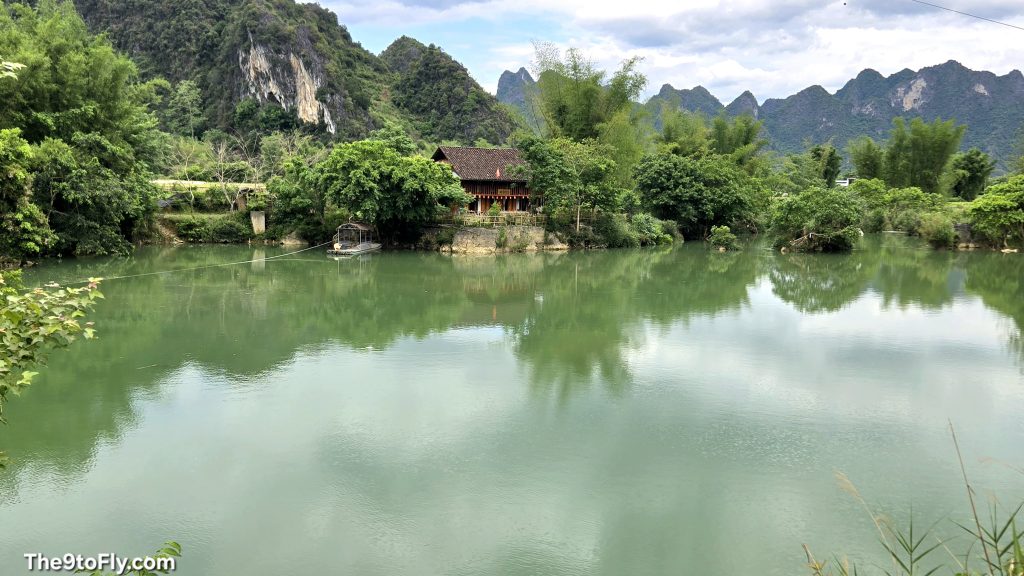
Most travellers in northern Vietnam stick to Ha Giang or Sapa. Cao Bang sits just east of that track and gets a fraction of the visitors. Which means the waterfalls are quieter, the villages are more genuine, and you feel like you’re actually exploring rather than following a well-worn tourist circuit.
We spent two days here on scooters. This guide covers how we got there, where we stayed, what we did, what things cost, and a few extra days’ worth of ideas if you have more time.
How to Get to Cao Bang from Hanoi (or from Sapa)
From Sapa (Our Route)
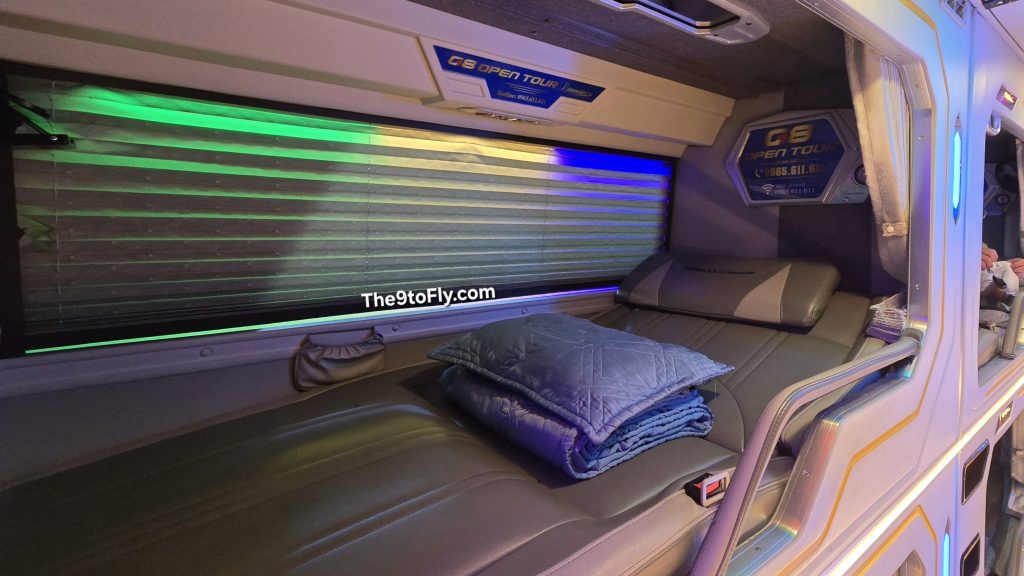
We came from Sapa, which meant arriving in Hanoi first and then catching an onward transfer. Our sleeper bus from Sapa got us into Hanoi around 5:00 AM. We waited at the G8 bus office until around 6:00 AM when a limousine van picked us up along with a few other passengers, collected people from a couple more stops across the city, and set off for Cao Bang.
The van makes two or three breaks along the way for bathroom and snack stops, which is welcome on a long stretch. We arrived in Cao Bang city at around 12:00 to 12:30 PM. The total journey from Hanoi to Cao Bang was roughly six hours.
Everything was arranged through our hotel. We didn’t book anything in advance for the Cao Bang leg. The hotel staff sorted the van transfer, the scooter, and the return trip to Hanoi. If you’re staying at a guesthouse or small hotel in Cao Bang, just ask. They’ll likely handle it for you.

From Hanoi Directly
Multiple buses and limousine vans run daily from Hanoi to Cao Bang. The journey takes between 6 and 9 hours depending on the service. Sleeper buses depart from My Dinh Bus Station in Hanoi. You can book through 12go.com or directly with local operators. Limousine vans are faster and more comfortable than standard buses and run from around 150,000 to 300,000 VND per person depending on the company.
Book transport through 12go.com for the most straightforward booking experience as a foreigner.
Day 1: Arrival, Lela Cafe, Angel Eye Mountain & Lazy Bug Dinner
Arrival and Lunch at Lela Cafe
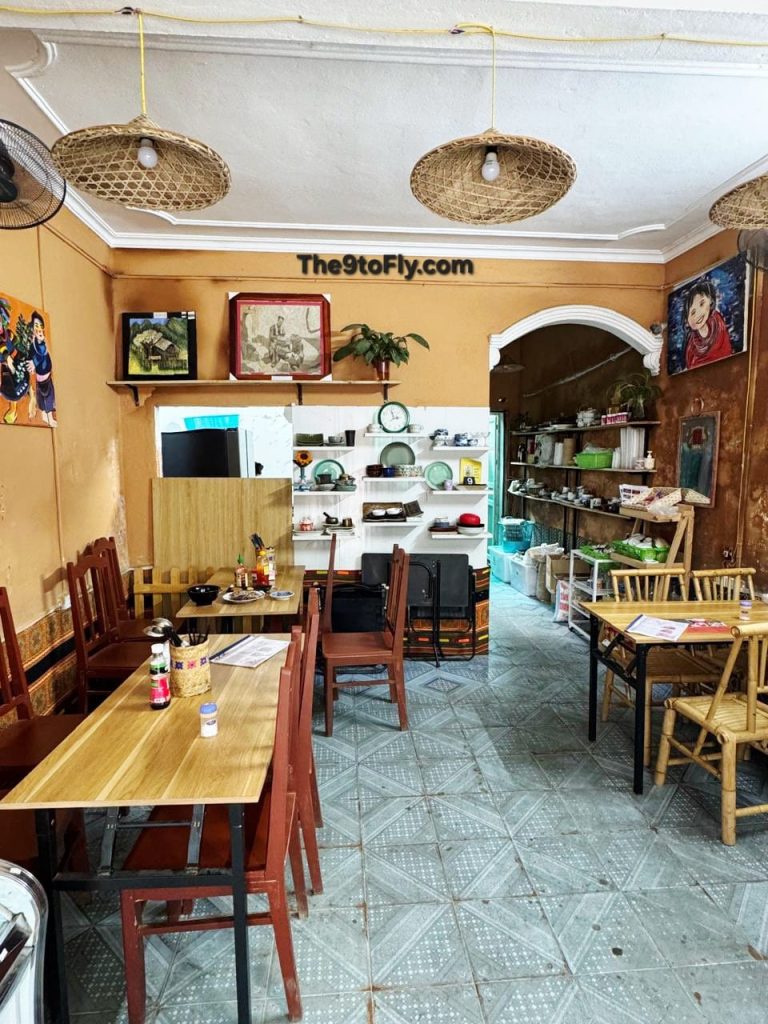
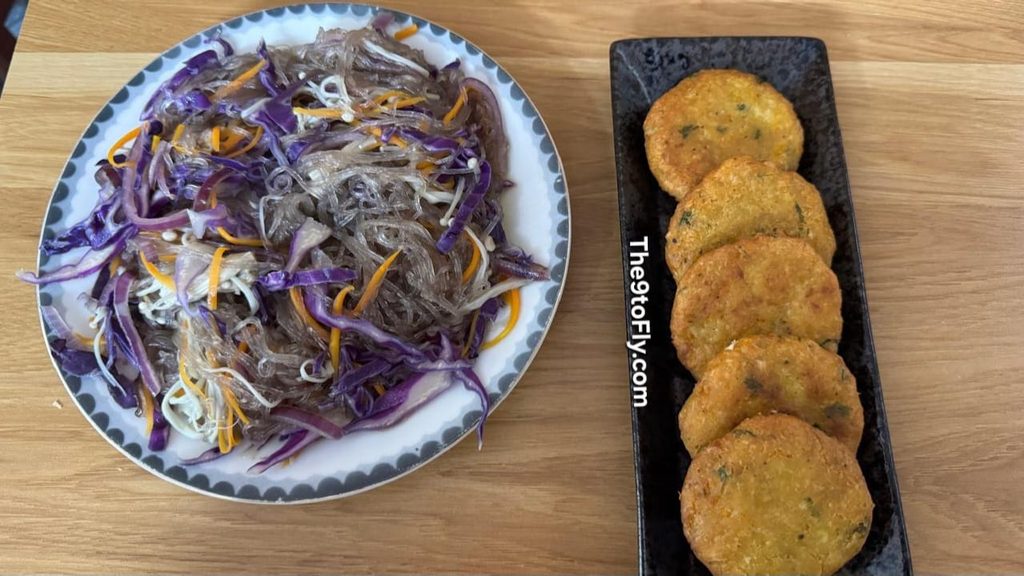
We arrived around midday, checked in, and headed straight to Lela Cafe for lunch. It’s a vegan cafe nearby and a genuinely good one. We had chickpea cutlets, glass noodles, and lotus flower soup. Clean, fresh food and a relaxed environment. Exactly what you want after a morning of travel.
After lunch we picked up the scooter from the hotel and set out for the afternoon.
Afternoon: Angel Eye Mountain (Nui Mat Than)
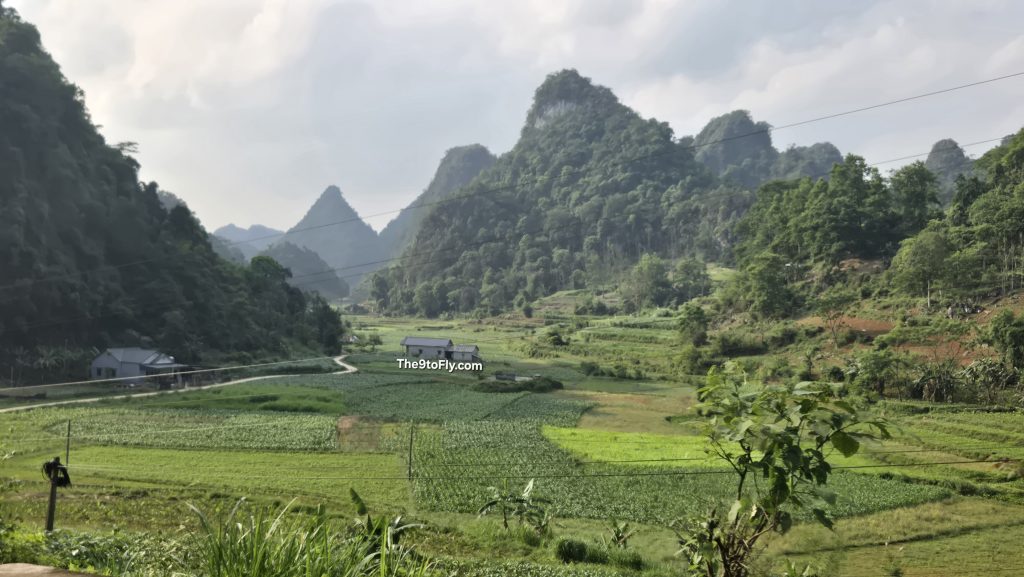
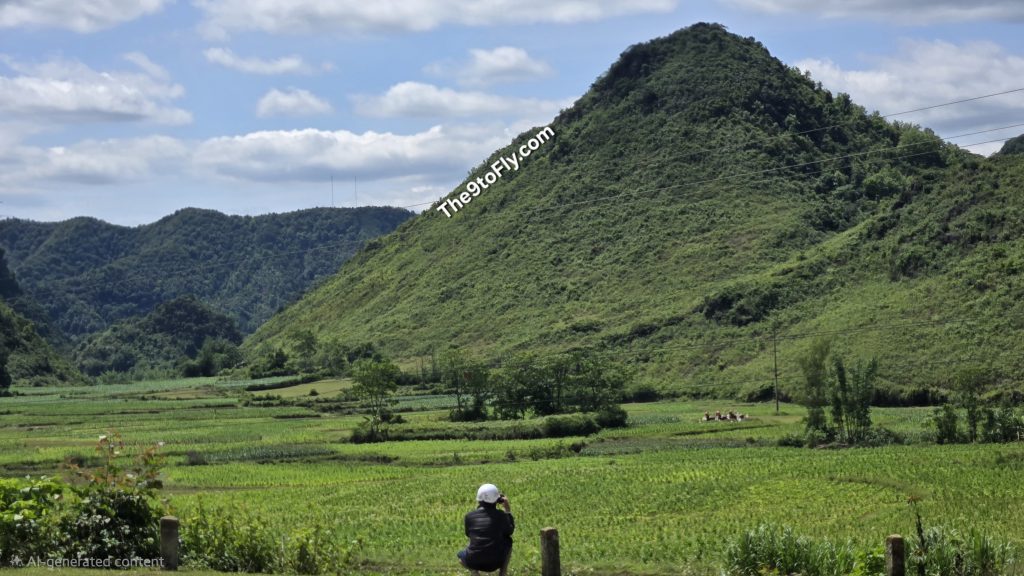
The Angel Eye Mountain is about 45 minutes north of Cao Bang city by scooter. The drive itself is one of the highlights: winding through green valleys with rice fields on either side, cliffs rising up around you, and almost nobody else on the road. We stopped multiple times just to take it in.
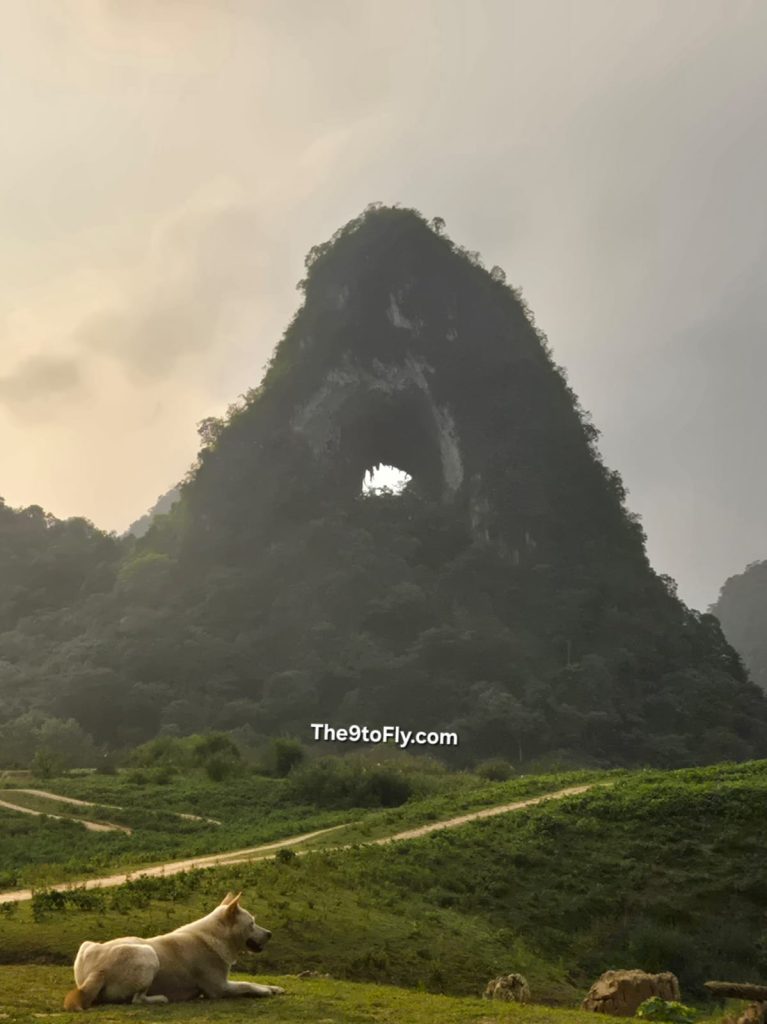
The mountain gets its name from a large circular hole near its peak, which looks like an eye when you view it from the valley floor. The effect is surreal. It’s the kind of thing that makes you stop and stare because you’re not quite sure if it’s real. There are no major facilities here, no crowds, no ticket booths. Just the mountain, the valley, and a few other people on bikes who had the same idea.
About the parking: There’s a parking area about 20,000 VND where you can leave your scooter. But you don’t have to. If you’re comfortable on a scooter, you can ride further up toward the mountain itself along the dirt track. The path is steep, rocky, and rough in places, so don’t attempt it if you’re not confident. But if you can manage it, you save the parking fee and get much closer to the mountain. We rode up and it was worth it.
We spent about an hour here, walking around, taking photos, and watching the sun start to drop behind the surrounding peaks. The light in the late afternoon on the valley floor and the mountain is genuinely beautiful.
Getting there: About 45 minutes from Cao Bang city by scooter.
Evening: Night Market and Lazy Bug Cafe
Back in the city by early evening, we walked around the night market near the hotel for a while. Cao Bang’s market area is lively and unpretentious. Not a tourist market at all. Just locals going about their evening, food stalls setting up, and a general buzz that doesn’t feel performative.
It was around the 30th of April, a national holiday in Vietnam, and there were local dance groups practicing in the streets for the celebrations. We didn’t plan for it and had no idea what we were watching at first, but it was one of those spontaneous moments you remember more than the planned stuff. Groups in traditional dress, loud music, enthusiastic crowds of locals. We just stood and watched for a long time.
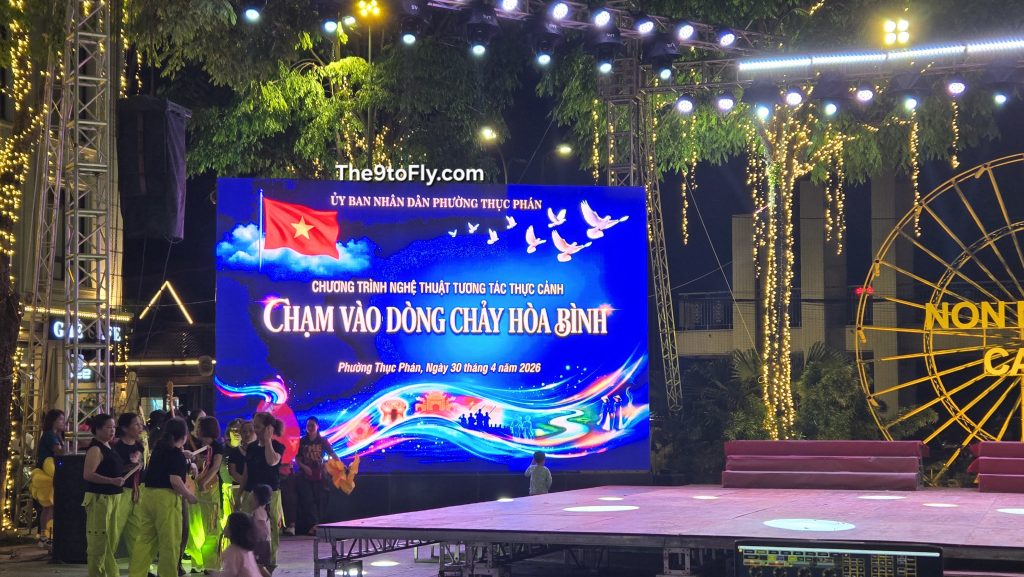
For dinner we went to Lazy Bug, a vegan cafe that’s a bit harder to find but well worth tracking down. It’s run by a family from their terrace, tucked inside a small alley. The place has five-star reviews and you immediately understand why. Books, Jenga, cards, magazines scattered around. Warm, cosy, completely unpretentious.
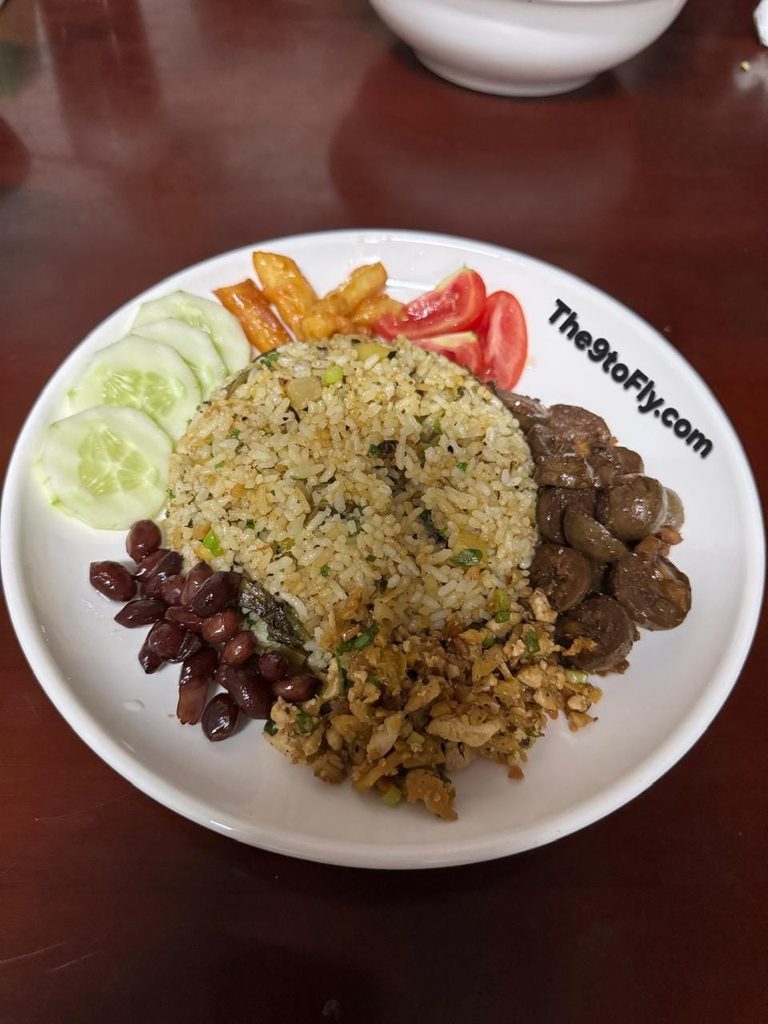
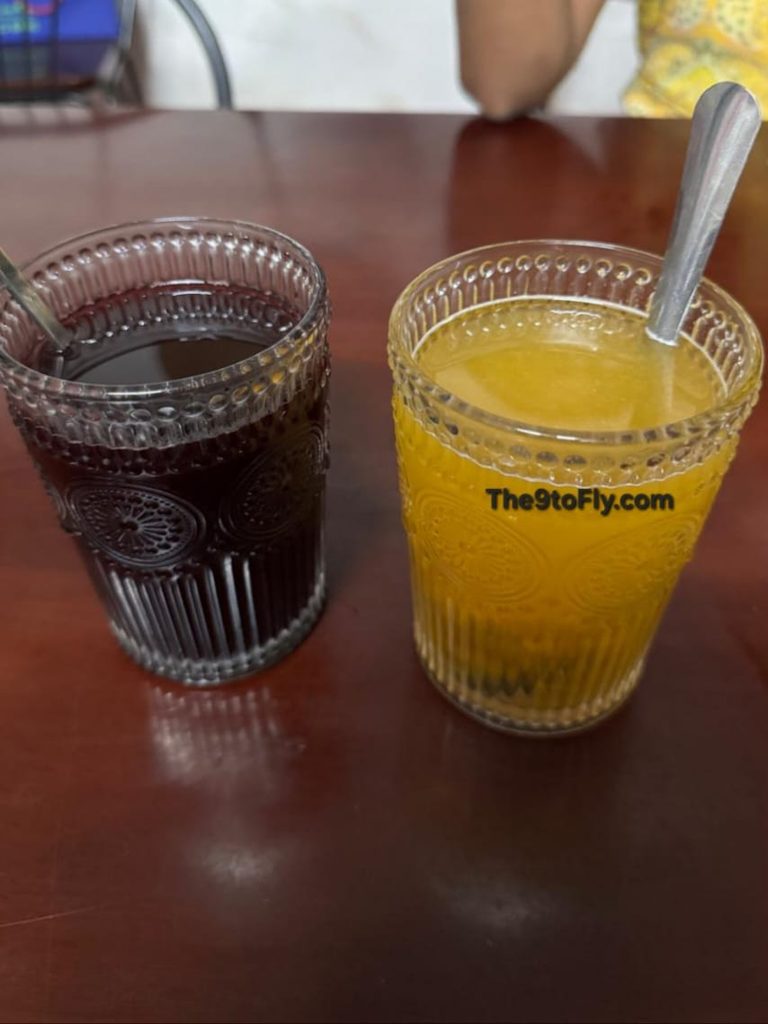
We had vegan fried rice, vegan soup noodles, and tried their mulberry juice and peach juice. The drinks were a genuine highlight, both really good. This cafe is the kind of place you stumble into and end up staying two hours longer than you planned.
Day 2: Ban Gioc Waterfall, Tiger Cave & Phuc Sen Knife Village
Early Start for Ban Gioc
We left the hotel at 7:00 AM. Early start is the move here, both to beat the crowds and to enjoy the drive in the morning light. We stopped at a supermarket on the way out of the city to grab snacks for the road, which was a good call because the route is long and beautiful but not well stocked with food along the way.
Ban Gioc is about 90 km from Cao Bang city and takes roughly two hours and fifteen minutes by scooter. The road takes you through rice fields, small villages, and increasingly dramatic mountain scenery. We stopped several times. You will too.
Ban Gioc Waterfall
We arrived around 9:00 AM and were glad we left early. By mid-morning the car park was starting to fill. Ban Gioc is one of the largest waterfalls in Southeast Asia, straddling the border between Vietnam and China. From the Vietnamese side, you look across the river and see the falls spreading across 300 metres, dropping in multiple tiers. The volume and scale of it is hard to get across in photos. It’s a lot bigger than it looks on Instagram.
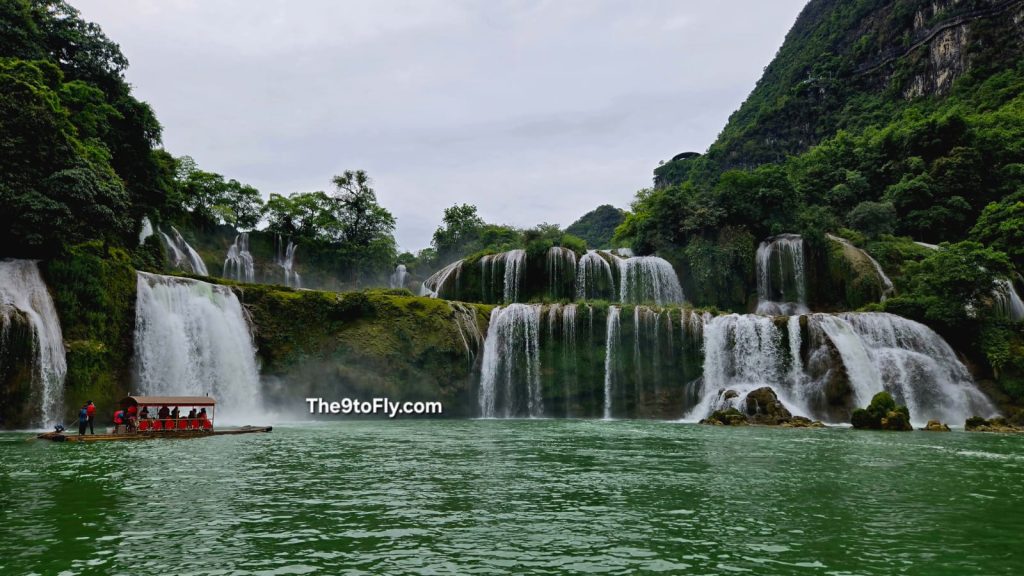
What makes it genuinely unusual is the border aspect. While you’re watching the falls from the Vietnamese side, you can see tourists on the Chinese side doing the same thing from their bamboo rafts. Both Vietnamese and Chinese flags are visible from the bank. It’s one of those rare places where a natural wonder is shared between two countries and you can actually see both sides at once.
The bamboo boat ride is worth doing. For 50,000 VND, a boatman takes you from the Vietnamese bank right to the base of the falls on a raft. The boat gets close enough that you feel the mist on your face and the roar of the water is right above you. The ride lasts about 10 minutes. You will get a little wet.
Entry fee: 45,000 VND per person.
Boat ride: 50,000 VND per person (highly recommended). About 10 minutes.
Motorbike parking: 10,000 VND.
Hours: 7:30 AM to 5:00 PM daily.
Cash only. Bring enough before you leave Cao Bang.
Pro tip: The waterfall’s flow is controlled by a dam upstream. Around midday the dam opens more, increasing the volume. If you have the option, staying until the afternoon means you’ll see more water coming through.
Tiger Cave (Nguom Ngao Cave)
About 4 kilometres from the waterfall is Nguom Ngao Cave, known as the Tiger Cave. In the local Tay language, “Nguom Ngao” simply means tiger cave, named for the tigers that once sheltered here. We did the short route, which takes about 30 to 40 minutes. There are two routes available:
- Short route: 45,000 VND per person. A well-lit walk through the first sections of the cave, past large chambers and rock formations. About 30 to 40 minutes.
- Long guided route: around 200,000 VND per person. A 1.5 to 2 hour tour with a local guide through the deeper sections of the cave. From everything we’ve heard from other travellers, this is the one to do if you have the time.
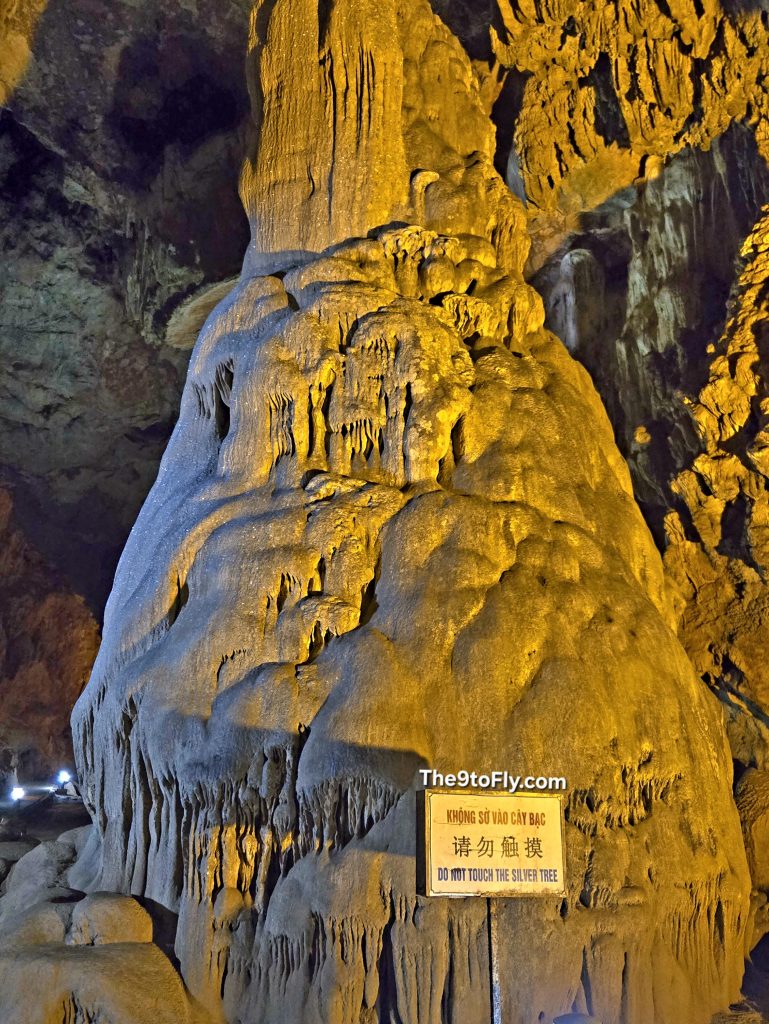
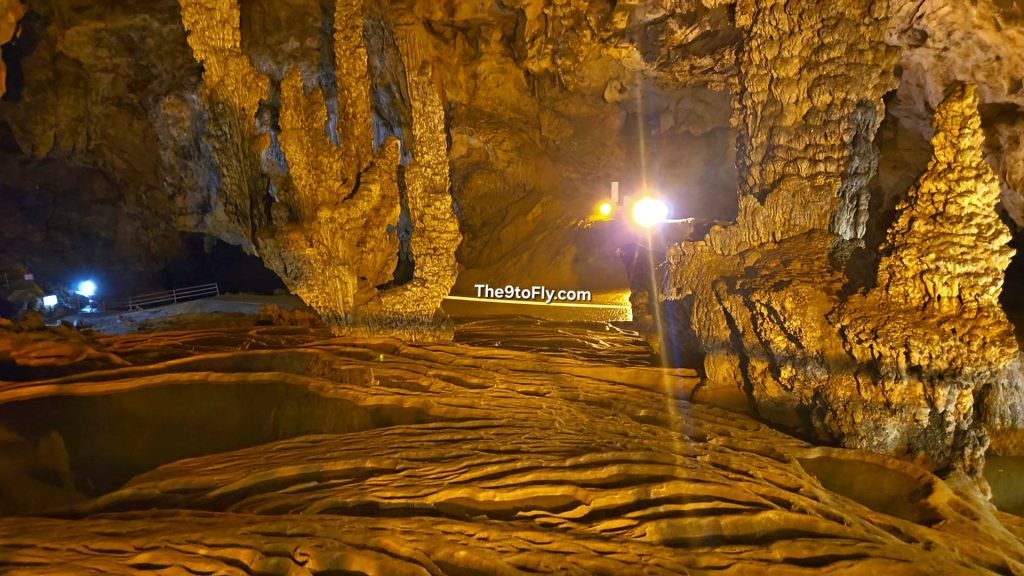
We only had time for the shorter route. The cave is genuinely impressive even so. Large chambers, well-maintained walkways, and colourful lighting that highlights the formations. We’d strongly suggest doing the long route if you have an extra hour.
Hours: 7:30 AM to 5:30 PM daily.
On the Way Back: Phuc Sen Knife Village
On the road back from Ban Gioc toward Cao Bang, we stopped at Phuc Sen, a village known for its traditional knife-making. Families have been forging knives here for generations and the village is lined with small workshops you can walk into and watch the process.
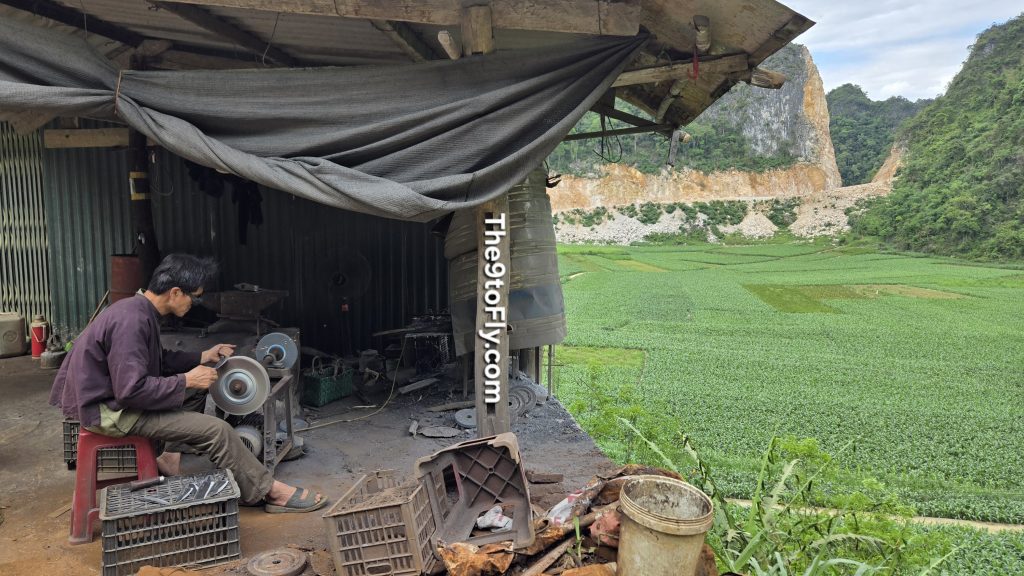
The man we met showed us exactly what he was doing at each stage: heating the metal, hammering it into shape, grinding the edge. He let us hold the finished knives and demonstrated how sharp they were by cutting paper and slicing through a plastic bottle as cleanly as if it were butter. Very impressive. He was friendly and clearly enjoyed showing people his work, not for a pitch or a tip, just because he was proud of it.
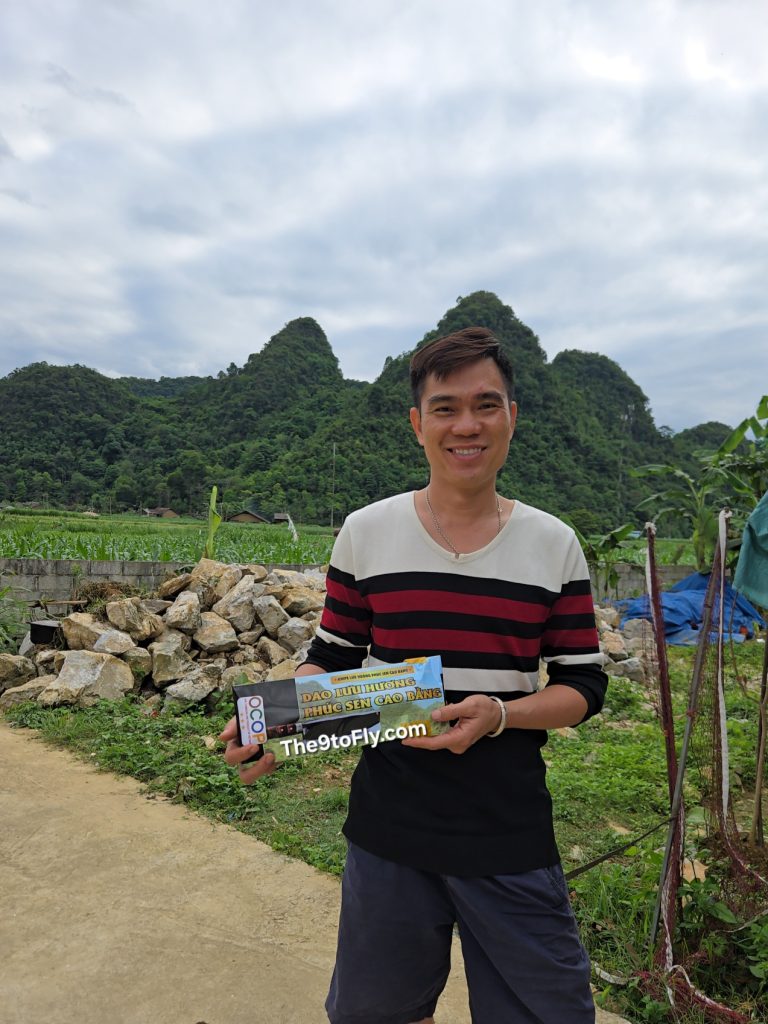
We bought a knife. It’s now in our kitchen in Kobe.
This isn’t a touristy village. There are no signs in English, no entrance fee, and nobody is waiting to sell you something. It’s just a community that makes knives, happy to have visitors as long as you’re respectful of their space.
Evening: Eco Bistro and Stay
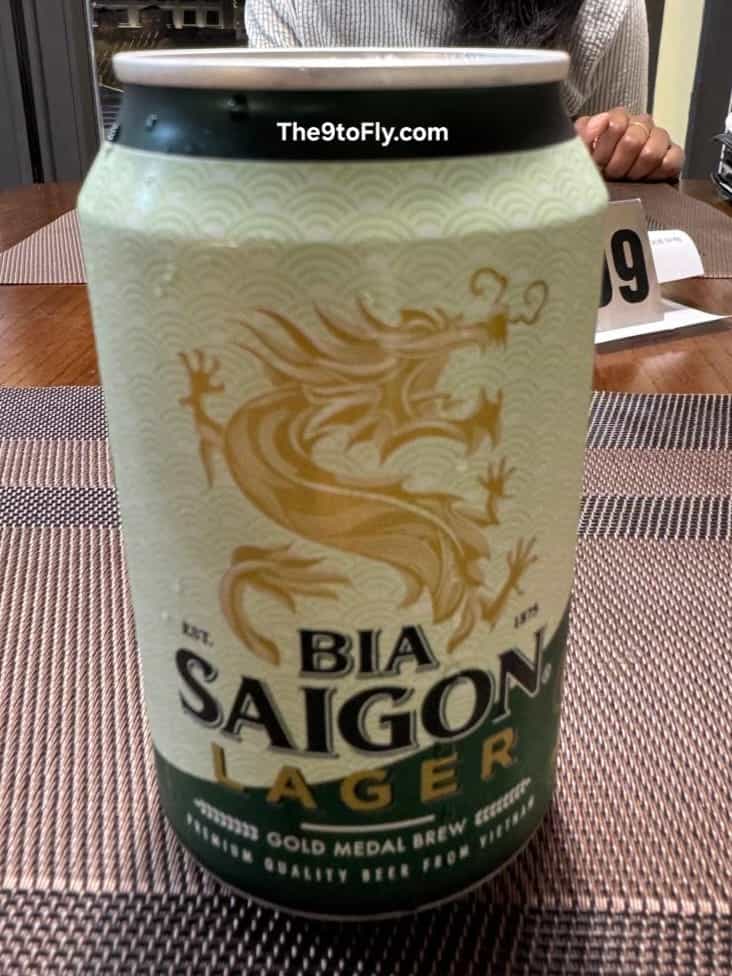
We were back at the hotel by around 6:00 PM. Tired, happy, and in need of food. We walked around the city for a bit and ended up at Eco Bistro and Stay for dinner. Good pizza, Saigon beer, and another glimpse of the national holiday preparations happening in the streets outside. Dance performances, colourful costumes, locals celebrating. Cao Bang was clearly gearing up for the 30th of April festivities and the energy in the city was good.
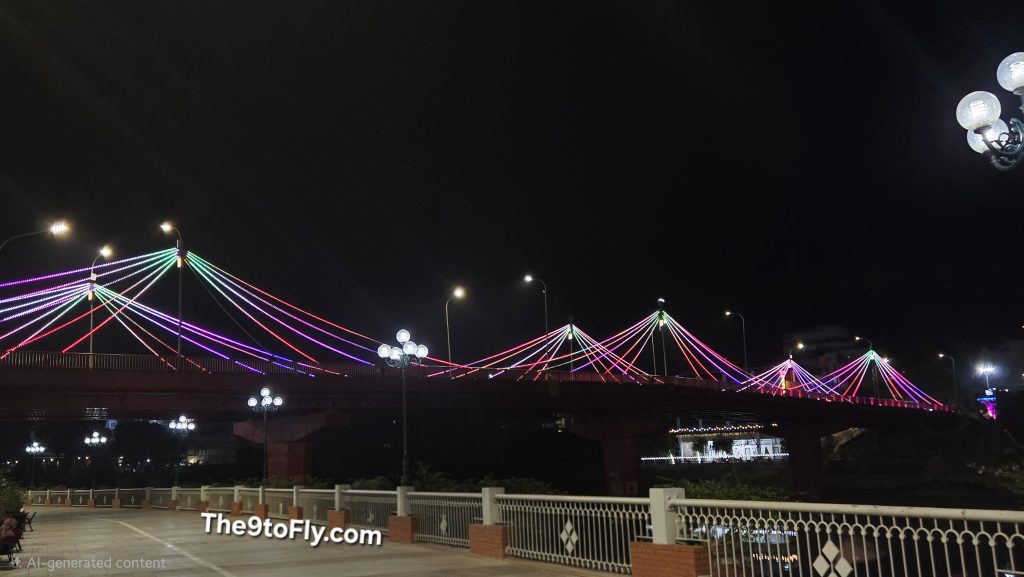
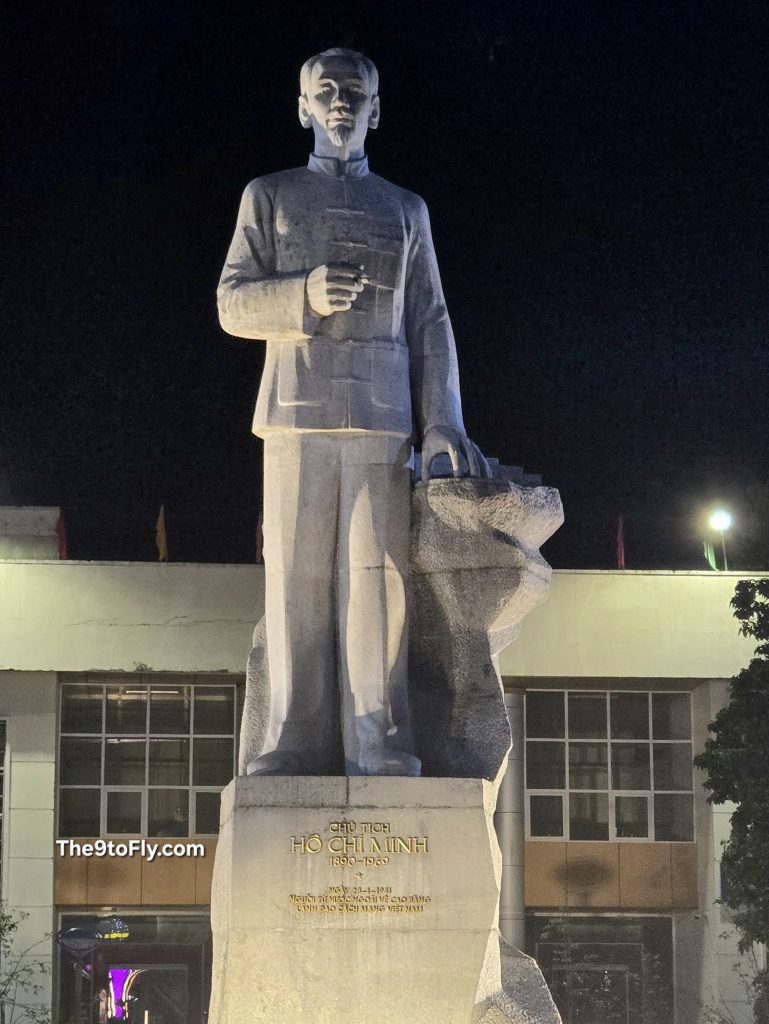
We had to leave the next morning for our onward journey to Hanoi, so this was our last night. Honestly, we could have stayed longer.
Heading Back to Hanoi
The hotel arranged a 7:00 AM limousine pickup the following morning. The van headed back to Hanoi with a few stops along the way, and we were back in Hanoi by early afternoon. You don’t need to book anything in advance. Just let your hotel know when you want to leave and they’ll sort it.
If You Have More Time: Day 3 and Beyond
Two days in Cao Bang covers the main highlights. If you can add a third day (or more), here’s where we’d go:
Lenin’s Stream and Pac Bo
About 52 km northwest of the city, Lenin’s Stream is a series of crystal-clear pools and a small river that winds through a forested valley. Ho Chi Minh settled here in the 1940s and named the stream after Lenin. The surrounding area, known as Pac Bo, is historically significant for Vietnam and has been developed into a scenic site with electric shuttles, a Ho Chi Minh memorial, and the Pac Bo cave where he lived and worked.
Entry: 50,000 VND including shuttle bus, 20,000 VND without.
Worth knowing: Weekends and public holidays can get busy with domestic visitors. Weekday visits are quieter.
Phong Nam Valley and Other Mountain Roads
The mountain roads northwest of Cao Bang are some of the most beautiful riding roads in northern Vietnam. If you have a day to spend just exploring, Phong Nam Valley (between Cao Bang and the Ban Gioc area) is a quieter alternative to the main waterfall route, with rice fields, ethnic minority villages, and very few other tourists.
Bo Hay Viewpoint
On the road north toward Ban Gioc, there’s a hidden viewpoint called Bo Hay that very few people find. A short but steep climb up a rocky path rewards you with a view of a wide valley with the river snaking through it and mountains on all sides. Hard to find without a local or a detailed guide, but absolutely worth it if you’re up for the walk.
Food in Cao Bang: Vegan and Vegetarian Options
Cao Bang surprised us on the food front. Compared to other parts of northern Vietnam, there were more genuinely good vegan options, especially given the size of the city.
Lela Cafe
Our lunch spot on Day 1. Fully plant-based menu. Chickpea cutlets, glass noodles, lotus flower soup. Relaxed atmosphere. Very good.
Lazy Bug
The best vegan meal we had in Cao Bang. Family-run, tucked in an alley, all five-star reviews. Vegan fried rice, vegan soup noodles, and the mulberry and peach juices are both a must. Bring a bit of time because you’ll want to stay.
Eco Bistro and Stay
Pizza and Saigon beer. They have vegan options on the menu. Good food, friendly staff, central location.
General food tips
Remember that the word chay (C-H-A-Y) means vegan or vegetarian on Vietnamese menus. Even regular Vietnamese restaurants in Cao Bang are usually happy to make something plant-based if you ask. The city has a local, non-touristy food scene and prices are significantly cheaper than Hanoi or Sapa.
Where to Stay in Cao Bang
We stayed at Jeanne Hotel, right in the market area of the city centre. Convenient location, clean rooms, friendly staff, and very good value for money. Everything you’d want from a base in Cao Bang. The hotel team organised our scooter rental and our return limousine to Hanoi without us having to do anything ourselves. We’d recommend it without hesitation.
Book your accommodation at Jeanne Hotel here
Cao Bang city is built across both banks of the Song Bang River, with most accommodation, food, and markets concentrated on a large “island” created where the river splits. Staying on or near the island keeps everything walkable.
Getting Around: Scooter Rental
A scooter is how you get to everything worth seeing in Cao Bang. The attractions are spread out across the mountains and you’ll cover 80 to 100 km in a day if you’re doing the Ban Gioc route. Public buses do run to the waterfall but they stop at villages along the way and can take three to four hours each way. The scooter takes about two hours and gives you complete freedom to stop wherever you want.
We rented an automatic scooter from our hotel for 250,000 VND per day. Semi-automatic bikes are available from around 180,000 VND per day and manual bikes slightly cheaper. We chose the automatic because neither of us knew how to ride a semi or manual. If you do, it’s worth saving the money, especially since the roads are genuinely good.
Scooter rental: 180,000 VND (semi-auto) to 250,000 VND (automatic) per day.
Fuel up before heading out, especially on the Ban Gioc day. The route is beautiful but there are long stretches without petrol stations.
Practical Tips
- Bring cash for everything. Cards are not widely accepted in Cao Bang, and there are no ATMs near Ban Gioc or the Tiger Cave. Stock up before you leave the city.
- Fill up the scooter before the Ban Gioc day. The route is long and petrol stations are sparse along the way.
- Leave early for Ban Gioc. We left at 7:00 AM and arrived by 9:00 AM. By 10:30 the car park was filling. The waterfall and cave are quieter in the morning.
- Carry snacks. There are very limited food options near the waterfall and cave.
- The roads in Cao Bang are genuinely good. Nothing like the more extreme mountain riding in Ha Giang. If you’re comfortable on a scooter in normal conditions, you’ll manage here.
- You don’t need to book anything in advance. Your hotel will sort scooter rental, transport to Hanoi, and any logistics you need. Just ask when you arrive.
- Cao Bang is close to the Chinese border. Carry your passport as usual.
- The city comes alive around national holidays. We were there around April 30th and the streets had dance rehearsals and celebrations going on. If your timing aligns with a holiday, plan for bigger crowds at attractions but a more lively city atmosphere.
FAQs
How many days do you need in Cao Bang?
Two days covers the main attractions: Angel Eye Mountain on Day 1, Ban Gioc Waterfall and Tiger Cave on Day 2. Three days would give you time for Lenin’s Stream and Pac Bo without rushing. If you have the time, take it.
Is Cao Bang worth visiting?
Yes. It’s one of those places that is genuinely off the standard backpacker trail and the better for it. Ban Gioc is one of the most impressive waterfalls in Southeast Asia, the roads are beautiful, and the city itself is friendly and cheap. Go before it gets busy.
Is it safe to ride a scooter in Cao Bang?
Yes. The roads are well-paved and much less extreme than those around Ha Giang. Some sections toward Ban Gioc are steep, so take your time. Be careful on the dirt track up to Angel Eye Mountain if you attempt it. After rain, everything gets more slippery.
What is the best time to visit Cao Bang?
October to April is the dry season and the best time to visit. The roads are drier, the skies are clearer, and you get better views of the waterfall and mountains. If you visit June to September during the rainy season, the waterfall is more powerful but roads can be affected by landslides. We visited in late April and had excellent conditions.
Is there good food for vegans in Cao Bang?
More than you’d expect. Lela Cafe and Lazy Bug are both excellent vegan spots. The word chay on a menu indicates a vegan or vegetarian option. Local Vietnamese restaurants are also generally happy to accommodate. You won’t struggle.
Can I get to Cao Bang without a motorbike?
You can get to the city by bus or limousine van from Hanoi or Sapa. Once in the city, you’ll need a scooter to reach Ban Gioc and the other attractions. Public buses to the waterfall exist but take three to four hours with stops. The scooter is the practical and enjoyable option.
Planning the Rest of Your Vietnam Trip?
If you’re doing a northern Vietnam loop, Cao Bang pairs well with Sapa. Here are our other guides:
3 Days in Sapa from Hanoi: Beyond Trekking (Our Honest Itinerary) [2026] – the9tofly – Alpine coaster, glass bridge, Fansipan, and Ta Phin herbal bath.
Final Thoughts
Cao Bang is one of those rare travel wins: somewhere genuinely worth visiting that most people overlook. We added it to our trip almost by accident and ended up talking about it more than places we’d deliberately planned for months.
The waterfall is extraordinary. The mountain roads are as good as anything in Vietnam. The knife village, the vegan cafes, the national holiday dancing in the streets at night. Two days went by very fast.
If you’re planning a trip through northern Vietnam and you have the time to add Cao Bang, add it. Go before everyone else catches on.
Got questions? Drop them in the comments or DM us. We’re happy to help.

![3 Days in Sapa from Hanoi: Beyond Trekking (Our Honest Itinerary) [2026]](https://the9tofly.com/wp-content/uploads/2026/08/Cable-Car-Fansipan-1-768x432.jpeg)